
Choosing the right battery for your boat depends on how you plan to use it.
If you need reliable, long-lasting power for trolling motors or electronics, a deep cycle battery is generally your best choice.
For a bit of everything—starting your engine and running moderate accessories—a dual purpose battery offers more versatility.
Keep reading to find out which one suits your boating needs best.
Deep Cycle vs. Dual Purpose: The Core Difference
The main difference is that deep cycle batteries are designed for sustained, deep discharges, while dual purpose batteries offer a compromise between starting power and moderate cycling. Deep cycle batteries feature thick lead plates that withstand repeated deep discharges, typically lasting between 300 and 1,200 charge cycles. This makes them ideal for applications requiring long-lasting, steady power, such as trolling motors or off-grid lighting. For reliable electrical connections in these setups, choosing best battery terminals ensures optimal performance and longevity. These batteries excel in applications where consistent power delivery is critical for equipment operation. When charging trolling motor batteries on the water, a proper marine charger is essential to avoid damage from wave motion and moisture.
Dual purpose batteries incorporate a combination of plate designs, allowing them to deliver short bursts of starting power and handle moderate cycling. However, they sacrifice endurance for deep discharges, typically providing only 200 to 400 charge cycles. They are suitable when space is limited and you need a single battery to start engines and power accessories.
If your priority is reliable, long-duration power, a deep cycle battery is the better choice. If you need a versatile option for both engine starting and accessory use in tight spaces, a dual purpose battery offers the necessary convenience, even if it doesn’t last as long under deep discharges.
Cold Cranking Amps: Why Starting Power Is a Separate Job
Cold Cranking Amps (CCA) measure the immediate, high-current power your battery can deliver to start your engine in cold conditions. A high CCA rating indicates your battery can generate a strong, rapid burst of electricity to turn over the engine even at freezing temperatures. This is different from amp-hour capacity, which reflects how long your battery can run a device, not how quickly it can start an engine. For boaters needing both starting and deep cycling power, a dual purpose battery like the Optima Yellow Top can serve as a reliable all-in-one solution. To maintain this starting power, pairing your battery with a specialized lithium charger ensures optimal charging performance and longevity. Think of CCA like your home’s electrical connection—designed to handle sudden, large demands, not steady, continuous power. When choosing a battery, check your engine manual to find the recommended CCA rating. Matching or exceeding this ensures your engine will turn over reliably, especially in low temperatures. Keep in mind, a battery with a high storage capacity or long run time does not necessarily guarantee it will start your engine. Always prioritize the CCA needed for your specific engine to ensure reliable starting power. For keeping these critical connections secure and tidy, use cable clamps with screws to prevent loose wires from causing starting failures.
Amp-Hour Capacity: Sizing for Lights and Electronics
Once you’ve determined your engine’s Cold Cranking Amps needs, sizing battery capacity for lights and electronics shifts your focus to daily amp-hour consumption. To do this, calculate each device’s Ah by multiplying its current draw in amps by the hours it operates each day. For 12V loads, divide the wattage by 12 to find the current in amps. For example, a 60-watt bulb drawing power for 4 hours uses 20 Ah (60/12 x 4).
Separate mission-critical items, like navigation lights, from intermittent loads, such as cabin or interior lighting, to prioritize your power needs. Add up all the daily Ah values for each device to find your total daily consumption. Then, multiply this total by the number of days between charges to determine your required battery capacity.
When choosing batteries, remember that lead-acid types can typically only be discharged to 50% of their rated capacity without risking damage. To meet your needs, double the total daily Ah estimate. Lithium-based batteries, which can safely be discharged to 80%, should be sized at about 1.25 times your total daily consumption. It’s wise to add a safety margin of 20 to 30 percent to account for aging batteries, forgotten loads, or unexpected power draws. Proper maintenance and consistent charging protocols ensure your battery bank can reliably support your needs, especially during overnight anchoring or extended periods without shore power.
Can a Dual Purpose Battery Run a Trolling Motor?
Yes, a dual-purpose battery can run a trolling motor, but it depends on its amp-hour rating relative to the motor’s power needs. These batteries are designed to provide a balance between starting power and moderate cycling. For light to medium trolling on smaller boats, they work adequately. However, they are a compromise and not a substitute for a dedicated deep-cycle battery when heavy or prolonged trolling is involved. Deep discharges can reduce performance, so regular maintenance and proper charging protocols are essential. Ensuring your battery’s connection is secure is important, and many boaters pair their setup with a kill switch with lanyard for emergency shut-off. If your trolling sessions are infrequent, a dual-purpose battery offers an economical and convenient solution. For frequent or extended trolling, investing in a dedicated deep-cycle battery is a better choice. Always check the battery’s amp-hour and reserve-capacity ratings to ensure they match your trolling motor’s requirements. Following proper charging protocols can significantly extend the usable lifespan of your battery. You can also compare your battery’s voltage readings against a state of charge chart to avoid discharging it too deeply.
Marine Cycle Life: Which Battery Survives Deep Discharge?
Deep-cycle batteries are designed to handle frequent and substantial discharges much better than dual-purpose batteries. For example, discharging a deep-cycle battery to 50% allows for roughly 1,000 cycles before its capacity significantly deteriorates. However, if you drain it to 80%, the lifespan drops sharply to around 150 to 250 cycles. Dual-purpose batteries, by contrast, usually manage only 150 to 300 cycles at 50% discharge before failing. This difference stems from the chemistry of the batteries: lithium iron phosphate can tolerate 80 to 100% discharge levels, making it ideal for deep cycling, whereas flooded lead-acid batteries degrade quickly past 50%. To maximize your battery’s lifespan, regular maintenance is critical. Keep it properly charged and prevent terminal corrosion. Using secure battery straps ensures that wiring remains stable and protected from vibration during operation. Keep in mind that dual-purpose batteries are a compromise—they won’t withstand repeated deep discharges as effectively, which could reduce your boat’s operational time. For projects requiring precise control, a heat gun with adjustable temperature settings is essential for evenly heating shrink tubing without damaging the battery components. Following safe desulfation methods can restore capacity in sulfated lead-acid batteries and further extend their service life.
Single-Battery Boats: The Dual Purpose Sweet Spot
A single-battery setup with a dual-purpose battery is ideal for smaller boats where space and weight are limited. It provides high cranking amps—roughly 600 to 700—that ensure reliable engine starts. Simultaneously, it offers moderate deep-cycle power, typically around 20 to 100 amp-hours, suitable for running accessories such as fish finders and navigation lights. This configuration balances power needs without requiring a second battery bank, making it a practical choice for boats like small runabouts, center consoles, or recreational craft. For optimal performance, follow charging your marine battery guidelines to maintain its capacity and lifespan.
The main advantage is versatility; a dual-purpose battery handles both starting and accessory loads. It simplifies installation and reduces weight, freeing up space for other gear. However, this setup sacrifices some peak battery lifespan compared to dedicated batteries, often lasting around 3 to 5 years with proper maintenance. It is best suited for intermittent loads like bilge pumps or music systems but may not support heavy overnight power demands for living aboard.
When choosing this solution, match the battery’s group size to your engine’s starting requirements and expected accessory usage. This ensures ample cranking power and sufficient reserve capacity. Using a dual-purpose battery helps you keep things simple without compromising on essential electrical needs, making it an efficient and economical choice when one battery must do both jobs.
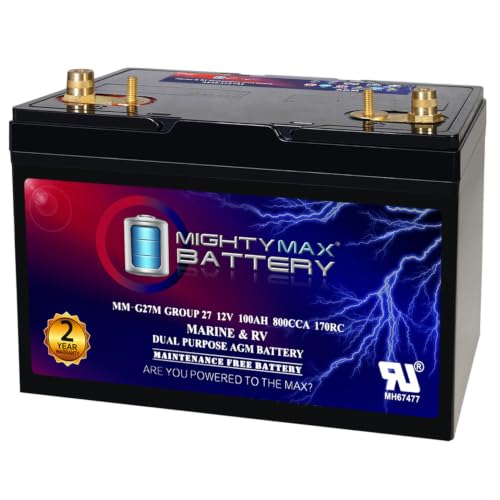
Marine-Grade Confidence: Harness the endurance and dependable energy you need to power every journey on the water, on the road, off the grid, or wherever adventure takes you.

2-in-1 Functionality: Powers both outboard motor cranking and marine electronics (e.g., fish finders, trolling motors). Eliminates the need for two heavy batteries, saving space and reducing extra costs. Compatible with most Honda, Suzuki, Evinrude, Tohatsu, and more — contact us if you need a compatibility guide. With ABYC-compliant installation standards, it ensures safe, worry-free use across different brands.

2-in-1 Marine Battery: Delivers cranking power for outboard motors and continuous operation for marine devices like fish finders and trolling motors. Say goodbye to dual heavy batteries and enjoy more space, less weight, and lower costs
Dedicated Banks Win for Larger Boats
For larger boats, dedicated battery banks are essential. You should separate your starting and house loads to ensure reliability. A dedicated start bank preserves cranking power, so your engine always starts even if your house bank is drained after running equipment like the fridge overnight. The house bank should be sizable—often 1,200Ah or more—to power autopilots, air conditioning, and other high-demand systems. Dual-purpose batteries cannot typically handle this scale and workload efficiently. A good marine battery for the house bank should deliver deep-cycle performance to withstand repeated discharges. Choosing the correct fuse for your power inverter protects the system from overloads and short circuits. For recharging these banks effectively, a solar battery charger can provide reliable supplemental power when at anchor.
Matching your batteries with appropriate charging systems is vital. Use a high-output alternator, such as 200A or more, to ensure quick recharging of each bank and prevent slow recharge times. Separating the banks also improves redundancy; if one bank fails or is depleted, the other remains unaffected, offering peace of mind during your voyage.
Managing two separate banks makes maintenance simpler and reduces corrosion. You can service each bank independently, spotting issues early and preventing cross-contamination. Overall, dedicated banks deliver increased reliability, easier upkeep, and better protection for your larger vessel’s electrical system.

🔋 DEPENDABLE DEEP CYCLE POWER – Power your next trip with the Newport 12V 50Ah Deep Cycle Lead Acid Battery, designed to deliver steady, consistent power for trolling motors and other 12V marine electronics.

MAINTENANCE FREE: 12.99x 6.73x 8.43 inches. Weize 12v 100Ah sealed lead acid battery is manufactured with absorbent glass mat(AGM), which can help to save you from acid leakage and frequent maintenance. Terminal: Left : Positive (+)-Red, Right: Negative (-)-Black. Terminal: Left : Positive (+)-Red, Right: Negative (-)-Black.

【Advanced Smart BMS & All-Weather Safety】Equipped with an upgraded 100A Smart BMS, our battery provides comprehensive protection against overcharge, over-discharge, over-current, and short circuits. Unlike standard lithium batteries, it features automatic low-temperature cut-off, preventing charging below 32°F (0°C) to avoid cell damage. Built with stable LiFePO4 chemistry, it eliminates the risk of thermal runaway, ensuring maximum safety for your RV, boat, or home energy system in any season.
Tight Space? Dual Purpose Saves You a Battery Tray
A dual-purpose battery can halve the number of trays needed in a cramped boat compartment. Instead of using two separate batteries, a single Group 24M or 34M unit, measuring approximately 10.25 by 6.77 inches, fits standard marine battery boxes and reduces terminal clutter. This setup simplifies installation and maintenance by eliminating one tray, hold-down, and set of cables. It also offers better temperature resilience compared to two flooded batteries sharing a hot locker, which helps prolong battery life. Maintenance becomes easier with fewer terminals to check for corrosion. Despite their substantial weight, ranging from 44 to 70 pounds, maneuvering a single battery is less awkward than wrestling with two. These compact dual-purpose batteries provide strong starting power, around 850 to 975 MCA, and moderate reserve capacity, making them ideal for small fishing boats and runabouts where space is limited. For buyers needing an inverter-compatible option, this battery type compares favorably against the best 12V batteries for smaller setups. To ensure the battery maintains its rated capacity, you should test the deep cycle battery regularly using a multimeter and a load tester. Using a trickle charger during storage helps prevent sulfation and extends the battery’s usable lifespan.
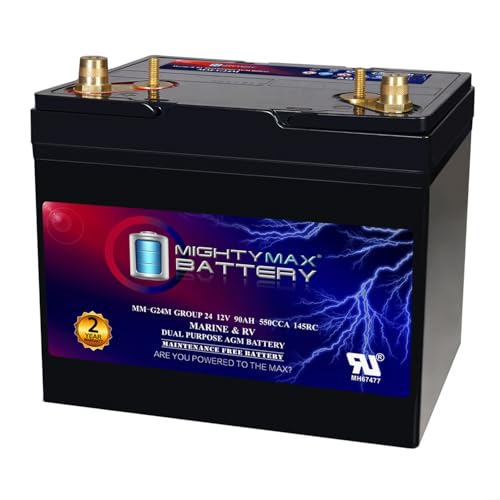
Marine-Grade Confidence: Harness the endurance and dependable energy you need to power every journey on the water, on the road, off the grid, or wherever adventure takes you.

DUAL PURPOSE MARINE RV BATTERY: Interstate's marine dual-purpose AGM battery can serve as both your cranking battery to start the motor & power your trolling motor - whether the motor is on or off! Built "Interstate tough" to withstand the most rugged conditions so you can spend more time having fun & less time worrying about your battery

SPACE-SAVING DESIGN --- A dual purpose marine battery eliminates the need for two separate units by combining the functions of a starter and deep cycle battery. This frees up space in your boat and simplifies your electrical system.
Deep Cycle Wins for Heavy Electronics and Trolling
Deep cycle batteries are ideal for powering heavy electronics and trolling motors on your boat because they supply steady, long-lasting power rather than short bursts needed for engine starts. With capacities of 110Ah or higher, these batteries can support extended trolling sessions, providing hours of low-amp motor operation and keeping your fishfinder powered without voltage drops. Their thick plates and sturdy build resist the corrosion that gradual discharges cause, ensuring a durable lifespan. Unlike starting batteries, deep cycle models are designed to handle repeated deep discharges without losing capacity, so you won’t have to worry about premature power degradation. They deliver consistent amperage until nearly fully drained, making them perfect for all-day fishing trips. For example, a sealed AGM design like the Banshee model offers leak-free, maintenance-free operation, which prevents corrosion and eliminates the need to add acid, further extending its reliability during long outings. These batteries are commonly available in a Group 24 size, which fits many standard battery trays and provides a good balance of capacity and physical dimensions for onboard installation.

Maintenance-free Absorbed Glass Mat (AGM) technology - no water required, no spills, no leaks, and no maintenance

Fast Starting Power: This 12V 70Ah 710 CCA delivers strong, steady starts is ready for any weather in any season.

ML75-12 Internal Thread is a 12V 75AH group 24 Sealed Lead Acid (SLA) rechargeable maintenance free battery.
Choose Your Marine Battery: A Simple Framework
To choose the right marine battery size, focus on the group size designations—such as Group 24, 27, or 31—and select one that fits your boat’s battery compartment. The group size determines the physical dimensions, terminal placement, and capacity, ensuring it will physically fit and meet your power needs. If your boat is equipped with multiple electronics or needs higher cranking power, a larger group size like 31 might be necessary. On the other hand, smaller boats with basic functions can often get by with a Group 24 or 27. Always verify the space available and match the battery size to those dimensions. Proper fit prevents issues during installation and helps ensure consistent performance while avoiding the inconvenience and expense of a poorly fitting battery.

A rugged battery tray for group 31 batteries, including marine, RV, camper, and trailer batteries.
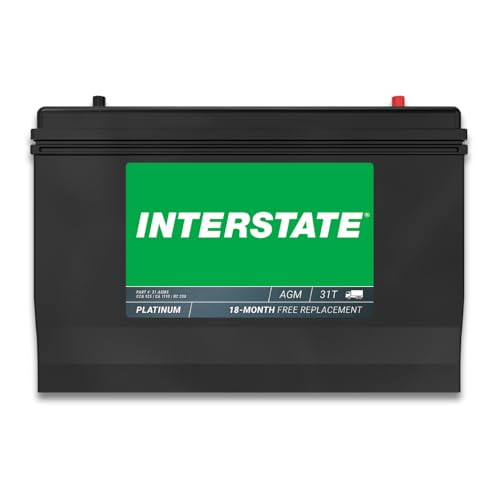
EXTREME DEEP-CYCLE POWER: This 2-in-1 pure lead AGM battery delivers high-cranking, extreme deep cycle power. It's designed to provide reliable force over an extended period to power your boat's motor & all of its accessories (appliances, trolling motor, audio systems, depth finders, fish locators, windlass). Not all marine batteries are the same - but this one exceeds the rest. Built with thick plates to allow the battery to continuously discharge power so you can recharge it many times over without decreasing its lifespan

DUAL PURPOSE MARINE RV BATTERY: Interstate's marine dual-purpose AGM battery can serve as both your cranking battery to start the motor & power your trolling motor - whether the motor is on or off! Built "Interstate tough" to withstand the most rugged conditions so you can spend more time having fun & less time worrying about your battery