
Are you trying to decide between flexible and rigid marine solar panels for your boat? The best choice largely depends on your specific needs and setup.
Rigid panels generally offer higher efficiency and longer lifespan.
Flexible ones are easier to install on curved surfaces.
Keep reading to see which option suits your deck space and budget best.
Why Efficiency and Power Density Matter for Limited Deck Space
Rigid marine solar panels typically deliver 18–22% module efficiency, compared to flexible panels that average 15–18%. This efficiency difference means you get more usable watts per square foot with rigid panels, allowing you to maximize power output in limited deck space. As a result, higher power density means you can pack more capacity into tight spots, preserving deck layout for essential features like hatches or storage compartments. For boat owners prioritizing maximum energy harvest, these rigid panels also outperform flexible options in long-term value and performance when compared to the top-rated battery terminals reviewed for quality and durability. For those seeking a portable setup, the best portable solar panels with plug sockets also demonstrate consistent charging output comparable to rigid marine models. Unlike flexible panels, rigid marine panels can be secured using cable ties with screw holes for a reliable mount that withstands constant vibration and wind.
Though rigid panels usually have a higher upfront cost, they often require fewer panels overall, which can make them more economical over time. Additionally, their greater efficiency translates to lower conversion losses, meaning you extract more electricity from the same area. While flexible panels may appeal for their low profile and aesthetic appeal, rigid panels’ superior output per unit area generally results in less space needed for achieving your energy needs. This efficiency gap is a key factor in determining whether your solar system can meet your boat’s house loads with limited deck space.

Advanced encapsulation material with multi-layered sheet laminations to enhance cell performance and provide a long service life.

Unmatched Cell Efficiency - Renogy solar panel 100w features grade A+ cells, delivering an impressive conversion efficiency of 25%. This solar panels provide 20W more power output compared to conventional PERC panels of the same design.

【N-Type 16BB High-Efficiency Solar Cells】The Callsun 200 watt solar panel is built with advanced N-type solar cells and 16BB busbar technology, delivering up to 25.6% conversion efficiency. Compared to traditional P-type cells, N-type solar panels generate higher power output and better reliability, while the 16BB design reduces hot spots and hidden cracks — ensuring superior performance and a longer lifespan.
How Weight and Mounting Profile Affect Your Installation
Flexible panels typically weigh 2 to 3 kilograms per 100 watts, whereas rigid panels weigh 6 to 8 kilograms per 100 watts. This significant weight difference allows you to cut your system’s total mass by over half, reducing the top-heavy load on your boat’s deck or cabin top. The lighter weight improves trailer suitability because you can tow without overstressing your vessel’s structure or exceeding axle limits.
In addition to weight savings, flexible panels have a profile thickness of about 2 to 3 millimeters, which allows them to hug curved surfaces seamlessly. This sleek, low-profile design creates a snag-free appearance that rigid panels, often 35 to 40 millimeters high, cannot match. The slim profile means you avoid bulky brackets and hardware, making curved-surface installations easier and reducing wind resistance. For surfaces with low clearance, such as dodgers or biminis, this thin profile helps preserve headroom and minimizes trip hazards.
Rigid panels, by contrast, require flat mounting surfaces and elevated brackets, adding both weight and complexity to your setup. Overall, flexible panels offer clear advantages in terms of weight and mounting profile, enhancing both the functionality and aesthetic of your marine solar installation.
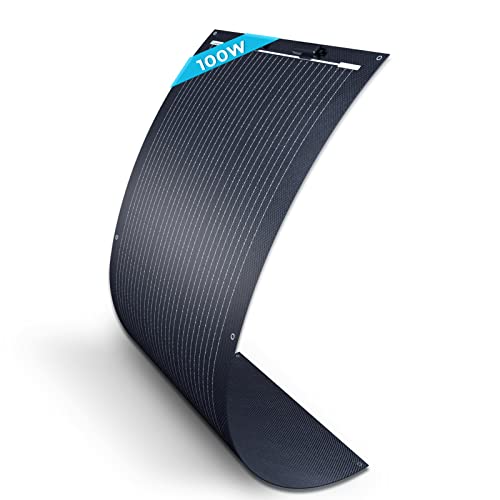
High Power Output - The flexible solar panel can provide an average of 500 Watt-hours of electricity per day (depending on sun availability).

【High Power Output】 Renogy 200w flexible solar panel can provide an average of 1000 Watt-hours of electricity per day (caculates with 5 hours sunlight).

[Extremely Flexible] This flexible solar panel is capable of meeting a wide range of applications where standard panels can be inconvenient to mount, such as on the curved roof of an airstream
Marine Weather and Salt Spray Resistance: Flexible vs Rigid
Rigid panels generally provide superior protection against marine salt spray and harsh weather conditions. Their durable anodized aluminum frames and tempered glass create a strong barrier against salt mist, which acts as an electrolyte and accelerates corrosion on less resistant materials. Many rigid panels feature specialized marine coatings on their frames and are certified for salt compatibility through IEC 61701 testing, ensuring effective resistance to chloride ions. This makes them more reliable where exposure to salt, wind, and rain is severe. For any onboard safety system, incorporating a best kill switch with lanyard ensures quick engine shutdown in emergency situations. For those selecting a master switch, choosing a best master switch certified for saltwater durability is key to long-term performance.
In contrast, flexible panels with ETFE fronts and IP67 sealing can perform adequately in marine environments but lack the structural armor of rigid designs. Their sealing relies heavily on maintaining perfect integrity over repeated wet-dry cycles, and any damage or degradation can compromise their performance. While flexible panels might be easier to install on curved surfaces, they generally require more careful maintenance to prevent moisture intrusion and corrosion. For boat owners, wiring a boat switch panel safely is equally critical to ensure that the electrical system remains reliable and corrosion-resistant over time.

【High Efficiency】This 50W solar panel converts sunlight directly into electricity. It has an excellent conversion rate of 21%-30% with high efficiency monocrystalline solar cells. Designed to charge and maintain 12V rechargeable batteries like LiFePO₄, Lithium Ion, AGM, SLA, GEL, EFB, MF, etc. Suitable for trailer, tractor, truck, boat, motorcycle, RV, car, lawn mower, water pump, gate opener, electric fence, etc.

【Lightweight design】ECO-WORTHY solar panel is 60% lighter than conventional panels, reducing roof load to extend your RV’s driving range by up to 5–8 km per charge, lower the center of gravity for smoother, more stable cornering, and reduce suspension wear for a longer vehicle lifespan.

【Power Your Life with Solar】This 25W 12V solar panel is a smart and eco-friendly way to charge your 12V batteries. It is made of durable tempered glass and aluminum frame, which can withstand harsh weather conditions and last for 20-25 years.
Lifespan Comparison: How Many Years Can You Expect
Rigid panels typically last 25 to 30 years, often outliving flexible options by two to five times. They are designed with durability in mind, and their sturdy construction handles harsh weather conditions, including salt spray, much better than flexible panels. Flexible panels, on the other hand, generally have a lifespan of 5 to 15 years. Lower-cost PET flexible panels may degrade even faster, sometimes in under five years.
Installation plays a crucial role in lifespan. Improper mounting or exposure to intense salt spray can reduce flexible panel life to under two years. While flexible panels offer aesthetic advantages with sleeker designs, they tend to have shorter warranties, usually less than 12 years, compared to over 20 years for rigid panels. This warranty gap underscores the durability difference, making rigid panels the preferable choice if longevity is your primary concern.
Heat, Shading, and Real-World Output Differences
Flexible panels mounted directly to dark surfaces can run about 20°C hotter than ambient when the sun is shining directly on your deck. This heat increase reduces their efficiency by up to 10% compared to rigid panels with an air gap. Excess heat not only slashes real-world power output but also shortens the lifespan of the panels over time. For shading, flexible panels usually perform better, losing only 10%–20% of their output in partial shade, while rigid panels can lose 60%–80%. Partial shadows from equipment like a boom or radar still impact series wiring, so proper array configuration is crucial. On a boat, you’ll likely see around 50%–70% of the rated power output in typical conditions. While rigid panels have a higher environmental footprint during manufacturing, their cooler operation maintains more stable wattage and extends useful life. Choose your panel type based on shading conditions and thermal considerations, not just the label on the product. For managing this output to your battery bank, pairing your panels with a DC to DC charger that includes solar input can significantly improve charging efficiency and system stability.
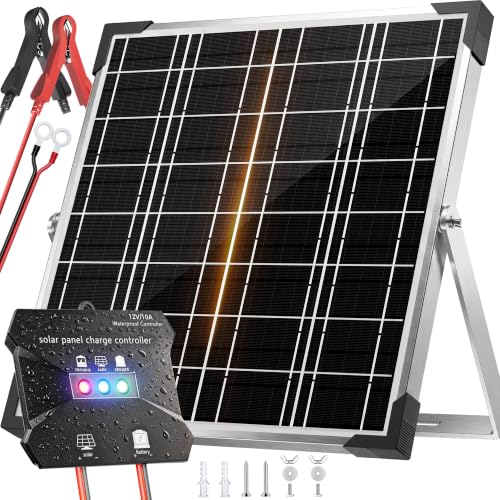
High-Efficiency MPPT Solar Charger - Advanced tracking technology delivers 20-30% faster charging for 12V batteries. A+ monocrystalline panels maximize power conversion. Perfect 20W solar trickle charger for cars, RVs, boats, and trailers. More sun captured, less time waiting.
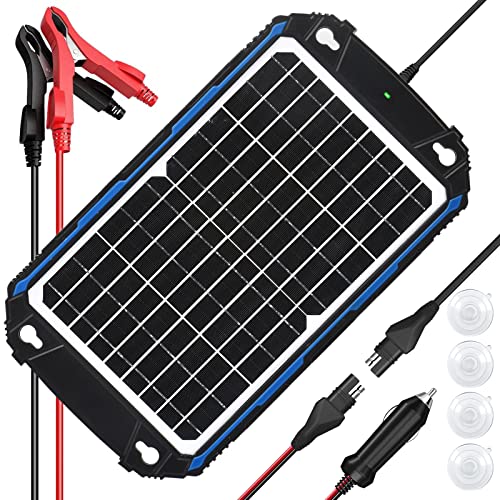
【Ultra-Smart MPPT Technology】This 12v solar panel battery charger is crafted with SUNER POWER's unique Ultra-Smart MPPT( Max Power Point Tracking) technology, the innovative MPPT allows to deliver high tracking efficiency of up to 99% and peak conversion efficiency of 98%, improving approximately 20%-30% utilization rate than other competitors

Bates SAE to SAE extension cable is a 25-foot heavy-duty cable designed to extend the reach of solar panels, battery chargers, and other DC power systems.
Best Use Cases for Flexible vs Rigid Solar Panels
Flexible solar panels are ideal for curved surfaces or tight spaces on your boat. They are lightweight and conform easily to irregular shapes such as bimini tops, dodgers, or the hull of a catamaran. This makes them perfect for mounting on areas where rigid panels might not fit or could add unnecessary weight. Flexible panels are also well-suited for lightweight canvas structures and racing boats where reducing drag and weight is crucial. Their low profile and resistance to corrosion make them good choices for small vessels, cabin roofs, or foredecks used mainly for basic battery charging. For larger electrical setups, using high-quality battery terminals ensures reliable power distribution from your panels to multiple devices. When choosing flexible panels, consider color options to match your deck aesthetic and ensure electrical connections are weatherproofed to guarantee reliable long-term output. To secure these connections, using the best crimping tools for bullet connectors ensures a durable and corrosion-resistant fit. For added security, you should also use best battery straps to keep your wiring neatly organized and prevent loose cables from shifting while underway.

☀【EXTREMELY FLEXIBLE】BC Solar Cells 25% Efficiency The flexible solar panels can be adapted to many different applications, allowing installation on yachts, boats, RVs, roofs, vans, cars, tents or any other uneven surfaces

Extremely Flexible - This flexible solar panel is capable of meeting a wide range of applications where standard panels can be inconvenient to mount, such as on the curved roof of an airstream

Extremely Flexible: Update to latest version size: 36.22inch*23.22inch*0.11inch/920*590*3MM, The minimum radius of the arc that a 100 watts flexible solar panel can reach is 45cm (17.7 in). It is capable of meeting a wide range of applications where standard solar panels can be inconvenient to mount, suitable for off-grid applications that include trailers, marine, boats, cabins, tents, cars, trucks, yachts, RVs, campervans, caravans, sheds, residential rooftop, home garden outdoor, or any other irregular surface.
The Final Verdict: Which Panel Wins for Your Boat
Rigid panels generally outperform flexible panels in long-term energy production, durability, and cost efficiency. They offer 16% to 24% efficiency and can last over 20 years, making them a better investment for most boats. Rigid panels are less prone to damage from heat buildup and physical stress, providing a stable performance over decades.
Flexible panels, however, excel in conforming to curved surfaces like biminis or dodgers. They are lightweight and easier to install on irregular shapes but have shorter lifespans of about 2 to 5 years. Advances in flexible laminate technology are narrowing the efficiency gap, and premium models now resist heat better and perform closer to rigid options.
The best approach is to select rigid panels for primary energy needs due to their durability and output, then add flexible panels to cover areas where rigid panels cannot fit comfortably. This combination optimizes both long-term value and adaptable installation.