
Are you wondering if your marine battery charger shuts off on its own? The answer depends on the type of charger you have.
Some smart chargers automatically switch to a safe float mode once the battery is full, while basic chargers keep running until you unplug them.
Knowing how your charger behaves helps prevent damage and keeps your battery safe.
Does Your Marine Charger Shut Off Automatically?
Many marine chargers do not turn off completely but instead switch to float or maintenance mode once the battery reaches full charge. This feature is beneficial because it prevents overcharging by delivering a low, steady current that keeps your battery topped up without risking damage. Continuous charging without float mode can lead to overcharge, which damages voltage stability and causes battery sulfation—a buildup of lead sulfate crystals that reduces capacity over time. Float mode helps mitigate these issues by compensating for self-discharge and maintaining the battery’s health during long-term connection. A shore power inlet provides the connection point for your charger to access dockside AC power safely. For example, the NOCO Genius GEN4 automatically monitors batteries and manages charging to prevent overcharging, integrating spark-proof technology and other protections for safe operation. Selecting a charger with automatic float mode is essential for preserving the longevity of your deep-cycle trolling motor battery. Some top crimping tools with cutter also include built-in safety features that prevent accidental shorts during installation.
Smart Chargers vs. Basic Chargers: Which Ones Turn Off on Their Own?
Smart chargers automatically turn off or switch to float mode once your battery reaches full charge. They actively monitor the battery’s capacity and adjust the current output accordingly, preventing overcharging and reducing stress on the cells. This ensures your battery stays healthy over time while also improving charging efficiency, since power is delivered only when needed. Some top-reviewed models even feature multi-stage charging to optimize performance for lithium batteries. In contrast, basic single-stage chargers do not turn off automatically. They continue supplying current regardless of the battery’s state, which can lead to overcharging, capacity loss, and wasted energy. To avoid damage, you must manually disconnect a basic charger once charging is complete. This makes them less suitable for unattended use or long-term maintenance. For safety and convenience, a smart charger is the better choice because it manages the entire charging process without requiring your intervention, helping to protect your battery’s long-term health while maximizing efficiency. As with selecting a master switch, choosing a charger with the appropriate amperage rating for your battery size is crucial for safe operation. Understanding boat starting batteries is key to selecting the right charging system.

【2 Bank Marine Battery Charger】output 12V 10A (5A/Bank) waterproof Onboard Boat Charger, which can automatically switch from full charging mode to float charging mode. Works with 12 volt batteries including marine, boat, starter, and deep-cycle batteries.

MEET THE GEN5X2 — 37% smaller and 43% more powerful than the GENM2. It’s our most compact and advanced onboard charger yet—engineered for peak performance in the harshest marine environments.

MEET THE GENIUS1 — Similar to our G750, just better. It's 35% smaller and delivers over 35% more power. It's the all-in-one charging solution - battery charger, battery maintainer, trickle charger, plus desulfator.
How Multi-Stage Charging Switches From Bulk to Float Mode
Smart chargers automatically transition from bulk to float mode to optimize battery health. During the bulk stage, they supply maximum current until the battery voltage reaches the absorption setpoint—usually around 80% charge for lead-acid batteries. Once this point is reached, the charger switches to a constant-voltage absorption phase, allowing the current to decrease gradually as the battery nears full capacity. This changeover helps prevent overcurrent stress and speeds up the charging process. For secure mounting in marine environments, these chargers can be fixed using cable ties with screw holes to ensure stable placement near batteries. If you are still comparing top options, reading Best Battery Tray Reviews can help you find a compatible mounting solution.
Float mode begins when the charger detects a prespecified taper current—typically between 2 and 5 percent of the battery’s capacity—or when the absorption timer ends. In float mode, the charger reduces the voltage to a maintenance level, generally between 13.2 and 13.8 volts. It delivers only a small trickle charge, compensating for self-discharge without causing gassing or overheating. This automatic transition ensures your battery remains healthy and extends its lifespan without manual adjustments. For lead-acid batteries, a solar charge controller often uses a similar multi-stage process to prevent overcharging and maximize efficiency.
Why Most Marine Chargers Stay On in Float Mode Instead of Powering Down
Most marine chargers stay in float mode rather than shutting down completely because your boat’s battery naturally loses charge over time. Float mode maintains a low, steady voltage that counters this gradual self-discharge, ensuring your battery remains charged without overtaxing it. It operates at a voltage below the gassing threshold, which protects the electrolyte and prevents electrolyte loss or damage to the battery’s chemistry. Shutting off the charger allows voltage to drift downward, reducing readiness when you need the battery most. Keeping the charger in float mode provides just enough current to keep lead-acid batteries topped up during long periods of inactivity, such as mooring. For precise monitoring of battery health and charge status, a Renogy 500A battery monitor with shunt offers real-time data to confirm float mode is working effectively. Many boaters also rely on a kill switch with lanyard as an additional safety measure to quickly disconnect power in emergencies. Achieving a secure electrical connection for these accessories often requires a reliable crimping tool to attach terminals correctly.
This approach also avoids the repeated stresses associated with turning the charger on and off, which can shorten the lifespan of both the charger and the battery. Because float voltage continuously matches your battery’s needs, you don’t experience capacity loss between uses. Overall, most marine chargers stay on intentionally—they prioritize steady maintenance and reliability over the convenience of a complete shutdown.
What Happens When a Basic Charger Doesn’t Shut Off
A basic charger that doesn’t shut off can cause serious damage to your battery. When the charger continues to supply current after the battery is full, it forces a constant flow of electricity into a saturated cell. This ongoing charge causes the battery’s chemistry to break down, leading to reduced efficiency. The excess energy turns into heat and gas, which can warp the plates inside the battery. Over time, this heat buildup accelerates internal wear and can even produce dangerous hydrogen gas. You might notice the charger or battery feeling abnormally hot, or see the battery swelling. Such conditions pose risks of fire or explosion, especially in confined marine compartments. For example, sparks from corroded connections on the shore power cord can ignite flammable gases, compounding the danger. Constant overheating can also damage your boat’s electrical system and lead to costly, premature battery replacements. Since basic chargers lack automatic shutoff, you must vigilantly monitor them to prevent these hazards—never leave them unattended. Choosing the correct charging amperage for your battery’s capacity is crucial to avoid overloading the system and reducing these risks. To trace the problem safely on board, start by checking the charger’s output voltage with a multimeter.

Heavy Duty 12V 24V Battery Charger – Built with pure copper coil, metal & ABS heavy‑duty housing; fully compatible with 4‑300Ah lead‑acid batteries: AGM, Gel, Wet/Flooded, EFB, Calcium, MF, deep cycle batteries; professional automotive charger for car, truck, motorcycle, boat, marine, RV, lawn mower.
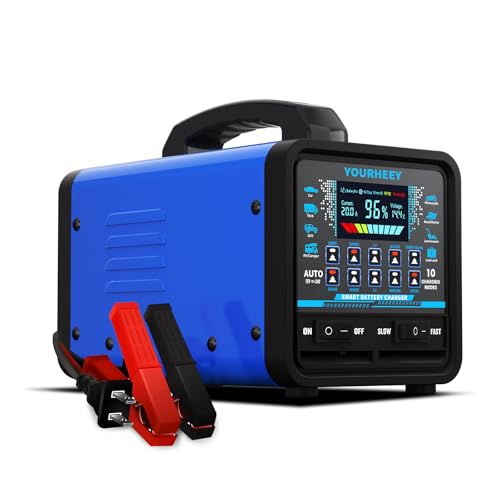
【Professional-Grade Battery Charger】Engineered with military-grade 13.1LB pure copper coils and heavy-duty aluminum alloy casing, the Yourheey Car Battery Charger delivers unmatched durability and 30% faster heat dissipation. This 12V 24V Battery Charger Automotive masterfully handles all lead-acid battery types - AGM, GEL, Flooded, EFB, Calcium, MF, and deep-cycle batteries (Note: Not compatible with lithium/LiFePO4). Its 20A max output ensures rapid charging for trucks/RVs while maintaining precision for motorcycles/lawn equipment. car battery charger heavy duty battery maintainer trickle charger

PREVENT BATTERY FAILURE: Ensure reliable starts after storage with this 4-in-1 device that charges, maintains, tests, and restores batteries for cars, motorcycles, ATVs, trucks, SUVs, and boats.
Key Features That Indicate Automatic Shutoff: Float, Maintenance, and Auto-Maintain
Automatic shutoff features are essential for protecting your battery during charging. These features—float, maintenance, or auto-maintain modes—ensure the charger stops supplying high current once the battery is sufficiently charged.
In float mode, the charger reduces its voltage to a lower, steady level after completing bulk charging. This keeps the battery topped off without overcharging, preventing damage like sulfation. Good voltage regulation at this stage is crucial for maintaining battery health during storage. For example, the Battery Tender 800 uses super smart technology to constantly monitor and maintain battery charge, ensuring no overcharging occurs. Unlike onboard marine battery chargers, which often require permanent installation and offer continuous multi-stage charging, portable chargers typically deliver these same smart shutoff benefits in a more versatile package. Choosing terminals with a solid corrosion-resistant design further supports this long-term maintenance by ensuring a clean connection. For applications using stainless steel ties, a cable tie gun can secure charging cables with consistent tension, preventing loose connections that might disrupt float mode performance.
Maintenance mode goes a step further by continuously monitoring the battery’s voltage. It only resumes charging when the voltage drops below a set threshold, providing a smart standby state that preserves charge without constant full output. Indicators such as green LEDs or labels like “maintenance” or “float” help confirm when this mode is active.
Auto-maintain functions similarly to maintenance mode but often combines conditioning with a holding stage. It maintains battery health over long periods by balancing charge without the risk of overcharging. These modes often feature clear visual indicators that signal stage changes, giving you confidence that your charger is operating safely and efficiently.

[Charges 6V and 12V Battery Types - Lead Acid and Lithium] One charger for multiple vehicles and equipment in your garage. Works with compatible 6V and 12V Lead-Acid batteries, including Wet, AGM, Gel, SLA and VRLA, as well as compatible 12V Lithium LiFePO4 batteries with built-in BMS. Press the MODE button to switch between supported battery chemistries and voltages. Suitable for charging compatible batteries used in a car, motorcycle, boat, riding lawn mower, ATV, UTV, jet ski, snowmobile, classic car, RV or kid’s ride-on toy.

Stay Charged: Battery Tender battery chargers and maintainers provide a full charge to your powersport vehicle’s battery before switching to float mode to maintain proper voltage levels for safe, long-term storage
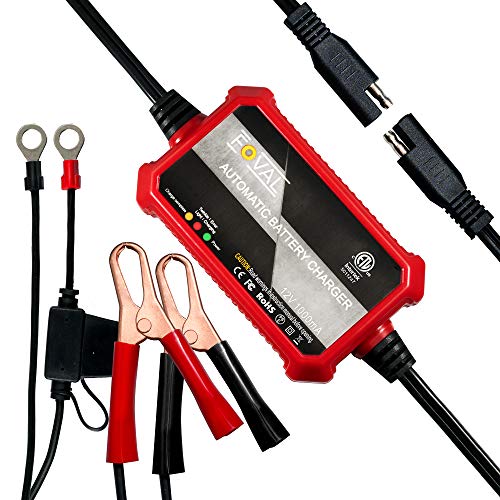
Automatic Battery Charger & Maintainer: 1A 12V smart battery charger perfect for SLA / VRLA / GEL CELL / AGM / WET lead acid batteries. It is a battery maintainer, trickle charger, float charger, and battery desulfator, also complete 4-step charging program (Initialization, Bulk Charge, Absorption Mode, Float Mode).
Can You Leave a Marine Charger Connected Indefinitely?
You can leave a marine charger connected indefinitely only if it is a smart charger with automatic maintenance features. These chargers are designed to detect when your battery is fully charged and then switch to a maintenance or float mode, providing just enough current to keep the battery topped off without overcharging. This prevents damage and reduces the risk of overheating.
Before leaving your charger plugged in long-term, verify in the manual that it supports continuous connection and has an automatic maintenance mode. Ensure it correctly recognizes full charge and switches to a safe, low-current state. Additionally, match the charger type to your specific battery—whether lithium, AGM, or flooded lead-acid—to avoid compatibility issues. Regularly inspect cables, connections, and ventilation to prevent hazards. Without automatic regulation, sustained connection can lead to overheating, battery damage, or safety risks. A smart charger makes leaving your boat unattended safer and helps maintain battery health over extended periods.
How Float Mode Prevents Overcharging Without Shutting Off
Float mode prevents overcharging by maintaining the battery at a safe, low voltage level without shutting off. Instead of cutting power entirely, the charger shifts into a voltage regulation mode around 13.2 to 13.5 volts for a 12V lead-acid battery. This allows it to deliver just enough current to counteract the battery’s natural self-discharge, keeping it fully charged and ready to use. For accurate monitoring of battery health during this process, you can rely on a top battery tester to compare quality and performance. Many of the best solar chargers also incorporate float mode to ensure long-term battery maintenance without damage.
In float mode, the charger reduces its output to a trickle or pulses as needed, ensuring you’re not forcing the battery above its safe limit. This prevents gassing, electrolyte loss, and damage caused by overcharging. Because the charger is constantly monitoring and adjusting voltage, you don’t need to disconnect it, making it ideal for long-term maintenance.
This process is crucial for ongoing battery health because it provides a continuous, safe charge without the risks associated with leaving a traditional charger on full power. It effectively balances the need to maintain full capacity with protecting the battery’s lifespan, saving you time and hassle over the long run.
The Biggest Mistake: Assuming Your Charger Shuts Off When It Doesn’t
Many boat owners assume their charger automatically shuts off when the battery is full, but this isn’t always the case. Not all chargers are designed to stop charging on their own, especially basic single-stage models that deliver continuous power. These chargers keep pushing current into the battery without pause, leading to overcharging. Overcharging causes heat buildup, which can boil water out of flooded batteries and permanently damage internal plates. For AGM and gel batteries, excessive voltage accelerates deterioration even faster. This misconception is dangerous because leaving a charger connected doesn’t guarantee safety. Always check your charger’s behavior—some lack a maintenance or auto-shutdown stage—and confirm whether it will stop charging once the battery reaches full capacity. Never assume that being plugged in means your battery is safe from damage.

Charger, Maintainer & Desulfator - An all-weather battery charger, battery maintainer, trickle charger, and battery desulfator. Perfect for charging and maintaining all 12-volt lead-acid, flooded or sealed maintenance free batteries (AGM and gel cell).

PREVENT BATTERY FAILURE: Ensure reliable starts after storage with this 3-in-1 device that charges, maintains, and reconditions batteries for cars, motorcycles, ATVs, trucks, SUVs, and boats.

🔋【3-in-1 Battery Charger, Desulfator, Maintainer】The 12V 24V battery charger is designed to charge and maintain 12 volts or 24 volts batteries, it can works as 12Amp quick battery charger. Compatible with all 12.6V Lithium-ion batteries,12V and 24V lead-acid automotive,marine, deep-cycle batteries: flooded,gel,AGM,maintenance-free,WET,CAL,EFB batteries in Car,motorcycle,lawn mower,ATV,truck,tractor,SUV,boat marine, etc.🎁Nice holiday gifts for Christmas day,New year,etc.
How to Verify Your Marine Charger’s Automatic Shutoff Behavior
To verify if your marine charger automatically shuts off, start by checking the status lights and mode labels on the unit. A “maintain” or “float” indication typically signals that the charger has entered maintenance mode and is not actively charging, which suggests automatic shutoff is functioning correctly. Avoid interpreting these signals as faults like reverse polarity; they are standard indicators of the charger’s operation mode.
Next, consult your owner’s manual for specific details about charging cycles and the charger’s intended behavior. The manual explains whether your charger is designed to cut AC input after a full charge or to shift into a maintenance mode that keeps the battery topped off without overcharging.
Use a multimeter to measure the DC voltage output at the battery terminals. If you see zero volts while the charger is plugged in, it likely indicates a protective shutdown rather than a blown fuse or internal fault. When the charger is actively charging, the voltage at the battery posts should rise and then gradually drop once the battery reaches full charge and the charger transitions into maintenance mode.
Recheck the resting voltage after disconnecting the charger; if it remains high, the unit is in maintenance mode rather than truly off. A persistent low-level voltage indicates float operation, which helps prevent battery corrosion without overcharging. If the voltage readings or behavior deviate from what your manual describes, your charger might need professional inspection or repair.

Heavy Duty 12V 24V Battery Charger – Built with pure copper coil, metal & ABS durable structure; fully compatible with 4‑300Ah lead‑acid batteries: AGM, Gel, Wet/Flooded, EFB, Calcium, MF, deep cycle batteries; professional automotive battery charger for car, truck, motorcycle, boat, marine, RV, lawn mower.

Compact, Smart & Durable - It can charge all types of 12V lead-acid batteries, including flooded or sealed maintenance free batteries (AGM & gel cell). It's the best smart charger for automotive, motorcycle, marine, RV, Powersport, lawn&garden, etc.
![[2-Pack] FOVAL Fully Automatic Trickle Charger, 1000mA 12V Smart car Battery Charger, Battery Maintainer, Float Charger for Motorcycle Car Lawn Mower Boat SLA ATV Wet Gel Cell Lead Acid Batteries](https://m.media-amazon.com/images/I/51pJBExH6JL._SL500_.jpg)
Automatic Battery Charger & Maintainer: 1A 12V smart battery charger perfect for SLA / VRLA / GEL CELL / AGM / WET lead acid batteries. It is a battery maintainer, trickle charger, float charger, and battery desulfator, also complete 4-step charging program (Initialization, Bulk Charge, Absorption Mode, Float Mode).