
Struggling to find the right marine battery for your boat? The best choice depends on your needs—whether you need quick-start batteries or ones that provide steady power for electronics.
From vibration resistance to low-maintenance options, understanding key features will help you pick a battery that keeps your boat running smoothly. Keep reading to learn how to choose the perfect marine battery for your vessel.
Choose Your Marine Battery Type Based on Boating Style
Matching your marine battery to your boating style ensures reliable performance. If your primary focus is engine starting, a dedicated starting battery is best because it delivers a quick, high-current burst to crank the engine. For running electronics, lights, or refrigeration over extended periods, a deep-cycle battery provides steady power for longer durations without sacrificing longevity. AGM batteries offer spill-proof construction and low maintenance, making them a popular choice for boaters who want reliable performance without frequent upkeep.
Small boats with minimal accessory needs can opt for a dual-purpose battery, which combines starting and deep-cycle functions but may compromise on specialized performance. Budget-conscious boaters might choose flooded lead-acid batteries; they are affordable but require regular maintenance, including checking water levels and ventilation to prevent gas buildup. For those seeking low-maintenance solutions, sealed AGM or gel batteries are excellent because they are spill-proof and require less upkeep. For superior corrosion resistance and reliable connections, consider upgrading to top post battery terminals that ensure consistent power transfer.
If weight is a concern or your system demands high power, lithium iron phosphate batteries are ideal. They are lighter and offer longer lifespan and better stability under high loads. Keep in mind that the chemical composition influences shelf life: lithium batteries remain stable for many years, whereas flooded lead-acid types typically have shorter storage durations. Always match your battery chemistry to your charging setup, ensuring compatibility for optimal performance and longevity. A proper charging setup must consider voltage and amperage requirements to prevent damage and extend battery life.

🔋 DEPENDABLE DEEP CYCLE POWER – Power your next trip with the Newport 12V 50Ah Deep Cycle Lead Acid Battery, designed to deliver steady, consistent power for trolling motors and other 12V marine electronics.

Heavy-Duty Rechargeable Battery: The VEVOR 12V 40Ah rechargeable deep cycle battery, with dimensions of 7.8'' x 6.5'' x 6.7'', stores a substantial amount of energy, extending the runtime of most light-duty electric devices. Note: Professional charging equipment is required during use to ensure battery security.

DUAL PURPOSE MARINE RV BATTERY: Interstate's marine dual-purpose AGM battery can serve as both your cranking battery to start the motor & power your trolling motor - whether the motor is on or off! Built "Interstate tough" to withstand the most rugged conditions so you can spend more time having fun & less time worrying about your battery
How Much Power Does Your Boat Demand?
To determine your boat’s power demand, you need to calculate the total daily amp-hours your electrical systems require. Begin by listing every onboard electrical device: navigation lights, VHF radio, GPS or chartplotter, bilge pumps, cabin lighting, refrigeration units, pumps, and accessory outlets. Be sure not to overlook small power draws—they can add up significantly over a day.
Convert each device’s power consumption into amp-hours by multiplying its current draw (in amps) by the number of hours it operates daily. For example, if a device uses 2 amps and runs for 4 hours, it consumes 8 amp-hours per day. Add the amp-hour totals for all devices to get your overall daily consumption.
Next, categorize loads based on their duty cycle—continuous (such as refrigeration), intermittent (like cabin lights), or transient (such as startup surges). For critical systems, include 100% of their load during peak operation, and add the highest intermittent draw to ensure the battery bank can handle sudden increases. Using top wire strippers ensures clean, precise removal of insulation, which is critical when working with marine-grade cables to prevent power loss and corrosion.
If possible, measure real current draw with a clamp meter for more accuracy, especially on devices with variable usage. This detailed load analysis directly informs the size of your battery bank—without it, your power management becomes guesswork. Keep in mind that peak loads matter even if the daily amp-hour total looks manageable, since exceeding capacity during surges can cause system failures. Selecting high-quality crimping tools for cable lugs ensures reliable electrical connections throughout your boat’s power distribution.

Mechanical Switch Key Feel for Enhanced Typing: Imitates the feel of a mechanical keyboard for fast and accurate input; tactile feedback and a distinct clicking sound make...
What Reserve Capacity Does That Power Load Require?
Your reserve capacity should be at least 150 minutes for essential systems. This rating, measured at a 25-amp load down to 10.5 volts, indicates how long your battery can power critical equipment if the alternator fails. For example, if your navigation and radio draw a combined 25 amps, a 150-minute reserve allows approximately 2.5 hours of operation. Higher current demands will reduce this runtime, so it’s important to use your actual load when selecting your batteries. For dual-purpose marine demands, a model like the Odyssey ODX-AGM31M offers a 205-minute reserve capacity, providing extended runtime for electronics and starting power. When wiring your boat’s electrical system, a marine fuse block ensures each connected device is individually protected from overloads. Using a quality maintainer between trips can preserve your battery’s reserve capacity and overall health. For reliable terminal connections that prevent voltage drop, use a good crimping tool to secure your battery cables.
Choosing a higher reserve capacity enhances voltage stability during sustained loads and extends the battery’s overall lifespan by reducing deep cycling. Short trips or minimal power needs might suffice with a lower reserve capacity, but for boats with electronics or longer outings, aiming for at least 180 minutes ensures reliable performance when it matters most.
Why Vibration Resistance and Low Maintenance Matter for Marine Batteries
Vibration resistance is crucial for marine batteries because it prevents internal damage caused by the constant shaking and pounding of a boat underway. During marine operation, high levels of vibration—tested at 6G and 35 Hz—can cause active material to shed off the lead plates, which may lead to internal short circuits. Without vibration resistance, loose terminal connections from constant shocks can reduce charging efficiency and generate heat buildup, risking the battery’s performance and lifespan. The choice of inverter also affects system reliability, as pure sine wave technology ensures clean power delivery that prevents interference with sensitive electronics. Ensuring the battery can withstand these shocks helps maintain reliable operation on the water and prevents costly repairs or replacements. For example, when comparing group 24 and 34 batteries, differences in internal construction and terminal design directly affect how well each resists constant vibration and shock. If you are building a multi-battery setup, proper wiring in series can help maintain consistent voltage under demanding conditions.

Capacity & Voltage: Provides 12 volts and 21 amp hours of usable power, ideal for deep-cycle usage in solar systems, backup power, mobility devices, and other 12V applications.
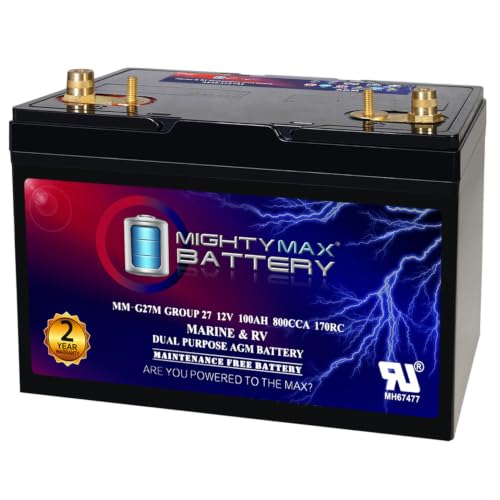
Marine-Grade Confidence: Harness the endurance and dependable energy you need to power every journey on the water, on the road, off the grid, or wherever adventure takes you.
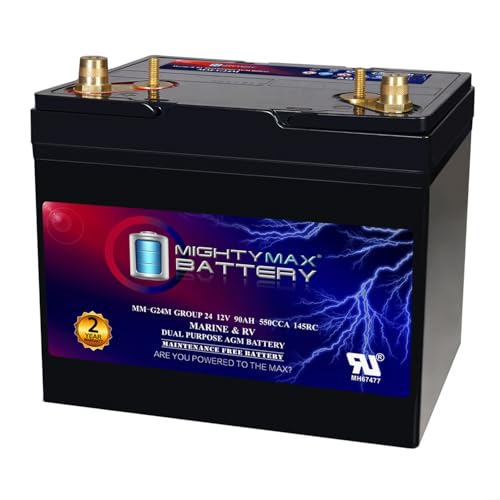
Marine-Grade Confidence: Harness the endurance and dependable energy you need to power every journey on the water, on the road, off the grid, or wherever adventure takes you.
What Battery Size, Weight, and Smart Features Fit Your Boat?
Choosing the right marine battery involves matching its size and weight to your boat’s compartment and handling preferences, while also considering your electrical needs. For smaller boats, a Group 24 battery typically fits well because of its compact size. If you use trolling motors or require higher power output, a Group 31 provides extra capacity, though it’s also heavier—about 60 to 75 pounds for lead-acid varieties. Lithium batteries of the same capacity weigh significantly less, around 34 to 40 pounds, making handling and installation easier and improving overall boat balance. To protect your electrical system, you should also understand how a thermal circuit breaker works to prevent overloads and short circuits. Using a smart charger ensures your battery receives the correct voltage for its chemistry and prevents damage during charging. For on-the-water convenience, you can use a portable power source to recharge your trolling motor battery without returning to shore.
Battery chemistry directly affects weight and performance balance. Lithium options tend to be lighter, more durable, and may include smart features, such as Bluetooth connectivity, to monitor charge levels remotely. These monitoring features are especially valuable on longer trips, helping you avoid unexpected power loss. Pair your chosen battery with appropriate charging methods to prevent damage—smart chargers that adapt to your battery chemistry are ideal. Ultimately, you should select a size that fits physically, meets your runtime needs, and benefits from modern monitoring features for sustained performance.

FITS GROUP 24 BATTERIES: Securely holds standard marine and RV batteries up to 10.125 inches tall; interior measures 10.6 x 7 x 10.125 inches for a stable and precise fit
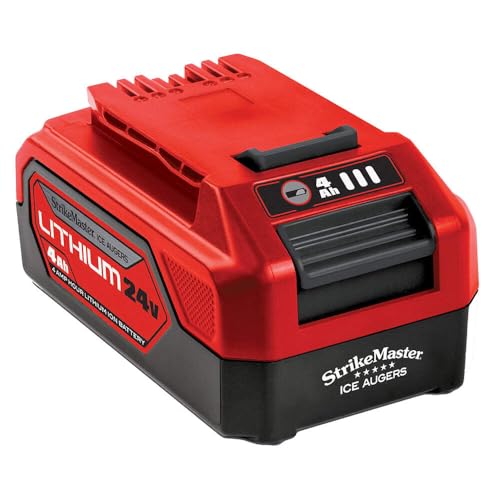
Lithium 24v Battery
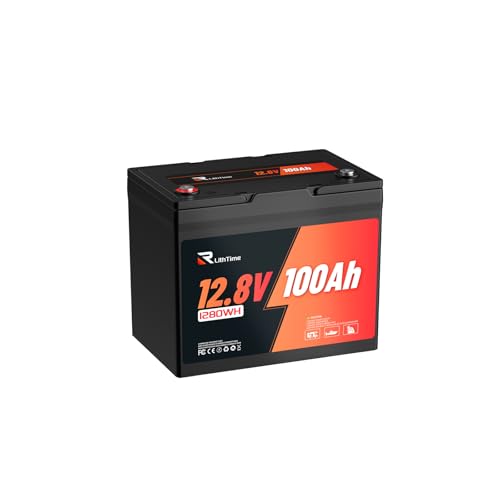
🔸【35% Smaller in Mini (Group 24)Size】RVLithTime 12V 100Ah MINI (Group 24)LiFePO4 battery measures in 10.2x6.65x8.39 inches, which is 35% smaller compared to 12V 100Ah group 24 battery, 80% lighter compared to 12V 100Ah group 31 lead acid battery. Ultra-compact construction for the RVLithTime 100ah lifepo4 battery mini(Group 24) makes it easier to replace your original SLA battery, with no worry about hard taking and maintenance.