
Figuring out which battery monitor suits you best can feel tricky, especially with options like fixed panels and Bluetooth models.
A fixed panel offers instant, always-on updates, making quick checks simple.
A Bluetooth monitor lets you remotely view your battery status and history from your phone, giving you more control.
Keep reading to see how these options compare and find the best fit for your needs.
Bluetooth vs Panel: What’s the Real Difference?
Both Bluetooth and panel battery monitors measure the same core metrics—voltage, current, and state of charge—but the key difference lies in how you read and interact with that data. A panel monitor features a fixed screen mounted in your cockpit or dashboard, allowing you to glance at live stats instantly without reaching for a phone. It provides a straightforward, always-on display that makes monitoring quick and simple during operation. On the other hand, a Bluetooth monitor transmits the same data to a mobile app, shifting the display to your phone or tablet. This setup offers greater flexibility in how you view and manage your battery information. For example, when installing a Bluetooth monitor, you must ensure the battery box is properly ventilated, as inadequate ventilation can lead to dangerous gas buildup and reduced battery performance, just as it would for any marine battery installation. Choosing corrosion-resistant terminals ensures reliable electrical contact and longevity in harsh marine environments. Additionally, when wiring either monitor, correct routing of cables away from sharp edges and heat sources is critical to prevent shorts and ensure system safety.
When it comes to battery calibration, a panel system requires you to adjust settings directly on the gauge itself, which can mean navigating physical menus or buttons. Bluetooth systems, however, enable you to fine-tune and calibrate through the app’s interface, often with easier controls and additional options. Display customization also differs: panel monitors typically have a fixed layout that you cannot change, while Bluetooth apps allow you to rearrange widgets or hide less relevant metrics, letting you customize your view for clarity. Overall, you trade immediate, constant visibility with the convenience and flexibility of remote control and customization through your mobile device.
4 Reasons for a Bluetooth Monitor (Remote Access)
Data logging is a key advantage of Bluetooth monitors. They store historical data such as voltage and temperature, which you can later download to your app. This allows you to analyze trends over time without needing to keep a device constantly connected. Managing multiple batteries becomes straightforward—you can scan, rename, and switch between units with just your phone. Bluetooth range generally caps at around 33 feet, but within that distance, it provides a flexible and convenient way to monitor your RV or marine system compared to fixed panels. For example, deep cycle batteries typically last between 3 to 10 years depending on usage and maintenance, which directly impacts your monitoring needs. For a 24V trolling motor, understanding battery bank size is critical to ensure sufficient runtime and performance. For example, choosing the right marine battery charger for your boat requires understanding amp-hour capacity and battery bank size.

🔋High Value Battery Tester: BM200 is your go-to solution for 12V lead-acid and lithium battery. Equipped with advanced features like voltage & cranking & charging system test, abnormal alarm and real-time trip records.This battery monitor ensures your car battery is always in optimal condition. Whether it's for your car, motorcycle, truck, RV or boat, this 12V battery tester has got you covered. Get it, and forget winter breakdown worries.

DETAILED IN-APP INSIGHTS: Battery monitor data is conveniently presented in the VictronConnect app on your smartphone. Instant readout enables you to see all important data at a glance, at any moment, without having to wait on Bluetooth pairing. Alarm notifications will inform you of any urgent matters.
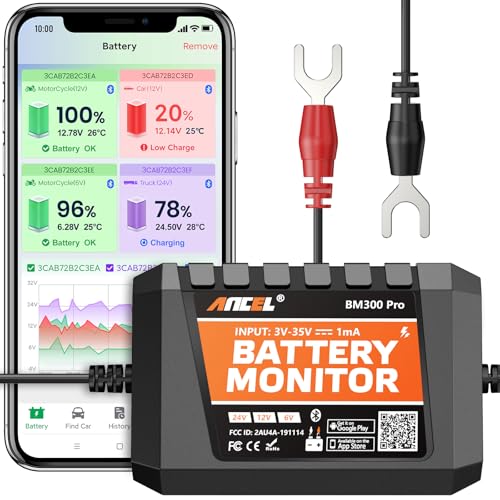
6V, 12V & 24V MONITORING - View voltage, estimated state of charge and temperature through the ANCEL BM300 Pro app. On supported 12V and 24V vehicle systems, review cranking and charging voltage tests. For 6V systems, use voltage, SOC and temperature monitoring; cranking and charging tests are not supported.
3 Setups Where a Panel Battery Monitor Beats Wireless
A panel battery monitor can outperform a wireless one in three key scenarios. First, in fixed dash or helm installations, the monitor provides an always-visible readout without relying on mobile devices. You can simply glance at the panel for instant information, avoiding the need to open apps or wake up phones. Unlike a multimeter that requires manual connection, a panel monitor offers a continuous reading. This is especially valuable when your portable solar panel kit also powers critical electronics onboard. Second, in environments with strong radio frequency interference—such as near motors, inverters, or radio gear—a wired monitor is more reliable because it avoids signal interruptions or packet loss common with wireless setups. Third, for no-phone, low-tech situations, a wired panel monitor allows multiple users to check battery status instantly without needing apps or device compatibility. It offers more consistent, immediate access in these situations. Additionally, many panel monitors are designed for specific battery types found in marine environments, ensuring accurate readings without compatibility issues. For those prioritizing longer lifespan over wireless convenience, a wired monitor is often the more durable choice.

【Meet Different Needs】 The 12V round voltmeter comes with a panel and a nylon nut, which can be mounted separately on the 29mm diameter mounting hole or fixed on the matching panel, so that it could meet your different mounting needs.

Precision Monitoring: The voltmeter is designed to monitor the vehicle voltage, which is easy to grasp the battery condition between fully charged and discharged in time. With this meter, you can better protect the vehicle's battery, extending its service time and improving driving safety

PANEL & HOLE: This 12v round digital voltmeter gauge comes with a panel, two connecting wires with 10A fuse, two insulated terminals and two screws. It can be either installed separately in the mounting hole with a diameter of 29mm or fixed on the matching panel, meet your different mounting needs.
How to Choose Based on Your Setup (RV, Boat, Cabin)
For your cabin setup, Bluetooth monitoring allows you to check your battery status remotely before you arrive. This feature is especially useful if you’re frequently away, as it helps you plan ahead and ensure everything is ready. To ensure the circuit breaker protecting your battery monitor is functioning correctly, you should perform a load test using a multimeter. Panel monitors installed near your inverter are ideal for centralized off-grid systems, providing continuous tracking of charge and discharge behavior. They give you real-time data on your entire system, making it easier to manage and troubleshoot. When choosing between these options, consider how often you’re on-site and how detailed your monitoring needs to be. For example, if you use deep cycle batteries, Bluetooth monitoring can help you verify their charge level before traveling to your cabin. Following proper wiring safety tips during installation ensures your monitor functions reliably without risking damage to your system.

More Accurate,No Data Lost:Upgraded shunt battery monitor equipped with high precision current detector which provides more accurate real-time voltage and current measurement. Moreover, LNEX battery monitor can automatically store the latest testing data when its system shuts down for protecting no data becomes lost when a power failure occurs.
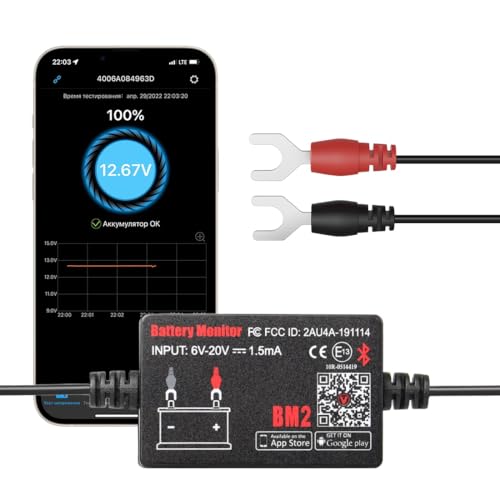
It compatible with all 12-volt vehicle Lead acid batteries;Voltage: 9-16V With Bluetooth 4.0; Supports Solar Power Systems/RVs/Motorcycles/Boats/Cars/Trucks with All 12 Volts.
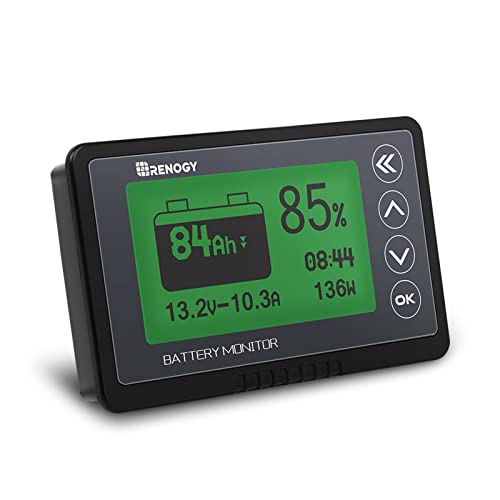
1% Accuracy Measurement: Shunt-type battery monitor design provides much more accurate real-time voltage and current draw measurement.
Total Cost: Bluetooth Vs Panel Monitors Over 5 Years
While Bluetooth monitors often have a lower initial price, their total cost over five years can become higher due to recurring expenses like battery replacements or charging time. Many Bluetooth monitors rely on batteries with short lifespans, which means you’ll need to replace them regularly. This ongoing cost can quickly offset any upfront savings. Additionally, frequent charging or replacement leads to inconvenience and potential device downtime. Understanding how it works and why it matters on a boat can clarify why panel monitors are often a more robust choice for reliable power management. For a more permanent installation, using cable ties with screw holes can help secure the panel monitor wiring and prevent it from coming loose. A panel monitor is often the better choice for deep cycle systems because it provides consistent voltage readings without the need for battery replacement.
Panel monitors, however, draw power directly from your system, eliminating the need for battery replacements. They tend to have longer-lasting components and more stable power, which can save you money over time. Warranty coverage also plays a role; a Bluetooth monitor with a limited warranty may end up costing more if it fails and requires replacing. In contrast, many panel monitors come with extended warranties, reducing future expenses.
Over a five-year span, choosing the least expensive monitor based only on the initial purchase price might not be the most economical choice. When factoring in recurring costs like batteries and potential repairs, a panel monitor often proves more cost-effective in the long run, especially if you would otherwise need to replace Bluetooth batteries annually.

LED Digital Display:Precise blue LED digital display for real-time monitoring of battery voltage status. It is also possible to switch between the voltage and the battery percentage, and it can also be turned off to reduce the battery consumption of storage.

DC 24V to DC 12V: Input Voltage: 24V nominal, Input voltage range: DC 20V-30V; Output voltage: DC 12V(non-adjustable); Output current: 20A; Output power 240W
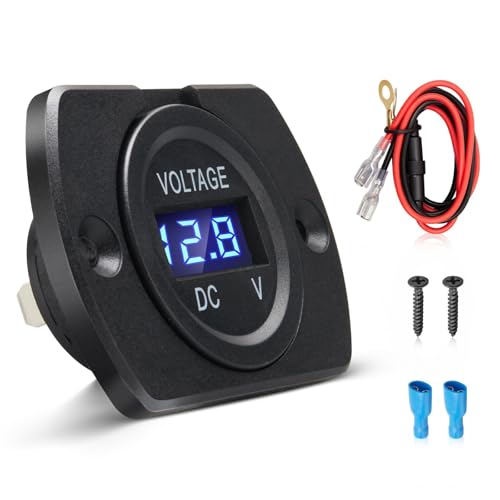
Accurate DC Battery Monitor: This Real-Time LED digital voltmeter gives you a precise, constant readout (6V-30V) of your battery’s voltage, letting you spot issues before a dead battery leaves you stranded
Can You Use Both? Bluetooth and Panel Monitors Together
Yes, you can use Bluetooth and panel monitors together seamlessly. Both displays can be connected to a single shunt, which supplies the same data to each, eliminating the need for additional hardware. This setup allows you to view local readings directly on the panel without opening an app, while still benefiting from remote access and phone-based configuration via Bluetooth. For example, the Renogy Bluetooth Battery Monitor offers a more reliable Bluetooth connection compared to previous models, enhancing this combined setup. When selecting a shunt, it is important to consider the battery cold cranking amps to ensure the system can handle high-draw starting loads. Using a marine battery box adds an extra layer of safety by protecting the battery from moisture and physical damage in harsh environments. A buyer’s guide often recommends comparing the top options to find the best fit for your specific setup.
Wireless interference is rarely a concern because Bluetooth operates on a separate frequency band from most RV electronics. Power consumption also remains low since the shunt handles most of the energy-intensive measurements, and Bluetooth modules use minimal power.
Ensure the shunt is wired correctly: all loads and chargers should connect after the shunt, not before. The panel and Bluetooth app simply display the same data from the shunt. If you notice mismatched readings, it usually indicates an incorrect setup rather than a hardware problem. Proper calibration is more important than the display method itself.
Quick Decision Guide: Which Battery Monitor Matches Your Needs?
A panel meter is suitable if you only need a quick voltage snapshot and want to keep costs low. These meters are simple and straightforward, perfect for backup checks but not meant for detailed or accurate lithium battery monitoring. Because lithium batteries have a flat discharge curve, a basic panel meter can be fooled into showing false voltage levels, leading to inaccurate assessments of remaining capacity. For those seeking more accurate capacity tracking, a top DC to DC charger with integrated monitoring can provide better performance and value, while a Bluetooth monitor offers features comparable to a master switch for battery that allows for remote system disconnection. If your setup requires minimal data and occasional readings, a panel meter offers a quick, affordable solution without the complexity of advanced monitoring systems.

PARAMETER --- measuring voltage DC 4.5V-100V; current 0-50A.

【Excellent Material】: Car voltmeter is made of high-quality and durable ABS plastic material. ABS plastic is tough and sturdy, resistant to wear and tear, not easy to burn, with high safety coefficient, supporting a long time application. It is also water proof, so that it can withstand harsh weather conditions like rainy days.

What you get: you will receive 1 pieces of double voltmeters, which remind you of charge or replacement in time, effectively avoid emergent dead battery at starting car engine