
Figuring out which marine battery is best for your boat can feel overwhelming. Whether you need reliable starting power or long-lasting deep-cycle energy, there are key differences that matter.
Knowing which type suits your boat size and budget helps you get the right battery and keep your vessel running smoothly. Keep reading to see how each option stacks up.
Why Most Boat Owners Buy Two Marine Battery Types (Starting + House)
Most boat owners opt for two marine battery types: a starting battery and a house battery. The starting battery is designed for short, powerful bursts to crank the engine, while the house battery provides sustained power for onboard accessories like lights, pumps, and electronics. Keeping these two batteries separate protects your engine’s ability to start by preventing household loads from draining the starting battery overnight. Auto charging systems, such as automatic charging relays, help manage this split by isolating the starting battery during engine cranking but charging both batteries when the engine runs. This setup simplifies maintenance since you can top up each battery bank independently, avoiding over-discharge of the critical starting battery. It also reduces voltage sag, which safeguards sensitive electronics on the boat. For emergencies, a switch system allows you to combine both banks, offering backup power when needed without compromising your primary starting power. When comparing battery options, AGM batteries typically offer a longer lifespan and better resistance to vibration than traditional lead acid types, making them a popular upgrade. Choosing high-quality battery terminals ensures reliable connections and reduces resistance for both the starting and house battery banks.
Flooded Marine Lead-Acid: The Budget Workhorse That Needs Maintenance
Flooded marine lead-acid batteries typically last between two and four years, depending on usage and maintenance. They are the most budget-friendly option and are suitable for smaller boats and basic setups. To maximize their lifespan, you need to perform regular maintenance. Check electrolyte levels frequently and top off with distilled water to prevent dry cells. Clean terminal corrosion using a baking soda solution to keep connections solid and safe. Charging should be done in a well-ventilated area because these batteries produce explosive gases during charging. Keep sparks away from the battery and store it fully charged to reduce sulfation and prolong its service life. For boats adding solar charging, using a compatible solar charge controller ensures the battery is charged safely without overvoltage damage. Integrating a master switch for battery disconnection can prevent accidental drain and improve safety when the boat is not in use. Though heavier and less convenient than newer battery types, flooded lead-acid batteries provide reliable performance if you’re willing to invest time in upkeep. For maintenance tasks like removing stubborn cable ties, using proper flush cutters makes the job cleaner and safer.

US Battery XC2 Flooded Deep Cycle Battery (2 Pack) – Includes (2) U.S. Battery US31DC XC2 flooded lead acid deep cycle batteries engineered for dependable cycling service and deep cycle applications.

AGM Marine Batteries: Best Balance of Performance and Convenience
AGM marine batteries provide a solid balance of performance and convenience. They seal the electrolyte within fiberglass mats between their plates, eliminating the need to add water during normal use. This makes them spill-resistant, even if cracked, and suitable for dual roles such as starting engines and powering household loads. They charge efficiently with less heat generated and maintain voltage stability, which smart chargers can easily manage. With a low self-discharge rate of around 3% per month, they are well-suited for seasonal use. Additionally, they resist vibrations, making them reliable in rough waters. Just ensure your charger matches their recommended charging profiles of 14.4 to 14.8 volts during bulk charging and 13.2 to 13.8 volts during float. When recycling is necessary, AGM batteries are recyclable like other lead-acid types, helping to reduce environmental impact. While they come with a higher upfront cost, their reliability and maintenance-free operation make them a convenient choice. For users who frequently handle wiring, a high-quality top wire stripper can simplify connections and improve safety. When evaluating their performance over time, using a reliable battery tester helps confirm that each unit maintains its rated capacity and voltage under load, ensuring your investment continues to deliver consistent power throughout the season. Before a trip, you should always check the battery terminals and connections to prevent starting issues when out on the water.

DUAL PURPOSE MARINE RV BATTERY: Interstate's marine dual-purpose AGM battery can serve as both your cranking battery to start the motor & power your trolling motor - whether the motor is on or off! Built "Interstate tough" to withstand the most rugged conditions so you can spend more time having fun & less time worrying about your battery

MAINTENANCE FREE: 12.99x 6.73x 8.43 inches. Weize 12v 100Ah sealed lead acid battery is manufactured with absorbent glass mat(AGM), which can help to save you from acid leakage and frequent maintenance. Terminal: Left : Positive (+)-Red, Right: Negative (-)-Black. Terminal: Left : Positive (+)-Red, Right: Negative (-)-Black.

【Exceptionally Safe Chemistry & Minimal Troubleshooting】Compared to batteries made of other chemistries, Renogy Deep Cycle AGM batteries offer exceptional safety due to their higher chemical stability. Their integrated internal structure and sealed design spare you from intricate internal troubleshooting, a feature not shared by lithium batteries.
Gel Marine Batteries: Best for Low-Heat, Deep-Cycle House Banks
Gel marine batteries are sealed VRLA lead-acid batteries that utilize a gelled electrolyte, making them spill-proof and maintenance-free. They are ideal for deep-cycle house banks rather than repeated engine starts. These batteries feature a low self-discharge rate of about 3% per month, making them suitable for seasonal storage. Their sealed design reduces gassing, making them well-suited for thermally sensitive environments. For proper installation, you should follow a step-by-step wiring guide to ensure correct routing and connections. Additionally, regular inspection for battery terminal corrosion is essential to prevent connection failures.
With proper care, gel marine batteries offer a strong longevity of 500 to 1,000 cycles. They operate effectively over a broad temperature range from -40°F to 140°F, but high heat accelerates aging. To optimize their lifespan, you should use a gel-compatible charger with a voltage profile limited to 13.8V to 14.1V, and ensure temperature compensation. Overcharging can dry out the gel, so maintaining appropriate charging practices is crucial. Because they produce less heat during charging, they are especially reliable in thermally sensitive environments where ventilation is limited.
Routine terminal cleaning and avoiding deep discharges below 50% state of charge will help maximize their service life. When well maintained, gel marine batteries can deliver between 3 and 8 years of reliable performance, making them a solid choice for deep-cycle, low-heat applications.

12V 100Ah Capacity: Provides consistent 12 volts and 100Ah of deep-cycle power, ideal as RV battery, off-grid solar, and marine deep-cell battery. Easy to integrate into existing setups.

Capacity & Voltage: Provides 12 volts and 21 amp hours of usable power, ideal for deep-cycle usage in solar systems, backup power, mobility devices, and other 12V applications.

Heavy-Duty Rechargeable Battery: The VEVOR 12V 40Ah rechargeable deep cycle battery, with dimensions of 7.8'' x 6.5'' x 6.7'', stores a substantial amount of energy, extending the runtime of most light-duty electric devices. Note: Professional charging equipment is required during use to ensure battery security.
Lithium Marine (LiFePO4): Premium for Weight Savings and Long Life
LiFePO4 batteries may cost more upfront but offer significant advantages in weight reduction and longevity. They can be 50% to 70% lighter than similarly rated lead-acid batteries, easing installation and enhancing boat trim. With a cycle life of 2,000 to 5,000 charges, they last much longer than lead-acid options, which typically provide 300 to 700 cycles. Their lithium-iron-phosphate chemistry reduces thermal runaway risk, making them safer for marine environments. The built-in battery management system (BMS) protects against overcharge and overdischarge, further ensuring safety and durability. When charging LiFePO4 batteries, you need a lithium-specific charger set to about 14.4V to 14.6V. Avoid charging below freezing unless the battery has low-temperature protection. This model delivers steady voltage output throughout the discharge cycle, unlike lead-acid batteries which experience a gradual voltage drop. Proper recycling at the end of their lifespan guarantees environmental compliance and responsible disposal of these premium batteries. For recharging during trips, these batteries pair well with a portable solar panel that includes a compatible plug socket. Before resetting any marine circuit breaker after a fault, always identify the cause—such as a tripped BMS or overload—to avoid repeating the same problem.

[Superior Performance]: Discover superior performance with our upgraded 12V 20Ah LiFePO4 battery. This rechargeable lithium battery offers impressive energy density, long cycle life, and advanced safety features. Equipped with a built-in 20A BMS protection system, it guards against overcharging, over-discharging, over-current, and short circuits. Additionally, its low self-discharge rate ensures trouble-free storage for up to one year
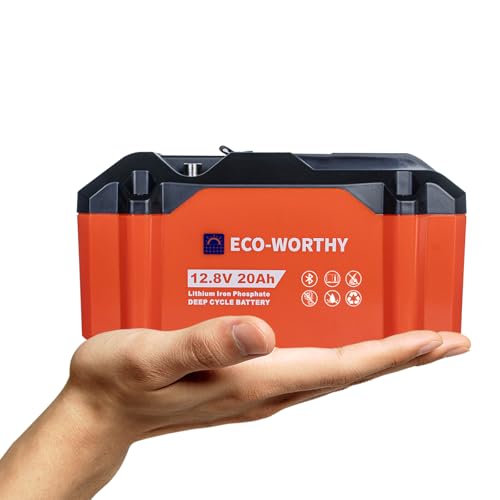
[Compact and Portable]The ECO-WORTHY 20Ah Marine Battery, measuring 8.70 x 4.45 x 4.61 inches, is perfect for small kayaks, traps and amateur radio equipment. Its ergonomic grip design ensures easy handling and portability, providing a reliable power option for amateur radio enthusiasts and campers

[Superior Performance]: Discover exceptional performance with our 12V 10Ah LiFePO4 battery. Designed for power wheels and similar applications, it offers high energy density, a long cycle life, and superior safety features. The built-in BMS (Battery Management System) protects against overcharging, over-discharging, over-current, and short circuits. Additionally, the battery's low self-discharge rate allows for hassle-free storage of up to one year. (Note: This battery is not intended for vehicle starting purpose)
Compare Marine Battery Types: Match Power, Budget, and Boat Size
Choosing the right marine battery depends on your boat size, power needs, and budget. For small day boats under 15 feet, a single dual-purpose battery can handle both engine starting and light accessories, saving space and reducing complexity. Boats in the 15 to 25-foot range typically benefit from a dedicated starting battery for engine ignition and a separate deep-cycle battery for electronics and accessories, providing reliable power without draining the starting battery. Larger boats with significant house loads or multiple electronics require dedicated deep-cycle batteries arranged in banks to ensure consistent, long-lasting power. When managing these battery banks, selecting the best solar charge controller ensures proper charging and protects battery lifespan. For those with a dual battery setup, using a dual battery isolator prevents the house bank from draining the starting battery while the engine is off. For many boaters, a Group 31 battery offers a balance of high capacity and robust starting power, making it a versatile choice for larger vessels.
Budget considerations influence your choice as well. Flooded lead-acid batteries are the most affordable upfront and suitable for those with minimal maintenance willingness. AGM batteries cost about 40 to 50 percent more but offer increased vibration resistance and faster recharge times, making them a better long-term investment. Gel deep-cycle batteries are tailored for deep discharge cycles but can be sensitive to overcharging, so they demand careful maintenance. Your decision should balance cost, maintenance needs, and intended use: for starting power, go with a starting battery; for sustained power delivery, opt for a deep-cycle model suited for your boat’s size and workload.
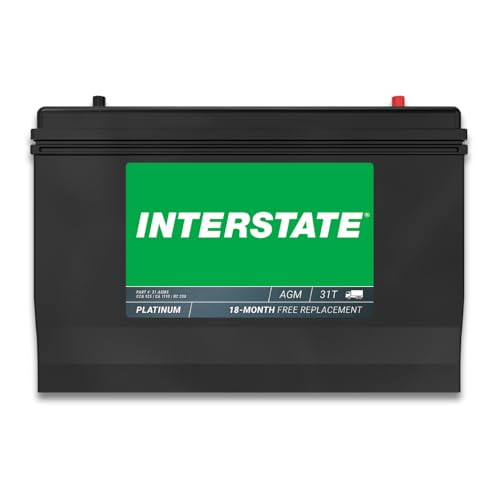
EXTREME DEEP-CYCLE POWER: This 2-in-1 pure lead AGM battery delivers high-cranking, extreme deep cycle power. It's designed to provide reliable force over an extended period to power your boat's motor & all of its accessories (appliances, trolling motor, audio systems, depth finders, fish locators, windlass). Not all marine batteries are the same - but this one exceeds the rest. Built with thick plates to allow the battery to continuously discharge power so you can recharge it many times over without decreasing its lifespan

DUAL PURPOSE MARINE RV BATTERY: Interstate's marine dual-purpose AGM battery can serve as both your cranking battery to start the motor & power your trolling motor - whether the motor is on or off! Built "Interstate tough" to withstand the most rugged conditions so you can spend more time having fun & less time worrying about your battery
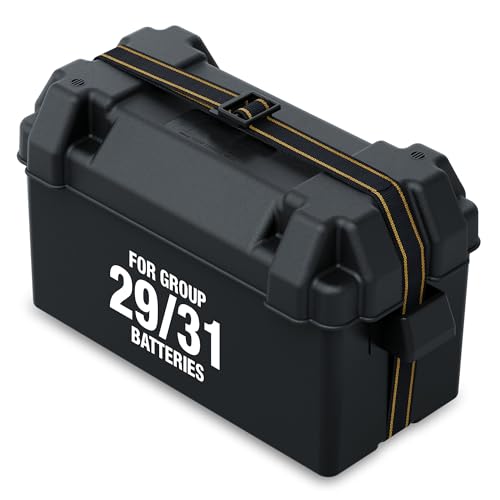
Designed for Group 29 and 31 Series Batteries: Securely holds larger marine and RV batteries with a maximum height of 9-3/4 inches. Inside dimensions: 15-7/16" L × 6-15/16" W × 9-3/4" H, outside dimensions: 18-7/8" L × 9-1/4" W × 10-1/4" H.