
wondering whether a Group 24 or Group 27 battery is right for your vehicle or boat? The key difference lies in size and capacity—most notably, a Group 27 is about 1.8 inches longer and offers 15 to 25 more amp-hours.
This means a Group 27 promises longer runtime. Before you buy, you’ll want to check your tray space and hold-down hardware to ensure a proper fit.
More details follow to help you choose the best option.
Group 24 Vs Group 27: Which Battery Fits Your Tray First?
The tray size determines which battery fits first. Check the internal length of your tray—Group 24 batteries are shorter and fit most universal trays without issue. Group 27 batteries are longer and generally won’t seat properly in a Group 24-only tray. However, a tray designed for a Group 27 battery usually accepts both sizes, but you must verify hold-down clearance to ensure proper fit. Using an incorrect size can cause vibration and internal damage, shortening battery life. It can also lead to charging problems, as a loose battery may not maintain stable contact, impairing optimal charging. Always measure the tray carefully before choosing your battery group to ensure a secure fit. The right fit is essential for performance, longevity, and reliable operation. A poor fit creates vibration similar to what occurs with an improperly selected 50 to 30 amp adapter, which can lead to connection and performance issues. For heat-shrink applications securing battery terminals, a mini heat gun provides precise airflow to avoid damaging nearby components. Selecting a battery with quality terminal posts ensures a stable electrical connection that resists corrosion and minimizes voltage drop, complementing the secure fit provided by the correct tray size.

Extreme-duty battery tray for Automotive, Marine, RV batteries

Perfect Fit for Group 24 Battery Tray: Engineered specifically for Group 24 battery dimensions, Accommodates 24 series batteries up to 7" x 11", this tray ensures a snug and secure fit, preventing slippage or movement during transport or over rough terrain. It's the ideal battery holder for your exact needs.

Heavy-Duty Construction – Made from rugged, non-corrosive black plastic for long-lasting performance in marine environments.
Group 24 Vs Group 27 Dimensions: Side-By-Side Size Comparison
The main difference in dimensions between Group 24 and Group 27 batteries is their length. Both have the same width of 6.8125 inches (173 mm) and height of 8.875 inches (225 mm), but Group 27 is approximately 1.81 inches (46 mm) longer, measuring 306 mm compared to 260 mm for Group 24. This extra length provides more internal space for plates and electrolyte, which can contribute to a longer lifespan. However, the actual time needed to recharge a Group 27 depends on factors like the charger’s output and the battery’s state of charge. When comparing overall value, Group 27 batteries typically require a higher upfront cost than Group 24 due to their larger build and enhanced capacity. For recharging these batteries with solar power, selecting a reliable solar panel is crucial for efficiency.
While manufacturing tolerances can cause slight variations in dimensions across different brands, the BCI standard ensures consistency. When measuring your battery tray, focus on the length: you only need the additional 1.81 inches to accommodate a Group 27, without worrying about width or height. This extra length allows for the thicker plates that help withstand deeper discharge cycles, extending the overall durability of the battery.
Why the 1.8-Inch Length Difference Decides Fitment
The 1.8-inch length difference is the key factor that determines whether a Group 27 battery will fit your boat or vehicle. Before swapping sizes, you should measure your tray from end to end. Group 24 trays are typically about 10.25 inches long, while Group 27 trays measure approximately 12.06 inches. You cannot fit a longer Group 27 into a shorter Group 24 compartment without extra space. Even if the width and height appear compatible, that extended length can prevent proper fitment. Your hold-down hardware also plays a role; shorter straps or bars might not secure a longer case. Additionally, check terminal clearance— a longer battery could press against nearby walls or components, causing cable routing issues. The voltage remains unaffected by size, but physical fitment depends on accurate measurements of your tray. For lithium-iron chemistry, you may also need a compatible charge controller to manage charging safely. Measure carefully from end to end before upgrading your battery. For proper installation, ensure you follow a battery switch wiring guide to avoid incorrect connections. A top wire stripper can help you prepare cables cleanly for a secure connection.
Group 24 Vs Group 27 Capacity: How Much More Power?
Once you’ve confirmed the physical fit of a Group 27 battery, you’ll notice it provides roughly 15 to 25 amp-hours more capacity than a Group 24, equating to about 20 to 35 percent extra power. This increase directly extends runtime under the same load, making the Group 27 a better option if you need longer operation time for heavy accessories or multiple devices. To ensure your battery remains secure during use, consider pairing it with a best battery tray that matches your chosen group size. However, this larger capacity also impacts battery lifespan. Deeper discharges can reduce cycle life, so you should match your usage to the higher amp-hour rating. Ensure your charging system—whether a charger or alternator—is compatible with the larger capacity to prevent undercharging. When your system supports it, you’ll experience noticeably more usable power before voltage drops, making the Group 27 ideal for increased runtime needs. The mounting hardware used for these batteries should also be rated to handle the weight difference, as proper mounting prevents movement during travel. For lighter or less demanding applications, sticking with a Group 24 keeps things compact and sufficient. For managing the electrical load safely, integrating a master switch helps isolate the battery during maintenance or storage.

SPACE SAVING DESIGN - marine battery tray is designed using the smallest possible dimensions to help with tight space issues

USCG AND ABYC COMPLIANCE: Ensures safe and reliable marine battery installation

Install with number 10 screwsMeets ABYC standard E-10 and U.S. coast guard requirements
Reserve Capacity Explained: What It Means for Runtime
Reserve capacity (RC) indicates how long your battery can sustain a steady load after being fully charged. Measured in minutes, RC shows how long a 12V battery providing 25 amps can operate before its voltage drops to 10.5 volts. For example, a reserve capacity of 150 minutes means you get about 2.5 hours of runtime at that load.
This metric is especially important when your charging system fails or during emergency situations. A higher RC means your battery can power essential electronics for a longer period without external charge. Keep in mind, actual runtime can vary depending on the size of your load—the larger the load, the shorter the runtime. To ensure your battery can deliver its full rated reserve capacity, you must follow safe watering tips to maintain proper electrolyte levels and prevent damage. When setting up multiple batteries, correct parallel wiring is crucial to avoid overheating and uneven discharge.
To extend your battery’s runtime, use smart charging practices: avoid overcharging, which can reduce a battery’s lifespan. Proper disposal at the end of its life is also crucial—never just throw a dead battery in the trash. RC is a useful metric to compare how long different batteries, like Group 24 or Group 27, can deliver sustained power under steady conditions. For applications requiring multiple connections, opting for top battery terminals can help maintain consistent power delivery and reduce voltage drop across the system.
When Should You Choose a Group 24 Battery?
Choosing a Group 24 battery is ideal when your battery tray and terminal layout require a compact 24-series size. This size typically offers a capacity of 70 to 85 Ah, which suits moderate electrical demands without taking up excessive space. It’s well-suited for starting, auxiliary, or mixed-use applications in cars, boats, and RVs, especially when your setup doesn’t need large runtime or high cranking amps. Understanding whether you need a deep cycle or a dual purpose battery for your boat will further clarify if a Group 24 matches your electrical loads. To verify the battery’s performance over time, using a reliable battery tester helps monitor its health and capacity. Maintenance remains simple because the standardized size ensures straightforward replacement and terminal compatibility. For optimal longevity, using a battery maintainer for AGM batteries helps preserve charge during storage. The charging requirements are compatible with common vehicle or system charging setups, so you don’t need specialized equipment. If your electrical loads are light to moderate—such as trolling motors, backup power sources, or auxiliary batteries—this size provides a space-efficient, reliable solution without overtaxing your installation system.

FITS GROUP 24 BATTERIES: Securely holds standard marine and RV batteries up to 10.125 inches tall; interior measures 10.6 x 7 x 10.125 inches for a stable and precise fit

Acid resistant polyethylene battery box provides a sound solution to storing a single group 24 battery

FITS GROUP 24 BATTERIES: Securely holds standard marine and RV batteries up to 10.125 inches tall; interior measures 10.6 x 7 x 10.125 inches for a stable and precise fit
When to Upgrade to a Group 27 Battery
Upgrading to a Group 27 battery is recommended when your current battery no longer provides sufficient runtime for your needs. This size offers roughly 85 to 110 Ah, compared to the 70 to 85 Ah of a Group 24, making it a better choice for higher electrical demands. Signs you should consider the upgrade include frequent deep discharges from trolling motors or refrigerator cycles draining the battery before the day ends. When installing a larger battery, ensure the mounting spot provides adequate ventilation and secure access, as recommended for onboard battery chargers.
Before swapping, check that your battery tray can accommodate the larger size, as the Group 27 is about 1.8 inches longer. Adequate terminal clearance and fitment are essential to avoid installation issues. Additionally, consider the battery type: AGM batteries tend to absorb vibrations better but come with increased weight, while flooded batteries usually cost less but may require more maintenance. Longer warranties from manufacturers often favor Group 27 batteries because they experience less deep-cycle strain, leading to improved longevity.
Ensure your charging system can handle the increased capacity of a Group 27 battery. Undercharging the larger capacity may not fully utilize its potential and could lead to premature failure. Upgrading at the right time prevents frequent replacements and provides a reliable power source for your growing electrical needs.
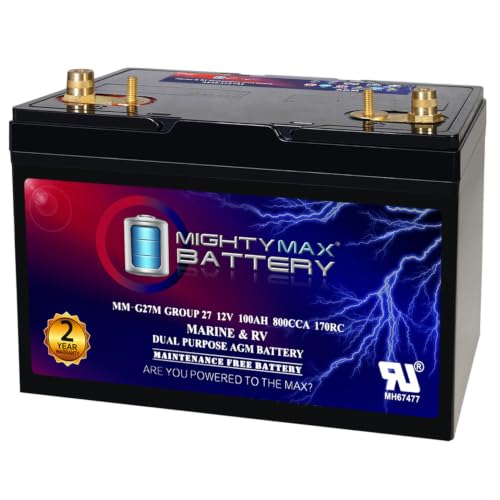
Marine-Grade Confidence: Harness the endurance and dependable energy you need to power every journey on the water, on the road, off the grid, or wherever adventure takes you.

DUAL PURPOSE MARINE RV BATTERY: Interstate's marine dual-purpose AGM battery can serve as both your cranking battery to start the motor & power your trolling motor - whether the motor is on or off! Built "Interstate tough" to withstand the most rugged conditions so you can spend more time having fun & less time worrying about your battery

[High Performance]: Powered by advanced AGM technology, the WEIZE BCI Group 27M has a low internal resistance and high output power, offering a reliable power supply and a long battery life, 2x more cycle life than traditional flooded marine batteries. [DUAL PURPOSE ]: The WEIZE BCI Group 27M is a dual purpose deep cycle sealed AGM marine and RV battery. It features an outstanding starting power and deep cycling capability for long-lasting power supply.Terminal: Left : Positive (+)-Red, Right: Negative (-)-Black.
Group 24 Vs Group 27 Applications: Marine, RV & Beyond
Group 24 batteries are typically 70 to 75 amp-hours in capacity, making them suitable for smaller boats, compact RVs, and basic solar setups where space is limited. Their smaller size allows for easier installation in tight quarters and provides enough power for low to moderate demands such as lights, pumps, and electronics. Marine applications often use Group 24 as a starting battery for smaller outboards or as an electronics battery due to their compact footprint. For those needing higher performance in a similar form factor, understanding Group 31 battery specifications can reveal even greater capacity and reserves for larger loads.
In comparison, Group 27 batteries generally offer around 80 to 110 amp-hours. They provide higher cranking reserves and longer runtime, making them more appropriate for mid-size outboards up to 250 horsepower or extended trolling motor use. For house banks and heavier usage, Group 27 batteries deliver more power and endurance, though they require more careful attention to charging and maintenance. Overall, choosing between the two depends on your space constraints, power needs, and how much effort you’re willing to invest in battery upkeep.
How to Measure Your Battery Box Before Buying
To ensure your battery fits properly, measure the interior dimensions of the battery box, not the outer shell. Focus on the inside length, width, and height, as these determine if your battery will sit securely. For example, Group 24 boxes typically have about 10.25 inches of interior length, while Group 27 boxes require roughly 12 inches. Don’t overlook the height; even if the length and width are compatible, a lid that won’t close means the battery won’t fit.
Always compare your battery’s case size to the box opening. A Group 27 battery generally needs about 1.8 inches more in length than a Group 24. Make sure there’s enough room for hold-down hardware and cable routing without forcing or stressing the case. A tight fit can cause damage and make future replacements more difficult.
Finally, check the outside dimensions of the box against your compartment. Account for mounting tray edges, tabs, and venting requirements if you have a vented box. Sizes can vary between manufacturers, so double-check measurements to avoid surprises. Properly fitting your battery box makes maintenance easier and helps keep voltage stable during operation.

Includes lift-off lid, durable woven hold-down strap, foot clamps and stainless steel screws
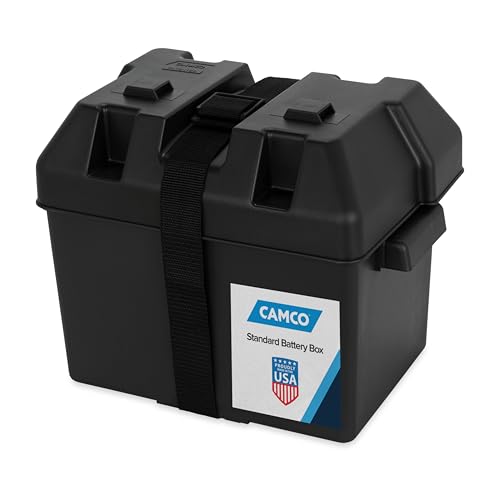
Includes lift-off lid, durable woven hold-down strap, foot clamps and stainless steel screws

FITS GROUP 27 BATTERIES: Securely holds larger marine and RV batteries up to 10.5 inches high; interior measures 13.06 x 6.9 x 10.5 inches for a precise, reliable fit