
Not all deep cycle batteries are AGM, and understanding the difference can help you make the right choice. A deep cycle battery is designed for repeated discharging and recharging.
While AGM refers to a specific construction that makes the battery spill-proof and fast-charging.
There are also flooded, gel, and lithium options. Keep reading to see which type suits your needs best.
The Short Answer: Not All Deep Cycle Batteries Are AGM
Not all deep cycle batteries are AGM. AGM refers to a construction method, specifically Absorbed Glass Mat technology, where the electrolyte is absorbed into a fiberglass mat. Meanwhile, deep cycle describes a battery’s ability to be regularly discharged and recharged without damage, covering various types such as flooded lead-acid, gel, lithium, and AGM. For example, when selecting best battery terminals for quality and performance, matching the terminal type to the battery’s specific construction and application is essential. When comparing group 24 vs. 34 options, physical dimensions and terminal placement often dictate which battery fits your boat’s tray.
Your battery’s lifespan depends more on your charging methods than on its type. Overcharging a flooded lead-acid battery can shorten its life differently than overcharging an AGM. Many batteries marketed as deep cycle are available in AGM, gel, flooding, and lithium variants, each suited to different applications. For top performance, a wire stripper with quality and performance features is essential for any electrical work involving battery terminals or connections.
Always check the label: if it says “AGM” or “Lithium,” it refers to construction and materials. If it states “Deep Cycle,” it indicates the battery’s intended use and cycle life. Don’t confuse the two features, as they serve different purposes in choosing the right battery for your needs.
How AGM Construction Changes Deep Cycle Battery Performance
AGM construction significantly improves deep cycle battery performance by immobilizing the electrolyte within a fiberglass mat. This design lowers internal resistance, allowing you to charge the battery up to five times faster and draw higher currents. It also makes the battery non-spillable and resistant to vibration, making it well-suited for marine and RV applications where movement is constant. Because the electrolyte is held in place, you won’t need to add water or worry about acid stratification over time. While AGM batteries support deeper discharges better than traditional flooded ones, their cycle life still depends on how deeply you discharge them—around 300 cycles at 80 percent depth of discharge compared to about 200 at full discharge. For example, a trolling motor drawing 25 amps from a 100 amp-hour battery will run for roughly four hours before reaching that 80 percent depth of discharge. For reliable connections in these applications, ensure you use a crimping tool designed for spade connectors to maintain strong electrical contact. Choosing the correct master switch is also essential for isolating the battery during maintenance or emergencies.
When Should You Buy a Deep Cycle AGM Battery?
You should buy a deep cycle AGM battery when your application requires frequent cycling or reliable standby power. Ideal for off-grid solar systems, RV house banks, or marine trolling motors, AGM batteries handle repeated discharges better than traditional flooded types. They are especially useful when battery maintenance is difficult, as their sealed design requires no watering and produces minimal gassing, making them suitable for tight compartments. If vibration or movement is a concern, such as on boats or in portable equipment, AGM’s glass mat construction offers superior shock resistance compared to flooded batteries. They also provide dependable backup power for critical systems like UPS units or emergency lighting, where stability is essential.
Consider choosing AGM if the higher upfront cost aligns with the longer lifecycle and low maintenance advantages. Keep in mind that end-of-life disposal requires proper recycling procedures due to the lead and acid content. Overall, AGM batteries deliver reliable, maintenance-light power suited for demanding cyclic use and situations where durability and safety are priorities.
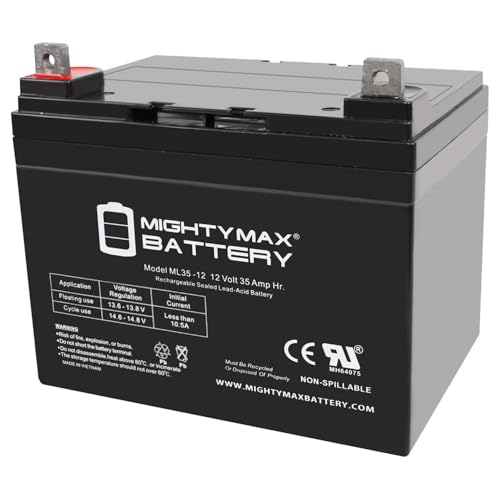
ML35-12 SLA is a 12V 35AH Sealed Lead Acid (SLA) rechargeable maintenance free battery - UL Certified

Maintenance Free: Manufactured with thick absorbent Glass Mat (AGM) seperators and advanced valve regulated technology, Renogy deep cycle agm batteries save you from acid leakage and frequent maintenance..Batteries Required:no

Renogy AGM Batteries: Trusted Worldwide, Exceptional Safety, Extreme Performance! Support series (No limitation), parallel (Up to 4P) connections
AGM vs. Flooded vs. Gel: Lead-Acid Deep Cycle Options Compared
Flooded lead-acid batteries are the least expensive option upfront. However, they require regular water top-ups and vent fumes, making maintenance necessary. These batteries are compatible with standard chargers, which simplifies charging routines. They tend to have a shorter lifespan if not properly maintained, especially if water levels are neglected. Marine battery types often include flooded models for budget-conscious boat owners. For portable solar setups, pairing a flooded battery with a 400 watt portable solar panel can provide a cost-effective off-grid power solution. For shoelace repairs, heat shrink tubing provides a durable and waterproof alternative to tying knots.
AGM (Absorbent Glass Mat) batteries charge quickly thanks to their low internal resistance. They are spill-proof and resistant to vibrations, reducing maintenance efforts. They accept both standard and AGM-specific chargers, providing flexibility in charging options. Their durability and convenience make them a popular choice despite a higher initial cost.
Gel batteries are designed for extreme deep cycling and excel in harsh discharge conditions. They require a dedicated gel-charging profile, as using incompatible chargers can damage them quickly. While they tend to be more expensive, their chemistry often leads to longer lifespan in demanding applications. They are less tolerant of overcharging, so careful charging practices are essential.

DUAL PURPOSE MARINE RV BATTERY: Interstate's marine dual-purpose AGM battery can serve as both your cranking battery to start the motor & power your trolling motor - whether the motor is on or off! Built "Interstate tough" to withstand the most rugged conditions so you can spend more time having fun & less time worrying about your battery
【Exceptionally Safe Chemistry & Minimal Troubleshooting】Compared to batteries made of other chemistries, Renogy Deep Cycle AGM batteries offer exceptional safety due to their higher chemical stability. Their integrated internal structure and sealed design spare you from intricate internal troubleshooting, a feature not shared by lithium batteries.

MAINTENANCE FREE: 12.99x 6.73x 8.43 inches. Weize 12v 100Ah sealed lead acid battery is manufactured with absorbent glass mat(AGM), which can help to save you from acid leakage and frequent maintenance. Terminal: Left : Positive (+)-Red, Right: Negative (-)-Black. Terminal: Left : Positive (+)-Red, Right: Negative (-)-Black.
When Lithium Beats AGM for Deep Cycle Use
Lithium iron phosphate (LiFePO₄) batteries generally outperform AGM batteries in demanding deep-cycle applications. They can provide between 3,000 to 5,000 or more charge-discharge cycles, compared to AGM’s 300 to 500 cycles. This means lithium batteries last significantly longer, reducing replacement costs and maintenance. For example, while AGM batteries are a common type of deep cycle battery, they cannot match lithium’s cycle life in heavy use. Using a best lithium battery charger designed for 12V systems ensures optimal charging performance and extends the battery’s lifespan even further.
LiFePO₄ batteries also allow you to use 80% to 100% of their capacity daily without a steep decline in lifespan. AGM batteries, by contrast, suffer rapid degradation if regularly discharged below 50%. This higher usable capacity means you can size your battery bank smaller, saving space and money while maintaining reliable performance. A key factor in practical use is that trolling motor battery life depends heavily on how often you discharge below 50%, where AGM ages quickly.
Charge efficiency is another key advantage. Lithium batteries accept power faster, making short generator runs or solar harvesting more effective. They waste less energy during charging and recover from deep discharges more quickly, ensuring your system remains ready for use sooner.
Furthermore, lithium maintains a higher voltage under load, which helps your inverter or motor run more consistently. These benefits make lithium batteries the better choice for high-cycling off-grid, marine, or RV systems where durability, efficiency, and capacity matter most.

【Superior Performance】: Lithium iron phosphate battery has high energy density, Long cycle life, Good safety performance, No memory effect, etc. NERMAK LiFePO4 battery has built-in BMS protection to prevent overcharge, Over-discharge, Over-current and short circuit, and very low self-discharge rate. (Not motorcycle starter battery)
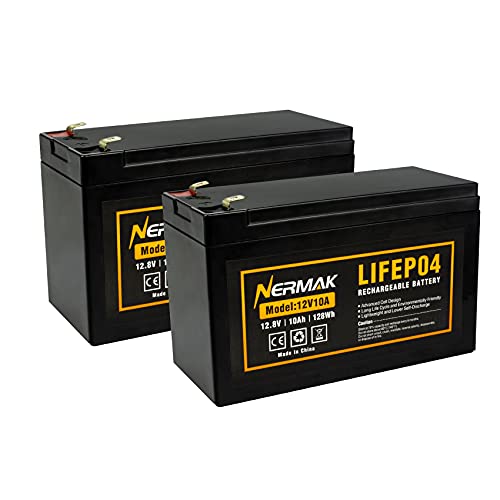
【Superior Performance】: Lithium iron phosphate battery has high energy density, Long cycle life, Good safety performance, No memory effect, etc. NERMAK LiFePO4 battery has built-in BMS protection to prevent overcharge, Over-discharge, Over-current and short circuit, and excessive low self-discharge rate ensuring up to 1-year maintenance-free storage.

【Advanced Smart BMS & All-Weather Safety】Equipped with an upgraded 100A Smart BMS, our battery provides comprehensive protection against overcharge, over-discharge, over-current, and short circuits. Unlike standard lithium batteries, it features automatic low-temperature cut-off, preventing charging below 32°F (0°C) to avoid cell damage. Built with stable LiFePO4 chemistry, it eliminates the risk of thermal runaway, ensuring maximum safety for your RV, boat, or home energy system in any season.
Deep Cycle AGM vs. Lithium: A Quick Decision Guide by Use Case
For applications like RV house banks, marine systems, or off-grid solar with daily cycling, lithium batteries are the better choice. They offer between 2,000 and 5,000 cycles, far surpassing AGM batteries’ 300 to 500 cycles. You also get nearly 100% usable capacity with lithium, compared to around 50% with AGM. These batteries are significantly lighter—roughly 10 to 14 kilograms for a 100Ah lithium pack versus 28 to 32 kilograms for an AGM. Additionally, lithium batteries charge faster, meaning a marine battery can often be fully charged in significantly less time than an AGM depending on amperage and battery size. They also require a compatible charger and a battery management system (BMS). They demand almost no maintenance and deliver consistent performance over time. While AGM batteries still work well in cold environments or for simple retrofits, lithium batteries excel where longevity, efficiency, and weight savings matter most. To verify battery health, you can use a top lithium battery tester as per expert reviews. When wiring lithium into a dual-battery setup, integrating a 1-2-both switch helps isolate charging and prevent draining the start battery.

Lightweight and Space-Saving Size: This 12V 200Ah LiFePO4 battery weighs about 58.86 lb and measures 20.08 × 8.07 × 8.46 inches, roughly one-third the weight of many lead-acid batteries with the same 200Ah rating. The lighter body and fixed footprint make it easier to lift, mount, or stack in RVs, solar enclosures, boats, and off-grid cabinets where space is limited.

【Product Overview】Designed for deep cycle energy storage applications, SUPER EMPOWER LiFePO₄ batteries provide reliable power for RV, marine, trolling motor, and off-grid systems, featuring premium LiFePO₄ cells and an integrated BMS for protection against overcharge, over-discharge, overcurrent, short circuit, and temperature extremes; ideal for auxiliary and house power needs in mobile and outdoor setups, ensuring stable and long-lasting performance. Designed for energy storage use only, this battery is not suitable for engine starting or cranking applications.

[Superior Performance]: Discover superior performance with our upgraded 12V 20Ah LiFePO4 battery. This rechargeable lithium battery offers impressive energy density, long cycle life, and advanced safety features. Equipped with a built-in 20A BMS protection system, it guards against overcharging, over-discharging, over-current, and short circuits. Additionally, its low self-discharge rate ensures trouble-free storage for up to one year