
Deciding between a blade fuse and an ANL fuse can feel confusing, especially when protecting high-current systems like battery banks or inverters.
The key difference is how well each handles large fault currents—ANL fuses can interrupt up to 6,000 amps, making them safer for big power setups.
For smaller circuits under 40 amps, a blade fuse usually does the job.
Keep reading to find out which one keeps your system safest.
Blade vs ANL Fuse: The Core Difference (Hint: It’s Interrupt Capacity)
The key safety difference between blade fuses and ANL fuses is their interrupt capacity. Blade fuses typically have low interrupt ratings, usually up to a few hundred amperes at 32 V DC, making them suitable for small branch circuits where fault currents are limited. In contrast, ANL fuses are designed to handle much higher fault currents, with interrupt capacities reaching up to 6,000 amperes at 32 V DC. This high interrupt capacity is critical for main battery feeds and high-energy circuits, where a fault could involve large current surges. Unlike wiring batteries in series, which increases voltage for a system, wiring in parallel increases available current, making high-interrupt fuses essential for protection. For maximum safety, choosing Best Battery Terminals that can handle the resulting high current is equally important. Additionally, the same principle applies to shore power connections where corrosion on prongs can also cause dangerous arcing.
The difference in construction and materials contributes to this disparity. Blade fuses are made from compact fuse elements and zinc alloys optimized for convenience and low-current protection. However, their design limits their ability to safely break high fault currents. ANL fuses employ specialized fuse materials and construction techniques that enable them to safely interrupt large fault currents without damage or risking further circuit fault.
It’s important not to rely solely on the fuse’s amp rating when selecting a fuse for high-energy applications. The interrupt capacity, which varies with voltage, determines how much fault current it can safely clear. For example, at higher DC voltages like 80 V, the interrupt capacity of an ANL fuse drops significantly, emphasizing the importance of choosing the right fuse for the circuit voltage and energy level.
When a Blade Fuse Is Actually the Smarter Choice
Blade fuses are the smarter choice for low-current, space-constrained circuits. Their compact size helps preserve enclosure volume, making them ideal for tight dashboards or interior panels where space is limited. A MINI blade fuse’s small body allows for more room within high-density fuse blocks and ensures better component organization. The lightweight design and durable plastic housing can withstand vibration and extreme temperatures, providing reliable performance in harsh vehicle environments.
Aesthetic appeal is another advantage. Blade fuses feature a clean, standardized appearance with color coding that instantly indicates their amperage rating. The see-through housing makes it easy to identify a blown fuse at a glance, and replacing it is quick and tool-free. For lighting or accessory circuits drawing between 2 and 40 amps, a blade fuse offers a practical, space-saving, and cost-effective solution. For higher-current applications like a 2000W inverter, ANL fuses are generally a better choice to handle larger wire gauges and prevent overheating.

ALL SIZES YOU NEED: Covers 11 commonly used blade fuses, 140pcs mini: 2A, 3A, 5A, 7. 5A, 10A, 15A, 20A, 25A, 30A,35A, 40A Blade Fuses, commonly used for most auto cars, trucks, SUVS, boats etc

[MINI FUSE KIT]: The mini fuses automotive kit includes 120pcs: 2A/3A/5A/7.5A/10A/15A/20A/25A/30A/35A(12PCS of each model ), and equipped with a fuse puller.
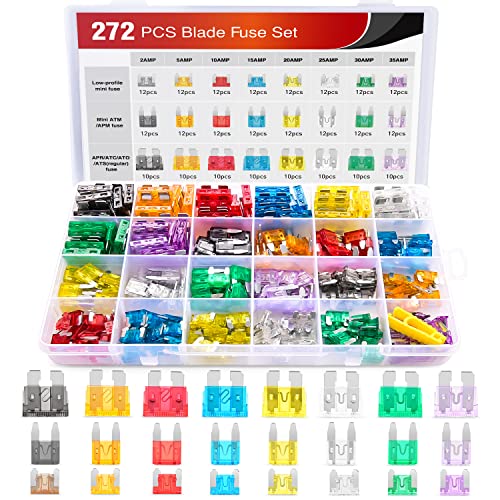
ALL SIZES YOU NEED: Covers 8 commonly used blade fuses, 272 PCs, mini: 2A 5A 10A 15A 20A 25A 30A 35A Blade Fuses, commonly used in most auto cars, trucks, SUVS, boats etc.
Where ANL Fuses Protect What Blades Can’t
ANL fuses protect high-current circuits that blades cannot handle, such as large battery banks, inverter feeds, and main supply trunks. Unlike blade fuses, which are suitable for low-current branch circuits, ANL fuses are designed to safely interrupt fault currents often exceeding 6,000A. They are available in sizes from 40A to 600A, making them ideal for heavy-duty applications. Their voltages are compatible with 12V, 24V, and 48V systems, providing versatile protection across different setups. Because of their larger physical size, ANL fuses can carry continuous currents without nuisance openings, which is crucial for protecting main power lines and ensuring system reliability. For marine applications, following a correct routing guide ensures these high-current lines are properly secured. Unlike battery isolators, which are designed to prevent battery drain between banks, ANL fuses are purely protective devices that prevent catastrophic damage from overcurrents. Their robust construction supports high-energy demands found in RV, marine, and solar power systems. When your DC system requires high-current capacity and serious fault clearance, ANL fuses are the reliable choice to protect what blade fuses cannot handle. For a proper installation, understanding the MRBF fuse as an alternative type can help you decide which protection best suits your system’s layout.

【UL Recognized Component E543339】Tested and verified under strict industry standards. This ANL fuse is a UL Recognized Component, ensuring top-tier electrical safety, stable current flow, and reliable overload protection for your expensive battery systems and inverters

Protect Your System: Nilight ANL fuse is a portable, battery-powered device that detects and diagnoses electrical problems in your vehicle's electrical system. These fuse with ANL fuse holder will protect your controller, wires, and battery from overcurrent. Suitable for any 12V, 24V, and 32V DC automotive cars, boats, trucks or other vehicles.Widely applied to inverter, audio amplifier and other high current applications, prevent excessive current and protect other electrical appliances.

【40A High-Current Protection】Designed for 40 Amp ANL fuses to safeguard car audio systems, amplifiers, and 12V/24V vehicle electronics from power surges or short circuits. Suitable for high-power applications like inverters and off-road lighting
Why Interrupt Capacity Beats Amp Rating for Safety
Interrupt capacity is more crucial for safety than amp rating alone. While amp rating indicates how much current a fuse can carry under normal operation, it does not reveal how well the fuse can handle fault conditions. The key measurement is the fuse’s interrupting capacity, which shows the maximum fault current it can safely break without failing catastrophically. If the available fault current at your installation exceeds this rating, even a fuse with the correct amp rating may blow apart instead of safely clearing the fault. Therefore, always match the fuse’s interrupting capacity to the prospective fault current at the installation site to ensure proper safety margins. Higher ratings, backed by strict manufacturing standards, allow a fuse to handle severe faults without rupturing. For battery systems, selecting a fuse with a sufficient interrupt capacity is similar to choosing a master switch for battery that can safely disconnect under heavy load. Remember to also verify the voltage rating, since interrupting capacity depends on voltage levels. Just as boat solar panels perform adequately under reduced sunlight, a properly rated fuse still functions reliably under diminished fault currents. Proper safety depends on choosing a fuse that can stop the worst-case fault scenario, not just carry normal current. For applications requiring rapid disconnection, consider a kill switch with lanyard as a supplementary safety device.
Three Mistakes That Down Your Fuse Protection
Using the correct fuse size is essential for proper protection. Many make the mistake of installing a fuse that’s too large, believing it offers better safety. However, a fuse that’s oversized allows excessive current to pass through, causing wires to overheat before the fuse blows. Always choose a fuse rated specifically for your circuit’s maximum current capacity to ensure it interrupts overloads promptly and safely. For a dual battery setup, selecting a battery with high cycle life ensures reliable long-term performance in your system. For detailed comparisons, review the top blade and ANL fuse options to select the right type for your solar panel system. Unlike fuses, a circuit breaker can be reset after a trip without needing replacement, making it more convenient for frequent troubleshooting on a boat.

Easy Identification: The fuse assortment kit is made of high-quality zinc alloy, featuring a transparent cover and color-coded labels for quick recognition.

Pack of 2, 30A fuses
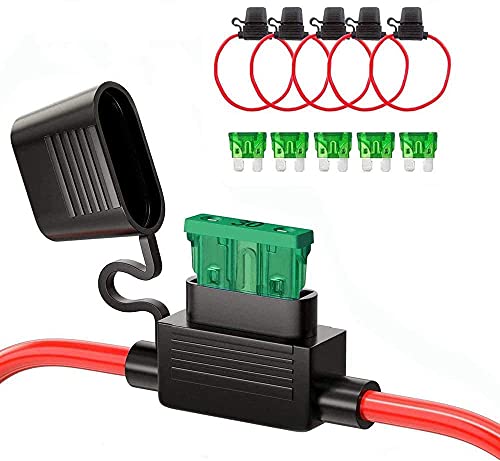
Heavy duty 12AWG wire, better protection to the circuit.
Match the Fuse to Your Circuit (3 Variables to Check)
To match a fuse to your circuit, check these three key variables. First, ensure the fuse voltage rating meets or exceeds your system voltage; a lower rating risks arcing during interruption. Next, confirm the interrupting rating safely handles the maximum short-circuit current available; without this, your circuit could become unstable during faults. Second, size the fuse’s amp rating at about 125% of your continuous load current. This prevents nuisance trips while still protecting the circuit during steady operation. Remember, motors and capacitive loads often need time-delay fuses to handle inrush currents. Third, match the fuse rating to the smallest wire’s ampacity to avoid leaving conductors unprotected. Exceeding wire capacity creates a fire hazard. Lastly, consider the load type. Fast-blow fuses work best for resistive loads, whereas inrush-heavy loads like motors require time-delay fuses. Fuse color coding helps you identify ratings quickly, but always verify these three variables before making a final choice.

Will withstand typical motor starting surges
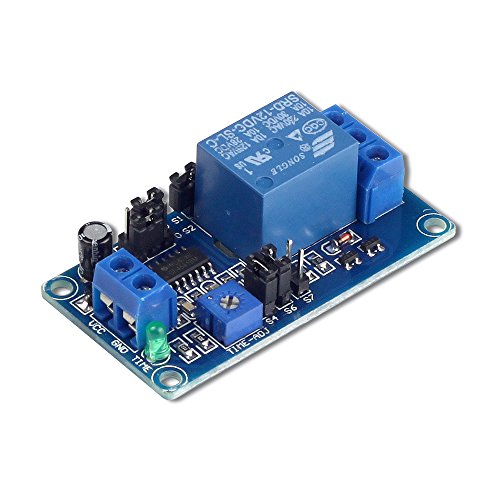
IMPORTANT NOTE: Please remove the jumper cap of S5 when controlling AC current or DC current voltages other than 12V, otherwise the module will be burned or will not work properly.

The Bussmann series FNQ-2 is a 13/31” x 1-1/2”, supplemental, time-delay fuse.
Buying Guide: Pick the Right Fuse for Your Setup
To choose the right fuse, first determine whether you’re protecting a low-current branch circuit or a high-current main line. For a low-current circuit, use a standard blade fuse, which typically handles 1 to 40 amps. These fuses are compact, fit into tight spaces, and are easy to replace. If you’re safeguarding a main line feeding an inverter or battery bank, opt for an ANL fuse. These fuses bolt securely and can handle current up to 500 amps, providing robust protection for high-power applications. To prevent equipment damage from short circuits, always install a fuse near the battery as close to the positive terminal as possible. For high-current setups, ANL fuses are specifically designed to withstand the high startup surges of inverters without blowing prematurely. Inspect the fuse materials and color coding. Blade fuses have a plastic body with a metal element, and their plastic color indicates its amp rating—common colors include red, blue, and yellow for different amperages. ANL fuses feature a clear window, allowing you to visually check the metal element for any breaks or damage. Always select the smallest fuse class that matches your circuit’s voltage and current needs to prevent nuisance blows or lack of protection. For circuits where fault energy protection is critical, verify that the fuse’s interrupt rating is sufficient—ANL fuses generally have higher ratings suitable for DC faults. When integrating fuses into a solar charging system, ensure the fuse rating aligns with the maximum current output of your DC-to-DC charger to avoid nuisance blows during peak generation.

Rated Current: 500 A


Package Dimensions: 3.302 H x 8.128 L x 11.176 W (centimetres)