
Choosing the right car battery can feel confusing, especially when comparing options like Group 31 and Group 34.
One is larger with more power, while the other fits tighter engine bays and offers decent performance.
Your decision will depend on your vehicle’s needs and space constraints.
Keep reading to learn how these two options stack up so you can pick the best one for you.
Group 31 Vs Group 34: How Do Sizes Compare?
Group 31 is significantly larger than Group 34, primarily in length and height. Both groups share the same width of 6.8 inches, but Group 31 measures about 13 inches long and 9.4 inches tall, resulting in a bigger overall footprint. In contrast, Group 34 is more compact, at 10.25 inches in length and between 7.5 to 7.9 inches high. This makes Group 34 ideal for tight engine bays, where space is limited, while Group 31 needs more room front-to-back and vertically. Understanding the differences between these sizes is especially important if you are choosing a deep cycle marine battery for sustained power needs at sea, as Group 31 typically offers a higher reserve capacity for longer run times. Note that the charging time for a Group 31 battery will generally be longer than for a Group 34 due to its larger capacity.
The size difference also influences installation and aesthetic choices. Group 31’s bulkier profile suits heavier-duty applications and systems that require a more prominent presence. Meanwhile, Group 34’s smaller shape fits sleeker, less intrusive setups. Both groups typically offer black cases, but some manufacturers provide options for red or blue lids to match your build’s style. When choosing between them, consider your available tray length and hood clearance to ensure a proper fit.
Which Group Has More Cranking Power?
Group 31 batteries provide significantly more cranking power than Group 34 batteries. Typically, they have CCA ratings ranging from 800 to 1150, whereas Group 34 batteries usually top out around 500 to 800 CCA. This extra cold-cranking amps means you’ll be able to turn over larger engines more reliably, especially in cold weather conditions. Keep in mind that the higher power comes with added weight and size, making Group 31 batteries heavier and less portable. For those upgrading their battery system, pairing a high-output battery with quality top post terminals ensures reliable current flow and secure connections. To achieve the most durable connections when installing these terminals, using crimping tools designed for heavy lugs is recommended. While they excel in demanding, high-power situations, lighter-duty vehicles with smaller engines may find that Group 34 batteries offer sufficient starting power. Always choose based on your engine’s minimum CCA requirement to ensure reliable starts. If you are integrating these batteries into a complex system, consider adding a master switch to control power distribution and enhance safety.
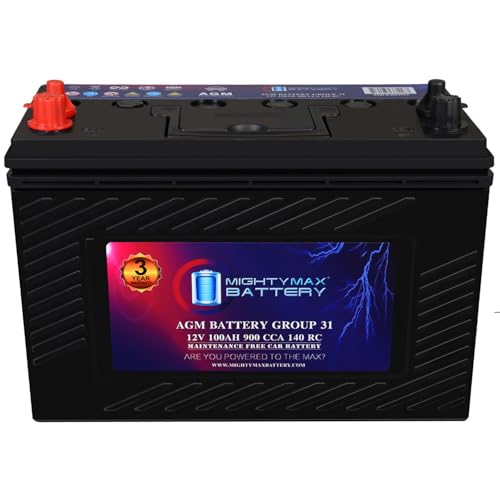
Fast Starting Power: This 12V 100Ah 900 CCA delivers strong, steady starts is ready for any weather in any season.

Marine-Grade Confidence: Harness the endurance and dependable energy you need to power every journey on the water, on the road, off the grid, or wherever adventure takes you.
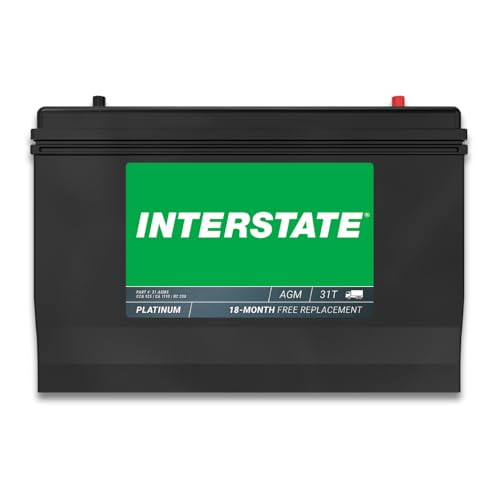
EXTREME DEEP-CYCLE POWER: This 2-in-1 pure lead AGM battery delivers high-cranking, extreme deep cycle power. It's designed to provide reliable force over an extended period to power your boat's motor & all of its accessories (appliances, trolling motor, audio systems, depth finders, fish locators, windlass). Not all marine batteries are the same - but this one exceeds the rest. Built with thick plates to allow the battery to continuously discharge power so you can recharge it many times over without decreasing its lifespan
How Long Will Each Battery Last?
Each battery’s lifespan varies based on size, chemistry, and maintenance. You can typically expect a Group 31 battery to last about 6 to 8 years, thanks to its larger reserve capacity of 180 to 220 minutes of runtime. In contrast, a Group 34 battery usually lasts around 4 to 5 years, with a reserve capacity of 100 to 145 minutes. Proper maintenance—like regular charging, avoiding extreme temperatures, and routine care—can extend either battery’s longevity. Neglecting these factors shortens their lifespan significantly. Additionally, proper charging is a key factor that can significantly influence battery lifespan, as overcharging or undercharging often leads to premature failure. For boaters using sensitive electronics, a pure sine wave inverter ensures cleaner power delivery compared to a modified sine wave unit.
Chemistry also influences durability. Flooded lead-acid batteries tend to last 2 to 5 years, AGM batteries about 3 to 7 years, and lithium batteries can reach 8 to 10 years, especially in larger Group 31 sizes. No matter how well you care for it, a Group 34 will generally not match the longevity of a Group 31 in similar conditions. For trolling motor use, the actual runtime depends heavily on the motor’s amp draw and battery capacity.

A rugged battery tray for group 31 batteries, including marine, RV, camper, and trailer batteries.
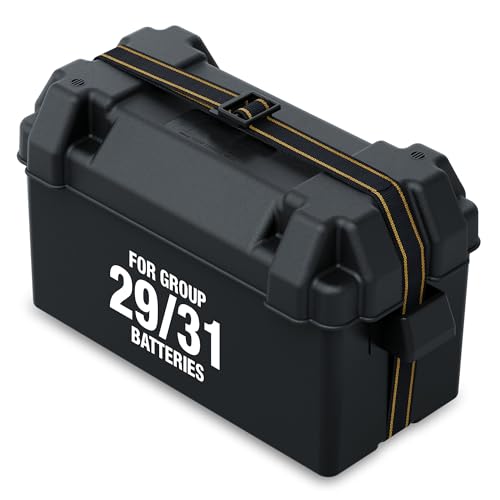
Designed for Group 29 and 31 Series Batteries: Securely holds larger marine and RV batteries with a maximum height of 9-3/4 inches. Inside dimensions: 15-7/16" L × 6-15/16" W × 9-3/4" H, outside dimensions: 18-7/8" L × 9-1/4" W × 10-1/4" H.

DUAL PURPOSE MARINE RV BATTERY: Interstate's marine dual-purpose AGM battery can serve as both your cranking battery to start the motor & power your trolling motor - whether the motor is on or off! Built "Interstate tough" to withstand the most rugged conditions so you can spend more time having fun & less time worrying about your battery
Is the Group 31 Worth the Extra Weight?
A Group 31 battery typically adds about 15 to 30 pounds compared to smaller options. This extra weight can be a concern if you need to limit overall mass, especially in RVs, marine vessels, or when installing manually. However, that additional heft provides significantly more capacity and reserve power. A higher amp-hour rating means the battery can store and deliver more energy, which extends its usable runtime during demanding use. Marine batteries often weigh between 40 and 80 pounds depending on their chemistry and capacity, making careful selection essential. This makes the extra weight worthwhile if you rely on high-draw accessories like winches, inverters, or need extended engine-off operation. In marine applications, careful selection is especially critical because AGM vs deep cycle batteries offer very different trade-offs in performance and lifespan. To ensure such a large battery stays fully charged during long periods of disuse, it is wise to pair it with one of the best trickle chargers for 12V batteries. In such cases, you’re not just carrying weight—you’re carrying a larger energy reserve that can save you from running out of power at critical moments. If those factors don’t apply, the additional pounds may just be unnecessary bulk that adds to your load without adding value.
Group 31 Vs Group 34: Which Should You Choose?
Choosing between Group 31 and Group 34 batteries depends on your needs. Group 31 batteries offer higher cold cranking amps (CCA), more amp-hours, and greater reserve capacity. This makes them ideal for heavy-duty trucks, RVs, or marine systems that require maximum power and extended runtime. However, they are larger and need a dedicated tray with sufficient interior space. To maintain peak performance in these larger batteries, regular battery desulfation can help restore lost capacity and prevent sulfate buildup. An insulated battery box is essential for protecting them during cold-weather use. For safety in marine applications, you should also consider using a kill switch lanyard to quickly disconnect power in an emergency. On the other hand, Group 34 batteries are better suited for standard cars, SUVs, or light trucks. They are more compact, fitting into tighter engine bays while still providing reliable cold-start performance. Choosing a Group 34 allows you to keep more underhood room available for other components, which can help maintain a cleaner appearance and make maintenance easier.

[Dual Purpose]: The WEIZE BCI Group 31M is a dual purpose deep cycle sealed AGM marine and RV battery. It features an outstanding starting power and deep cycling capability for long-lasting power supply. Terminal: Left : Positive (+)-Red, Right: Negative (-)-Black.

DUAL PURPOSE MARINE RV BATTERY: Interstate's marine dual-purpose AGM battery can serve as both your cranking battery to start the motor & power your trolling motor - whether the motor is on or off! Built "Interstate tough" to withstand the most rugged conditions so you can spend more time having fun & less time worrying about your battery
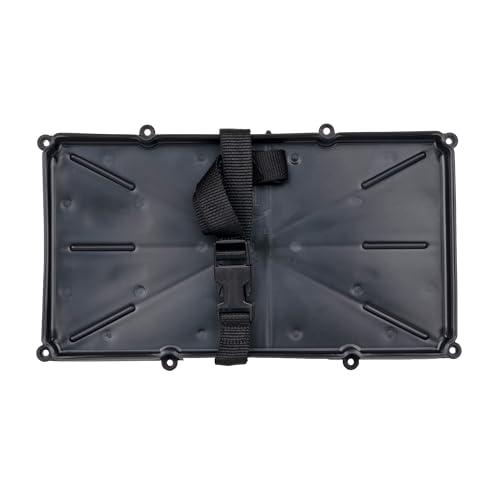
OPTIMIZE YOUR SPACE WITH A NARROW BATTERY TRAY - Designed specifically for compact spaces, our versatile narrow battery tray maximizes efficiency in boats, RVs, and tight installations without sacrificing safety or performance.