
Wondering if you can use a car charger on a marine battery? The answer depends on the type of battery you have and the charger’s specifications.
Using the wrong charger can damage your battery or shorten its lifespan, so it’s essential to check compatibility first.
Keep reading to find out what’s safe and what to watch out for.
When You Can Safely Use a Car Charger on a Marine Battery
You can safely use a car charger on a marine battery only if the charger matches the battery’s voltage and chemistry. For a 12V marine battery, a 12V charger is necessary. However, the charger must be set to match your specific battery type, such as lead-acid or AGM, because different chemistries require different charging profiles. Compatibility is more important than whether the charger is labeled “car” or “marine.” Using a charger with the wrong profile can lead to overcharging, reduced battery life, or damage. Always check the charger manual to confirm it is designed to work with your battery’s chemistry. Using quality terminals, like those reviewed in top post battery terminals**, can also improve connection reliability and performance during charging. For safety, ensure the wiring and connections follow proper marine fuse block** guidelines to prevent short circuits and fire hazards.
Opt for smart chargers with automatic shutoff or float mode features. These chargers reduce the current once the battery reaches full capacity, preventing overcharging and excess heat buildup. Proper maintenance also involves charging in a well-ventilated, dry area away from flammable materials. Keep the battery terminals clean, wear protective gear, and periodically inspect the setup. Stop charging once the battery is full unless the charger is operating in float mode, which allows continuous charging without risking damage.
Which Marine Battery Types Are Safe to Charge With a Car Charger?
Flooded lead-acid marine batteries are safe to charge with a basic 12-volt car charger. They tolerate standard charging profiles well and are less sensitive to overcharging. However, AGM, gel, and lithium marine batteries require specialized chargers with adjustable or specific profiles. Using a standard car charger on these types can cause damage, decrease lifespan, or pose safety risks. For example, repeated overcharging can reduce deep cycle battery lifespan to just two or three years. For optimal system protection, consider installing a master switch for battery isolation. Experienced boaters recommend that a battery switch provides crucial safety by preventing accidental drain and allows for quick disconnection during maintenance. Always check your battery’s label and ensure your charger matches the chemistry to avoid costly mistakes. For AGM, gel, and lithium batteries, consider using a smart charger designed for their particular needs to ensure proper charging and longevity.

Stay Charged: Battery Tender battery chargers and maintainers provide a full charge to your powersport vehicle’s battery before switching to float mode to maintain proper voltage levels for safe, long-term storage

PREVENT BATTERY FAILURE: Ensure reliable starts after storage with this 4-in-1 device that charges, maintains, tests, and restores batteries for cars, motorcycles, ATVs, trucks, SUVs, and boats.

【2 Bank Marine Battery Charger】output 12V 10A (5A/Bank) waterproof Onboard Boat Charger, which can automatically switch from full charging mode to float charging mode. Works with 12 volt batteries including marine, boat, starter, and deep-cycle batteries.
What Happens When You Use a Car Charger on a Marine Battery Too Often
Repeatedly using a basic car charger on a marine battery causes gradual damage rather than an immediate failure. This repetitive overcharging heats the battery, speeding up internal deterioration. The heat leads to water loss, which dries out the electrolyte and exposes the plates to permanent damage. Over time, you may notice corrosion on positive plates and structural wear that reduces capacity. Additionally, if the charger undercharges between cycles, sulfation can develop, impairing the battery’s reliability. Without proper float control, this misuse can significantly shorten the marine battery’s typical lifespan of 2 to 5 years, often by 30 percent or more. Constant improper charging doesn’t just degrade performance; it also voids the manufacturer’s warranty. Even a Group 24 battery weight adds to the physical stress during handling, but the charging damage is what truly compromises battery life. Similar to how sparking at the shore power connection indicates a loose or corroded plug, a poor electrical contact in your charger setup can cause internal arcing that damages the battery terminals. Investing in a charger with proper desulfation modes can help reverse early crystal buildup before it becomes permanent. The safest approach is to switch to a smart marine charger designed to prevent this kind of cumulative damage and preserve your battery’s health.
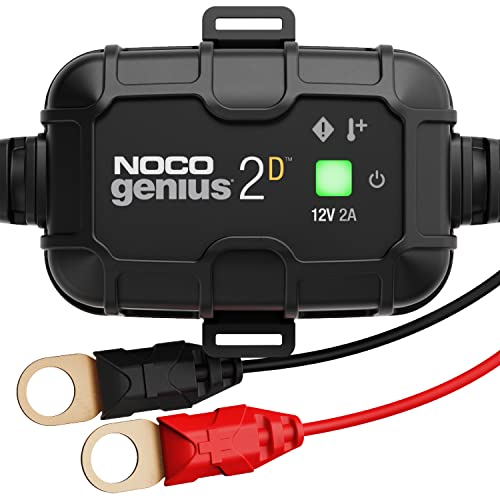
MEET THE GENIUS2D — The all-new direct-mount onboard battery charger for an under-the-hood battery charging system and year-round battery maintenance.

LiFePO4 LEAD-ACID SMART BATTERY CHARGER - 12V 15-Amp and 24V 8-Amp 9-stage quick battery charger, significantly faster than standard 10-Amp or 8-Amp chargers. Perfect for charging or repairing all 12V and 24V LiFePO4 and lead-acid batteries, including AGM, GEL, SLA, and Flooded types. Ideal for cars, trucks, SUVs, motorcycles, lawn mowers, boats, and marine applications. Note:(This is a battery charger not battery jump starter).

【5X2, 2-Bank, 5A Per Bank】: Marine battery charger for all types of lead-acid & lithium-ion 12V batteries, including marine, boat, starter & deep-cycle batteries. IP68 waterproof fully-sealed charging. Boat battery chargers can be charged 24/7 onboard.
How to Charge a Marine Battery With a Car Charger Safely
To charge a marine battery safely with a car charger, begin by verifying that the charger’s output matches your battery’s chemistry and voltage. Use a smart three-stage charger designed for flooded, AGM, or gel batteries to ensure compatibility and prevent overcharge or undercharge. Always turn the charger off before connecting it to the battery, and clean the terminals to remove any corrosion or dirt.
Connect the positive clamp to the positive terminal and the negative clamp to the negative terminal. Keep all boat accessories off during charging and position the charger in a well-ventilated area because lead-acid batteries emit explosive gases. Never place the charger directly above the battery to avoid damage or accidental short circuits. For long-term maintenance, a trickle charger is a reliable option to keep the battery topped off without overcharging. When using a marine battery for a winch, ensure the charger can handle the battery’s high deep cycle demands to prevent premature wear.
Monitor the charging process closely. Disconnect the charger once the battery is fully charged, indicated by a voltage or charge status light or timer. Make sure you do not exceed the recommended voltage limits for your specific battery type. For a safe charging rate, set the charger to around 10% of your battery’s amp-hour capacity to minimize heat buildup and stress. Stop charging immediately if the battery temperature becomes excessively high. Always wear gloves and eye protection to avoid injury from acid or sparks. For setups with an additional battery, a battery isolator prevents the charger from draining the starting battery.

✔️MULTIPLE BATTERY CHARGERS - Three bank marine battery charger rated at 30 amps. 10 Amps per bank for 12 volt lead-acid and lithium-ion batteries, including, boat, starter, and deep cycle batteries, 12V only!(Can also be used as a car charger)

24V DC OUTPUT: Delivers up to 50 amp of regulated clean DC power for 24V batteries and compatible electrical loads.

【POWERFUL LEAD-ACID LiFePO4 BATTERY CHARGER】12V 15-Amp and 24V 8-Amp 9-stage quick battery charger, charging speed is much faster than 10-Amp or 8-Amp automotive chargers. Charge or pulse repair all 12-volt and 24volt LiFePO4 or lead-acid automotive, marine and deep-cycle batteries including AGM, GEL, SLA, Flooded in cars, trucks, SUVs, motorcycles, lawnmowers, boats, etc. NEW REPLACEMENT AVAILABLE FOR ANY QUALITY ISSUE.
Why Standard Car Chargers Undermine Deep-Cycle Marine Batteries
Standard car chargers are not suitable for deep-cycle marine batteries because they lack the precise three-stage charging process—bulk, absorption, and float—that these batteries require. Car chargers are designed to deliver high current quickly to start engines, not to carefully nurture a battery through its full recharge cycle. Without the absorption phase, you risk undercharging the battery, which causes sulfation—the buildup of lead sulfate crystals on the plates. This buildup diminishes the battery’s capacity and decreases charging efficiency over time. Experienced boaters recommend using a charger with a dedicated absorption stage to prevent this damage. For vehicles requiring reliable power isolation, a remote battery disconnect offers superior control compared to using an incompatible charger. A proper charger with overcharge protection ensures the battery stays safe during long charging sessions.
On the other hand, if a car charger applies an aggressive voltage hold for too long, it can overheat the battery. Excess heat accelerates corrosion of the plates, especially in flooded batteries, and can lead to electrolyte loss through gassing. Loss of electrolyte results in higher internal resistance, reducing the battery’s performance and lifespan. Additionally, without proper float support during storage periods, the battery self-discharges and sulfates again form, further impairing its condition. The high current often delivered by poorly regulated chargers stresses the deep-cycle design, raising plate temperatures and potentially causing premature failure. Consequently, using a standard car charger can significantly shorten your marine battery’s runtime and its long-term reliability.

High Efficiency: Utilizing advanced power conversion technology, the Orion-Tr DC DC Converter series achieves high efficiency, minimizing energy loss and heat generation.
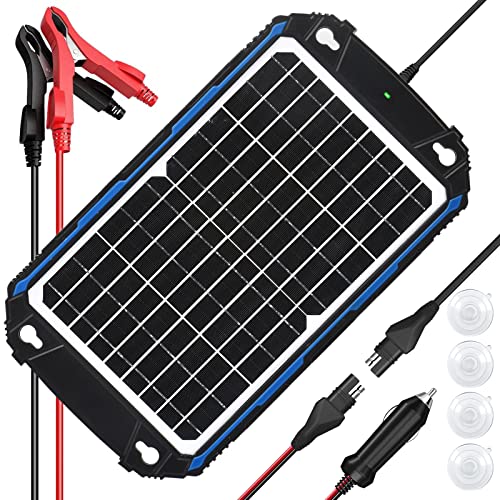
【Ultra-Smart MPPT Technology】This 12v solar panel battery charger is crafted with SUNER POWER's unique Ultra-Smart MPPT( Max Power Point Tracking) technology, the innovative MPPT allows to deliver high tracking efficiency of up to 99% and peak conversion efficiency of 98%, improving approximately 20%-30% utilization rate than other competitors
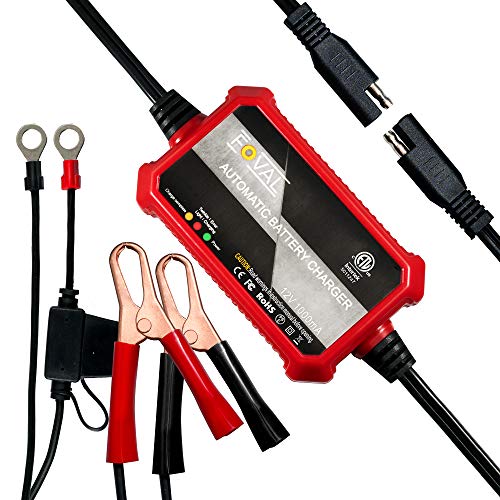
Automatic Battery Charger & Maintainer: 1A 12V smart battery charger perfect for SLA / VRLA / GEL CELL / AGM / WET lead acid batteries. It is a battery maintainer, trickle charger, float charger, and battery desulfator, also complete 4-step charging program (Initialization, Bulk Charge, Absorption Mode, Float Mode).
Choose a Marine-Rated Charger for Long-Term Battery Health
A marine-rated smart charger with automatic multistage charging is essential for maintaining long-term battery health. Look for one that shifts through bulk, absorption, and float phases, efficiently restoring charge while holding a safe, stable voltage—eliminating overcharge risk. This ensures your deep-cycle battery stays healthy over time without guesswork. For example, many top solar charge controllers designed for lead acid batteries include automatic multistage charging to prevent overcharging and extend battery life. Additionally, using a secure battery strap can prevent wiring from loosening due to vibration, a common issue on boats. Unlike a pure sine wave inverter, which delivers clean power for sensitive electronics, a modified sine wave inverter can cause inefficiency and noise in some devices.
Match the charger to your battery’s chemistry, whether AGM, gel, or flooded, to maximize compatibility and charging efficiency. Select a unit with an amp-hour rating suitable for your battery bank—avoid oversizing or undersizing, as either can cause inefficiency or damage.
Choose a charger with waterproof, corrosion-resistant, and vibration-proof housing, along with ignition protection if operating in enclosed spaces. Temperature compensation features are vital; they automatically adjust charging based on environmental conditions, allowing you to leave the charger connected during storage without risking damage or reduced battery life.
Skip general car chargers—they lack the marine-grade durability, safety features, and precise control needed for your boat’s batteries. Investing in the right charger enhances battery longevity and ensures reliable performance, protecting your investment over the long haul.

【5X3, 3-Bank, 5A Per Bank】: 3 Bank battery charger for boat 12V for all types of lead-acid & lithium-ion 12V batteries - including marine, boat, starter & deep-cycle batteries. IP68 waterproof fully-sealed charging. Boat charger can be charged 24/7 onboard.


ProSport HD 20A Triple Bank Waterproof Marine Battery Charger (Part Number 44021) replaces the old ProMariner Gen 3 ProSport 20 plus (part number 43021)