
Ever wonder if your inverter is quietly draining your boat’s battery? The truth is, even when nothing is plugged in, your inverter can be losing power—typically between 0.5 and 2 amps—that adds up over time.
A quick switch to disconnect it can stop this drain and keep your battery ready when you need it most.
Keep reading to see just how much power those idle draws cost you.
Why Your Inverter Drains Your Battery Even With Nothing Plugged In?
Even when nothing is plugged into your inverter, it still drains your battery due to its standby power draw. Many inverters consume a small amount of energy just to stay ready, typically between 0.5 to 2 amps, which adds up over time. This hidden load can deplete your battery quickly—especially during extended periods like quiet nights at anchor. This issue is similar to how shore power cord sparks often result from a persistent, small electrical current flow that builds up until it discharges. Turning the inverter off when you don’t need AC power completely stops this drain. To further minimize power loss, ensure your battery terminals are clean and tight to maintain optimal electrical conductivity, as quality battery terminals reduce resistance and improve overall performance. For ongoing use, select an inverter designed with low standby consumption to help conserve your battery’s capacity and prevent unexpected power shortages.
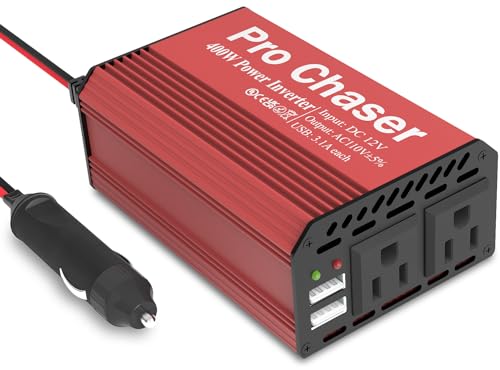
【Pro Chaser Power Inverter Basics】: This inverter provides a steady 400W of DC to AC power with a peak output of 800W. Equipped with dual 110V AC sockets and two high-speed 3.1A USB ports, it's perfect for powering your devices on the go.

3000W Pure Sine Wave Inverter: Our inverter charger provides reliable, uninterrupted power for devices such as refrigerators and medical equipment. Whether it's an unexpected home power outage or an off-grid adventure, this charger ensures a secure and stable power supply. (It is recommended to keep the load on each outlet below 1.2KW.)
The Amp-Hour Cost: What 24 Hours of Standby Draw Actually Drains
A 1-amp standby draw from your inverter quietly drains 24 amp-hours from your battery over a full day. This means that a 100Ah battery, under this single drain, is left with barely three-quarters of its capacity—roughly 75Ah—after 24 hours. At 0.5 amps, you lose about 12 amp-hours daily, while a 2-amp draw depletes 48 amp-hours. This represents a capacity loss of 12 to 48 percent on a 100Ah bank, and lead-acid batteries feel this effect more keenly since you can’t utilize their full rated capacity without risking damage. Poor inverter efficiency further exacerbates the drain, making it essential to monitor standby current to avoid unnecessary battery depletion. Testing your battery switch can help confirm if the inverter is the source of the standby drain. Your standby draw costs you between 144 and 576 watt-hours each day—significant energy when you consider that these losses can happen without actively using your inverter. Just as a crimping tool with cutter is essential for clean wire terminations, selecting an inverter with low standby consumption is critical for preserving battery life. Even a well-tightened battery terminal connection can reduce resistance and help your system run more efficiently. To minimize this drain, turn the inverter off whenever it’s not needed, especially during extended periods of inactivity. Additionally, consider choosing inverter units with lower idle currents to reduce standby power consumption and extend your battery’s lifespan and runtime.
Idle Consumption: 1,000W vs. 3,000W Inverter Standby Draw
A 1-amp standby draw from your inverter quietly drains about 24 amp-hours from your battery over a full day. The size of the inverter impacts this baseline. A 1,000W inverter typically idles around 10–20W, whereas a 3,000W model often pulls 25–50W. That 15–30W difference might seem small, but over a day without load, it can result in an extra 0.3–0.7 kWh consumption. Some modern 3,000W inverters feature improved standby circuitry, reducing idle draw closer to 20–25W. However, inverter standby power varies, and many warranties exclude coverage for standby losses. To save power, it’s best to turn off a large inverter when it’s not actively in use, especially overnight. Using a heat gun for heat shrink tubing can draw significant power, but it is only active for short bursts, unlike the constant idle drain of an inverter. For permanent battery connections, selecting a high-quality solder ensures minimal resistance and reduces parasitic losses at the terminal. Choosing between flexible and rigid panels can also affect overall energy efficiency on a boat due to differences in installation and durability.
Why “Nothing Plugged In” Still Drains Your Battery’s Usable Capacity
Even when no devices are plugged in, your battery continues to lose usable capacity due to inverter inefficiencies and parasitic drains. A typical inverter runs at about 90% efficiency, meaning it wastes roughly 10% of the power it draws as heat. This loss occurs even under light or no load, gradually reducing the energy available for your actual needs. Selecting a high-quality master switch can completely disconnect the battery from these parasitic loads, preventing unnecessary power loss. Moreover, the inverter’s low-voltage cutoff feature can trigger prematurely because of this continuous drain, leaving energy trapped in the battery that you cannot access. Choosing the right battery for your system, such as comparing Group 24 vs. 34 options, can help minimize these inefficiencies and improve long-term performance. For those maintaining a battery over long periods, using a dedicated trickle charger can help counteract these parasitic drains and preserve capacity.
This subtle, ongoing drain impacts voltage stability, making your system appear weaker than it truly is. It’s not just power loss; it’s a degradation of your battery’s long-term health and capacity. Over time, these inefficiencies can shorten your system’s lifespan and force more frequent battery replacements, ultimately increasing your costs and reducing operational reliability.
4 Hidden Inverter-Related Drains That Kill Your Battery Overnight
Many inverters draw power even when nothing is plugged in, with standby current typically ranging from 0.6A to over 2A. This constant draw can significantly drain your battery bank overnight, especially if the inverter lacks effective shutdown controls. Poor voltage regulation exacerbates this problem because internal circuitry stays active, continuing to consume power even when the inverter is not in use. Additionally, any AC devices connected to the inverter—such as TVs, chargers, or microwaves with clocks—add phantom loads that can range from 1W to 10W each. Over a night, these small loads can total 50W or more, equating to roughly 100Ah of battery drain daily. The inverter’s efficiency also plays a role; larger units often idle at 20W to 60W, wasting energy as heat. Without features like ignition sensing or enable switches, the inverter’s control electronics keep the system awake, silently draining your batteries. When combined with aging batteries or loose wiring, these four hidden drains can quickly kill your battery bank overnight. Using a dedicated lithium battery tester can help identify these parasitic draws and confirm actual battery capacity. A deep cycle battery’s total lifespan, typically 3 to 10 years, heavily depends on how often it is deeply discharged and recharged under such conditions. Choosing the right marine battery charger with a proper amp rating ensures your bank is fully replenished after such overnight drains.

Fully Waterproof Construction: Designed for harsh marine, automotive, and RV environments, this circuit breaker resists water ingress to insure dependable performance on boats, trucks, campers, and off-grid solar setups.
Fully Waterproof Construction: Designed for harsh marine, automotive, and RV environments, this circuit breaker resists water ingress to insure dependable performance on boats, trucks, campers, and off-grid solar setups.

Built to Last: Constructed from aluminum alloy, handles humidity, salt spray, and even short-term underwater use for long-term outdoor reliability.
How to Measure Your Inverter’s Parasitic Drain in 5 Minutes
To measure your inverter’s parasitic drain in just five minutes, start by disconnecting all AC loads and turning off any charging sources. Grab a digital multimeter, plug the black lead into the COM port and the red into the 10A port. Next, disconnect the negative battery cable and connect the multimeter in series between the cable terminal and the battery post. This setup measures the total current leaving the battery bank.
Allow the reading to stabilize, as initial transients or startup surges can skew the numbers. Typically, a parasitic drain for most inverters ranges from 0.2A to 2.0A. If your vessel is shaded by solar panels, verify that they’re not feeding current back into the system, which can mask the true drain. A solar charge controller can help regulate this feedback to protect your lead acid batteries. If you are using stainless steel ties for battery cable management, consider using cable tie guns designed for those ties to ensure secure connections. Compare this baseline reading with the inverter turned off to identify the actual parasitic draw. If the current remains high with the inverter off, switch off individual DC circuits one at a time to pinpoint any phantom loads unrelated to the inverter itself. To avoid undersizing your system, always match your inverter’s continuous current to a battery switch rated for at least that amperage.

Clamp onto the battery terminals and read the vehicle's dark current after the systems have gone to sleep. Remove fuses one by one — the circuit that drops the reading is your drain source. No more blind guessing.
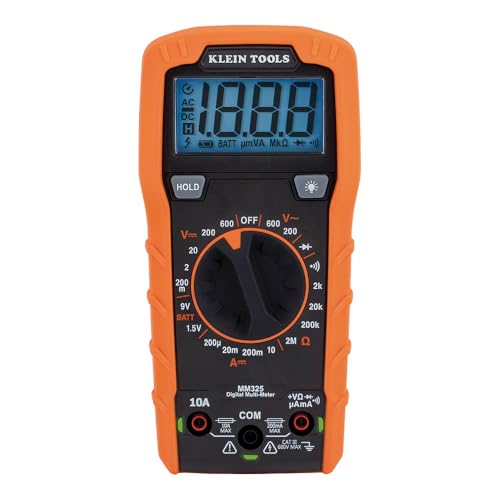
VERSATILE FUNCTIONALITY: Measures AC/DC voltage up to 600V, 10A DC current, 2MΩ resistance; additional features include continuity, diode test and battery test

【 Locate Battery Drain Faster】Stop guessing which circuit is draining your battery. This automotive fuse current tester helps identify abnormal current draw through individual vehicle fuse circuits, making it easier to diagnose parasitic battery drain, overnight power loss, and electrical issues from dash cams, audio systems, or other aftermarket accessories.
Will Power-Save Mode Cut Inverter Standby Draw?
Power-save mode can significantly reduce an inverter’s standby draw, often from around 40 W down to 5–10 W or less. It accomplishes this by using periodic load-sensing pulses instead of continuous output, helping to preserve your battery during low-load periods like overnight anchoring. This method is similar to how thermal circuit breakers protect boat electrical systems by responding to prolonged low-level overloads rather than instantaneous spikes. However, solar shading or other variable conditions can interfere with the detection thresholds. If your inverter’s calibration is not matched to your actual loads, small electronics may stay below the wake threshold and never power on. This is beneficial for idle times but means you cannot rely on power-save mode for constantly running low-wattage devices. For boats with solar panels, an MPPT controller can help manage such variable conditions more efficiently than a PWM model. Using a dedicated negative battery cable with ground can further reduce parasitic resistance and improve overall system efficiency.
Always check your inverter’s manual for wake thresholds and pulse timing. Proper calibration aligned with your typical loads ensures your battery isn’t wasted on unnecessary standby power. While some standby draw will remain, it’s usually far less than full idle consumption and can make a meaningful difference over time.
When You Absolutely Need a Battery Disconnect Switch
A battery disconnect switch is essential and non-negotiable for safety during inverter installations. Its primary purpose is to allow you to quickly isolate the batteries in case of faults, overheating, or when performing maintenance. Without this switch, you risk fire from short circuits or overloads, since you can’t safely remove live cable lugs. Using a master disconnect ensures that you can safely disconnect power without handling energized cables.
Switch ratings are just as important as the switch type. Match the switch’s continuous current rating to your inverter’s maximum running amperage to prevent fire hazards. For example, if your inverter draws up to 300 amps, your switch should be rated for at least that continuous load. Additionally, if the switch will serve starter circuits, it must handle the engine’s highest crank current, which can be several hundred amps. Opt for a heavy-duty marine switch with a continuous rating in the hundreds of amps and ensure it is ignition protected. Mount the switch close to the battery for quick access, and keep it in a location that is easy to reach during emergencies or maintenance. Using a quick disconnect for storage or electrical service prevents standby drain and adds an extra layer of safety. Never cut corners with this component; your safety depends on choosing the right switch and installing it correctly.

UNIVERSAL BATTERY DISCONNECT SWITCH - High current battery disconnect switch is designed to cut off the electrical power of the electrical system, which protects against electrical fires and theft when equipment is not in use and provides a reliable way to shutdown electrical power during maintenance and protect batteries from excessive battery drain. Disconnct the battery when you are not driving a car / boat / RV / vehicle / ATV / Trailers / Off-road, etc. Keep you safe all the time.

Ideal Power Switch: With tinned copper inner studs, the boat battery switch has better contact performance and good conductivity, greatly reducing power consumption. Studs Size: 2 x 3/8" (10mm). Furthermore, the housing of battery kill switch is made of flame-retardant plastic for safer use in messy or moist environment

Prevent Battery Drain: 12-50v battery switch is provide a convenient to disconnect the batteries from the electrical system, which refrains battery from draining during storage and isolate power in case of emergencies; Avert accidental discharge, electrical fires, helping you get the most out of your battery
Sizing Your Battery Bank for Standby Draw
Accounting for standby draw is essential for accurately sizing your battery bank because this continuous consumption quietly drains your batteries even when no AC loads are active. For example, a 200 mA parasitic draw consumes about 4.8 Ah per day on a 400 Ah AGM bank. Your battery chemistry affects usable capacity; lead-acid batteries typically allow a 50% depth of discharge (DoD), while lithium batteries can handle 80-90% DoD. Choosing the right voltage configuration is also important: 24V or 48V systems reduce current draw and decrease cable stress compared to 12V setups.
To determine your required battery capacity, use the formula:
Required Ah = (Load watts × Runtime hours) ÷ (Voltage × Depth of Discharge × Inverter efficiency)
Always measure the actual standby current with all breakers off; any reading above 100 mA should be investigated. Including a reserve capacity beyond your minimum calculation helps account for inefficiencies and aging of the batteries, ensuring reliable standby power over time.

ProSport HD 20A Dual Bank Waterproof Marine Battery Charger (part number 44020) replaces the old ProMariner Gen 3 ProSport 20 (part number 43020)
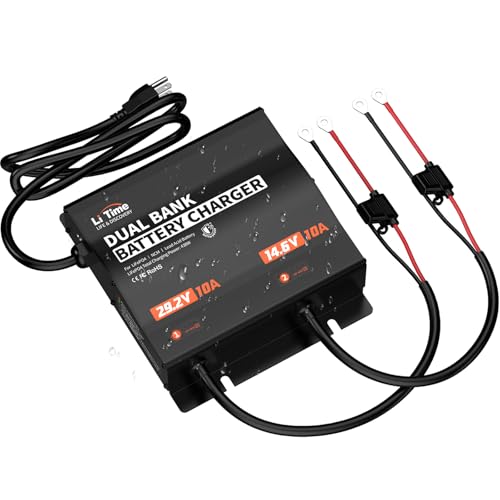
Dual 10A LiFePO4 Battery Charger: 2 Bank(10A/Bank). Charging Specs: 29.2V and 14.6V. Charging Current: 10A. Rated Input Voltage: 90V-260V AC ; 47Hz to 63Hz. Dual Channel can charge both batteries simultaneously, saving 50% charging time.

8 AMP DUAL BANK MARINE CHARGER: Compact onboard charging solution for two battery banks in smaller marine systems
The One Habit That Stops Inverter Standby Drain for Good
Turning off your inverter completely when not in use is the most effective way to eliminate standby drain. Many inverters have a low-power standby mode or “sleep” setting, but these still draw between 2 and 10 watts continuously. This small, constant drain can significantly reduce your battery lifespan over time, especially during long periods of inactivity. Relying solely on low-power modes isn’t enough because they only slow the drain, they don’t stop it.
The key habit is to flip the inverter’s main switch to off whenever you are sleeping, docked, or away from the boat. Doing so ensures zero current flows into the inverter, preventing vampire load and conserving precious amp-hours. This simple step transforms your power management routine and significantly extends your battery capacity by removing wasteful idle consumption. For boats used intermittently, this is especially important as it keeps batteries fully charged for when you need them without unnecessary drain.