
Wondering if your solar panel can overcharge your marine battery? It’s a common concern, especially since too much voltage can damage the battery over time.
The good news is, with the right setup, you can prevent overcharging and keep your system safe.
Here’s what you need to know about avoiding this risk and choosing the right components.
The Device That Prevents Overcharging (It’s Not the Battery)
A solar charge controller is the device that prevents overcharging your marine batteries, not the batteries themselves. It is installed between your solar panels and the battery bank and actively manages voltage and current flow. By cutting power once the battery reaches full capacity, the controller protects against rapid aging and efficiency loss. For proper installation, cable gauge sizing must match the controller’s current rating to avoid voltage drop and overheating.
This device also offers protection functions such as reverse polarity and short-circuit safeguards. Both PWM (Pulse Width Modulation) and MPPT (Maximum Power Point Tracking) controllers perform these critical roles, although MPPT units are generally more efficient at maximizing power transfer in variable conditions. For boat owners using shore power, a 50 to 30 amp adapter can provide similar protection by managing the electrical connection between dock power and onboard systems. Proper sizing of the controller is essential; it must match the current output of your solar array to ensure safe and optimal operation. Marine-specific controllers feature waterproof enclosures and temperature compensation, which are vital in harsh maritime environments. For secure cable connections, corrosion-resistant terminals are equally important for maintaining consistent performance in marine systems. Trusting your charge controller is key to maintaining your battery health and overall system longevity.

SMART SOLAR CHARGE CONTROLLER: Solar charge the smart way with the Victron Energy SmartSolar MPPT charge controller, to ensure that every ray of available sunlight is converted into usable energy, while optimizing battery longevity.
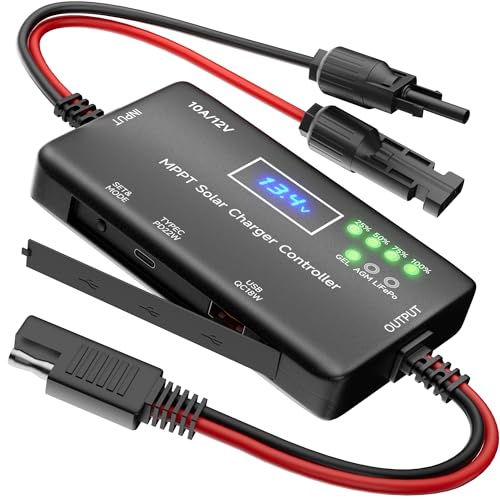
12V Solar Charge Controller: This MPPT charge controller is specifically designed for solar panels that do not have an integrated controller. It is not compatible with solar panels that have built-in controllers. Note: It is only suitable for 12V batteries and must not be used with 24V or 36V battery packs. Please note: This unit does not include a polarity converter and must be connected with correct positive/negative polarity

SMART SOLAR CHARGE CONTROLLER: Solar charge the smart way with the Victron Energy SmartSolar MPPT charge controller, to ensure that every ray of available sunlight is converted into usable energy, while optimizing battery longevity.
Why Solar Panels Keep Charging Past Full Battery
Solar panels can continue to charge past your battery’s full level because the charge controller maintains staged charging, rather than shutting off immediately. During absorption mode, the voltage remains constant while the current gradually tapers off. This process makes it appear as though charging still continues, but it’s actually a controlled, intentional process designed to ensure battery health. Unlike best trickle chargers that typically shut off completely when a battery is full, solar charge controllers use a multi-stage approach to prevent damage. For a safe installation, correct marine inverter connections are essential to handle this staged charging without risking short circuits or overheating.
After absorption, the controller switches to float mode, which lowers the voltage to a safe holding level instead of fully turning off. This prevents unnecessary cycling and keeps the battery topped up without overcharging. Additionally, if the battery voltage dips below the float threshold, the controller may restart charging, even if the monitor indicates 100 percent.
Strong sunlight doesn’t mean your battery is receiving full current; the controller constantly adjusts its operating point based on factors like current battery capacity and temperature. This careful regulation helps avoid overcharging and prolongs your battery’s lifespan. For optimal system configuration, choosing the best master switch for battery systems ensures reliable isolation and protection.
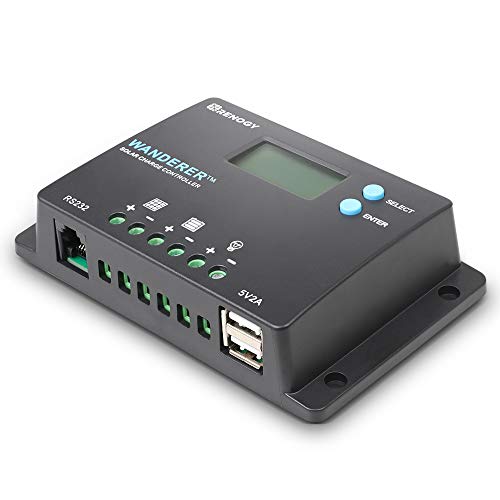
𝐒𝐦𝐚𝐫𝐭 𝟒-𝐒𝐭𝐚𝐠𝐞 12V/24V Solar Charge Controller: Renogy charge controller 𝐦𝐚𝐱𝐢𝐦𝐢𝐳𝐞𝐬 𝐁𝐚𝐭𝐭𝐞𝐫𝐲 𝐋𝐢𝐟𝐞 & 𝐒𝐨𝐥𝐚𝐫 𝐄𝐟𝐟𝐢𝐜𝐢𝐞𝐧𝐜𝐲, this advanced pwm solar charge controller utilizes intelligent 4-stage charging (Bulk/Boost/ Float/Equalization) to optimize power delivery for AGM, Gel, Flooded and Lithium batteries. RV solar charge controller prevents overcharging and gas buildup while 𝐚𝐜𝐡𝐢𝐞𝐯𝐢𝐧𝐠 𝟑𝟎% 𝐥𝐨𝐧𝐠𝐞𝐫 𝐛𝐚𝐭𝐭𝐞𝐫𝐲 𝐥𝐢𝐟𝐞𝐬𝐩𝐚𝐧 compared to basic charge controllers.
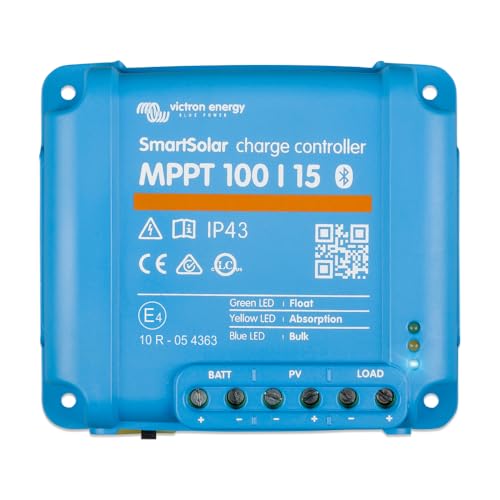
SMART SOLAR CHARGE CONTROLLER: Solar charge the smart way with the Victron Energy SmartSolar MPPT charge controller, to ensure that every ray of available sunlight is converted into usable energy, while optimizing battery longevity.
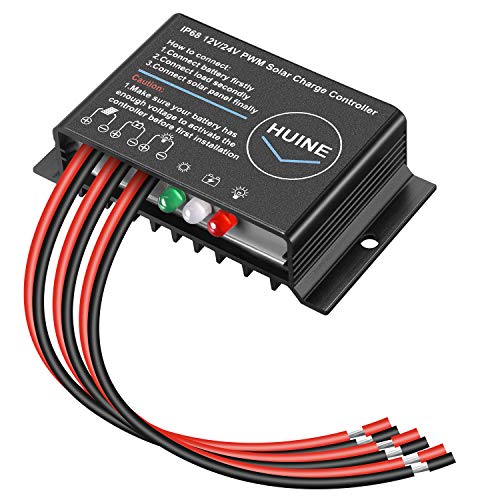
IP68 Rated Waterproof, this Intelligent 4-stage PWM solar charging controller is suitable for outdoor use,you can use it for solar fencing system, solar monitoring system, solar lighting system or other solar system.
How Overcharge Hurts Lead-Acid and Lithium Batteries Differently
Overcharging a lead-acid battery causes slow damage through gassing, heat, and plate corrosion, but the process provides early warning signs. Mild overcharge is tolerated by converting excess energy into gas and heat, leading to water loss and capacity reduction over time. Visible signs such as bulging or electrolyte loss often appear before the battery suffers catastrophic failure, giving you a window to address issues before major damage occurs.
In contrast, lithium batteries are far more vulnerable to overcharge. Their narrow voltage window means that excess voltage can cause rapid internal breakdown, including lithium plating and swelling. Because lithium batteries lack a venting mechanism for gases, heat builds quickly and can escalate into thermal runaway, which poses serious safety risks like fires. Once the cell structure is compromised, the damage is irreversible. Unlike lead-acid batteries, where degradation is gradual, overcharging a lithium battery can lead to sudden, total failure, making precise voltage control crucial to safe operation.
What Happens With No Charge Controller
Without a charge controller, connecting a solar panel directly to a marine battery leads to uncontrolled charging once the battery is full. Your panel continues to deliver current even as the voltage exceeds 14.4V, which is typical for a fully charged lead-acid battery. This raw voltage from the panel, often between 18 and 20V, hits your battery terminals directly without regulation. As a result, overcharging occurs, causing gassing, water loss, and heat buildup in lead-acid batteries. For lithium batteries, the risk includes triggering safety protections or damaging internal cells. Without a charge controller, there’s no battery monitoring to alert you when charging is complete. On a boat, where batteries are left unattended for days, this setup can cause permanent damage, similar to the risks from a loose shore connection that also leads to overheating and component failure. Proper crimping of cable lugs ensures secure, low-resistance connections that prevent similar overheating issues. Over time, you might notice reduced capacity, swelling, or venting. The bottom line: a direct connection is unsafe for marine batteries because it risks overcharge and damage without proper regulation. Selecting the proper solar panel fuse is critical to preventing electrical fires if a fault occurs in this unprotected system.

【Start Every Trip Ready】 Built for 12V solar panels up to 10A and compatible with 12V LiFePO4, AGM, and GEL batteries, this solar charge controller helps keep your battery supported while your vehicle sits. When the road, water, or trail is calling, spend less time worrying about a dead battery and more time getting on your way.

[POWER EFFICIENCY & MPPT TECHNOLOGY] This 400W solar charge controller delivers 90-97% conversion efficiency with true boost capability, handling input voltages from 7-80V and outputting 1.4-79V. Ideal for off-grid solar systems requiring maximum power point tracking.
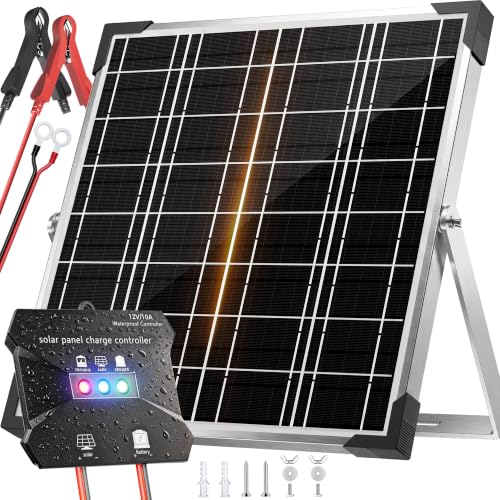
High-Efficiency MPPT Solar Charger - Advanced tracking technology delivers 20-30% faster charging for 12V batteries. A+ monocrystalline panels maximize power conversion. Perfect 20W solar trickle charger for cars, RVs, boats, and trailers. More sun captured, less time waiting.
Pick a Controller That Stops Marine Battery Overcharge
A controller that stops marine battery overcharge will actively disconnect or reduce charging once the voltage reaches a preset limit, preventing damage. Look for models that offer programmable over-voltage disconnect thresholds, so you can set the limit slightly above your battery’s recommended maximum voltage. Multi-stage charge controllers—particularly those with a float or taper stage—are essential for avoiding overcharge by maintaining the battery at a safe, full state without continuous high voltage application. Solid voltage regulation matching your battery chemistry—whether flooded, AGM, gel, or lithium—is crucial to prevent overcharging. An MPPT (Maximum Power Point Tracking) controller is ideal because it optimizes panel output, maintaining stable voltage even under shading or varying sunlight, reducing the risk of overvoltage. Choosing a controller with appropriate current capacity to match your solar array’s output ensures it can handle peak conditions without failure. Compatibility with marine environments demands hardware that is rated for corrosion resistance, and safety features like reverse-polarity protection and reverse-current blocking help prevent damage during installation or wiring mistakes. Properly sized, programmable controllers with these safety features are your best defense against overcharging and preserving your marine battery’s health over the long term. For example, PWM and MPPT controllers differ in performance and cost, with MPPT typically offering better efficiency and voltage regulation for marine batteries.
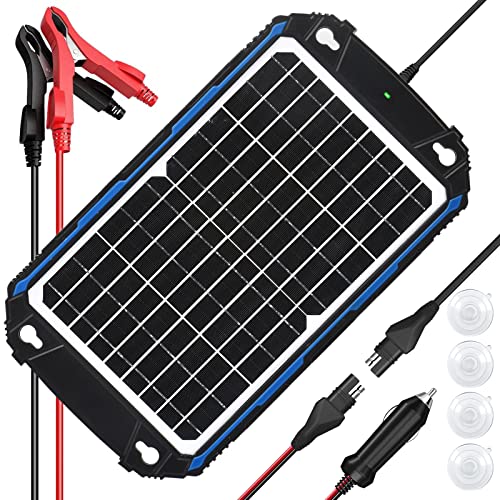
【Ultra-Smart MPPT Technology】This 12v solar panel battery charger is crafted with SUNER POWER's unique Ultra-Smart MPPT( Max Power Point Tracking) technology, the innovative MPPT allows to deliver high tracking efficiency of up to 99% and peak conversion efficiency of 98%, improving approximately 20%-30% utilization rate than other competitors

【High Conversion Rate】This 20W solar panel with monocrystalline A+ solar cell has an excellent cell efficiency of 21%-30%. Designed to charge and maintain 12V rechargeable batteries like LiFePO₄, Lithium Ion, AGM, SLA, GEL, EFB, MF, etc. Keep batteries in charged for trailer, tractor, truck, boat, motorcycle, RV, car, lawn mower, water pump, gate opener, electric fence, etc

ADVANCED 40A MPPT SOLAR CHARGE CONTROLLER: This Dyness MPPT solar charge controller continuously tracks solar panel output and combines multiple MPPT algorithms for efficient charging under changing weather and temperature conditions. Supports up to 600W at 12V or 1200W at 24V, with PV input below 100Voc.
Swelling, Heat, and Voltage Spikes: Warning Signs of Overcharge
Swelling, heat, and voltage spikes are clear warning signs that your marine battery is overcharging. The first and most obvious indicator is swelling or bulging of the battery case. This occurs when internal gas pressure builds up from the breakdown of the battery’s chemistry, and once it happens, it’s irreversible. Touch the battery—if it feels excessively hot, it’s a sign that energy is being wasted as thermal heat, which can lead to a dangerous feedback loop. For boats with limited space, Group 24 batteries are a compact option, but they may offer less reserve capacity than larger models. Using a quality lithium battery charger designed for 12V systems can help avoid these issues by maintaining proper voltage regulation. Properly crimping tool connections ensure clean electrical contact for safe charging.
Check the voltage during charging: if it exceeds 14.6 volts, or if the terminals show 15 volts or higher, you’re pushing the battery beyond safe limits. Additionally, be alert for sulfur smells or bubbling sounds, which indicate electrolyte loss and potential damage. When you notice swelling, heat, and voltage spikes together, it’s critical to take immediate action. Disconnect the battery or panel right away. Ignoring these signs can lead to capacity loss, electrolyte leaks, or even fire hazards. Acting swiftly keeps your equipment safe and preserves battery lifespan.
Connect Solar Panels to Marine Batteries Safely
To connect solar panels safely to your marine battery, start by installing a charge controller between them. The controller regulates voltage and current, preventing overcharging and ensuring your battery receives the correct charging profile for its type—whether sealed, flooded, AGM, gel, or lithium. For future expansion, oversize the controller’s amperage rating; for example, a 400W array on a 12V system requires a 40A controller to provide sufficient margin for additional panels later on. Use waterproof, corrosion-resistant wiring and components designed for marine environments. Incorporate reverse-polarity protection and reverse-current blocking features to avoid damage from wiring mistakes or backflow. Choose an MPPT (Maximum Power Point Tracking) controller for higher efficiency, especially with larger arrays, or opt for PWM controllers for smaller setups, as models reviewed in top solar charge controller comparisons often rank PWM as a cost-effective choice for basic maintenance charging. Keep wiring heavy-duty, terminals tight, and the battery well-ventilated, particularly if it is a lead-acid type. Always fuse the connections for safety and mount the controller in a dry, protected spot to prevent corrosion. For deep-cycle marine batteries, such as the Optima Yellow Top, ensure the charge controller is set to the correct voltage limits to avoid damage. A 2000 watt inverter can power many onboard loads, but its safe operation depends on a properly sized battery bank and charge controller to manage overall energy usage.