
Charging a marine battery safely can feel tricky, especially if you’re concerned about hazards like overheating or damage. Using the right equipment, like a marine-rated smart charger, is key.
Knowing how to set it up and monitor your battery ensures you stay safe and extend its lifespan. Keep reading for all the tips to do it properly.
Choose A Marine Battery Charger, Not A Car One
Choose a marine battery charger designed specifically for marine environments rather than a standard car charger. Marine batteries have unique chemistry and voltage requirements that a car charger cannot provide safely or effectively. Marine chargers feature tailored profiles for flooded, AGM, gel, or lithium batteries, ensuring each type receives the correct charging stages. For example, AGM batteries need a lower absorption voltage than flooded batteries, and you should avoid using equalization on AGM or gel types. Lithium batteries require a charger made specifically for lithium chemistry; using a lead-acid charger can be dangerous. Compatibility with your battery’s chemistry is essential for proper bulk, absorption, and float charging stages. A smart marine charger automatically adjusts voltage and current to prevent overheating and overcharging, prolonging your battery’s lifespan. Using a car charger risks damaging your battery and shortening its service life. Smart marine chargers also protect against corrosion and spark hazards common in wet boat compartments. Unlike car chargers, marine chargers often incorporate solar charging options for off-grid maintenance. Always select a charger rated for your battery’s total amp-hour capacity to ensure safe and efficient charging.

MEET THE GENIUS1 — Similar to our G750, just better. It's 35% smaller and delivers over 35% more power. It's the all-in-one charging solution - battery charger, battery maintainer, trickle charger, plus desulfator.

MEET THE GEN5X2 — 37% smaller and 43% more powerful than the GENM2. It’s our most compact and advanced onboard charger yet—engineered for peak performance in the harshest marine environments.
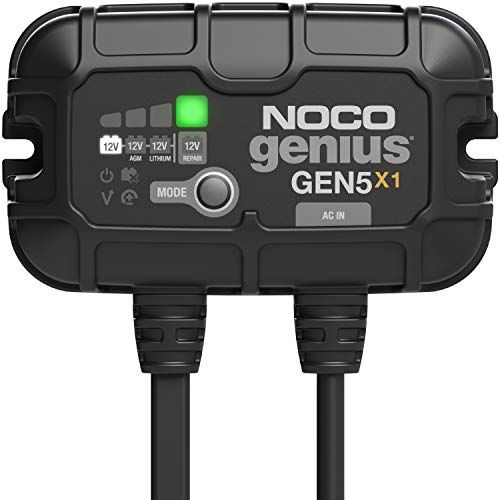
MEET THE GEN5X1 — 37% smaller and 43% more powerful than the GENM1. It’s our most compact and advanced onboard charger yet—engineered for peak performance in the harshest marine environments.
Set Up A Safe Charging Station On Your Boat
To set up a safe charging station on your boat, begin by prioritizing ventilation. Hydrogen gas can be released during overcharging, even from sealed batteries. Install a vent system or select a location with strong natural airflow. Never charge batteries in a sealed compartment to prevent gas buildup. Ensure the shore power cord connection is clean and tight to avoid sparks from power that could ignite nearby fumes. Position the charger close to the battery bank to minimize DC cable length, but avoid placing it directly above the batteries. Escaping gas and acid vapor can damage the charger if placed overhead. Leave at least four inches of clearance around the charger for airflow and route cables without strain. Ensure cables are secured and do not become pinched or damaged. Choose a non-flammable mounting surface for the charger and keep it protected from water exposure. Always keep the charger away from fuel tanks and below the waterline. To maintain safety, secure the charger against vibration, which helps prevent loosening or damage over time. Use a marine fuse block to protect each circuit from overloads, matching the fuse rating to the wire gauge for safe operation. For an additional layer of safety, use high-quality battery terminals to ensure a clean, tight connection that minimizes resistance and reduces the risk of sparking.
Inspect Your Marine Battery Before Charging
Before charging your marine battery, thorough inspection is essential to prevent fires, shocks, and damage. Start by examining the battery case for cracks, bulging, or leaks. If you notice any of these issues, do not attempt to charge it—remove the battery from service immediately. Next, inspect the terminals for corrosion, which appears as white or green buildup. Clean off corrosion to ensure good electrical contact. Also check the cable insulation for fraying or cracks. For additional safety, consider how top wire strippers can help ensure clean, reliable connections when servicing terminals. For a stable installation, ensure the battery sits securely in a correctly routed tray to prevent movement that could damage terminals.
For flooded batteries, verify the electrolyte levels. The fluid must cover the plates; if it does not, add distilled water. Only open the caps if it is safe to do so. Never check electrolyte levels on sealed batteries, as they are not designed to be refilled. Always wear gloves and goggles when handling electrolyte to protect yourself.
Finally, allow the battery to rest for at least two hours before measuring voltage. A reading below 12.0 volts indicates the battery is discharged. You may also consider adding a remote battery disconnect switch for extra safety and to prevent parasitic drain when the vehicle is not in use. If the battery fails any part of this inspection, replace or service it before proceeding with charging.


All-In-One - The ultimate battery terminal cleaning kit provides all the tools to clean and protect your battery from battery corrosion.

CORROSION GONE! cleans leakage from all types of batteries including alkaline, nicad, nickel metal hydride and low cost zinc carbon cells.
Connect And Disconnect Charger Cables Safely
To connect and disconnect your charger cables safely, always power down the charger completely before handling any cables. Unplug it from the AC mains first to eliminate the risk of sparks. When attaching cables, connect the red positive lead first, making sure it has a solid metal-to-metal contact. Then, connect the black negative lead last. If working with installed batteries, ground the black lead to a clean, unpainted chassis point away from the battery for added safety. For long-term safety, consider installing a top post battery disconnect switch to physically isolate the battery from the circuit when not in use. Understanding your battery’s specifications is essential, as a Group 31 battery provides the high capacity needed for marine starting and deep-cycle demands. For setups with multiple batteries, using dual battery isolators prevents one battery from draining another while charging.
To disconnect, reverse the procedure: turn off and unplug the charger first. Remove the black negative lead before removing the red positive lead. Always disconnect the first lead as far from the battery as practical to minimize spark risk. Keep the charger wires on top of existing cables and ensure they are clear of hot surfaces, moving parts, and fuel lines to prevent hazards.

Heavy Duty: ABS plastic housing, durable made for safety use, rear cover insulates terminals against any short of circuits, equipped with 4 sets of bolts.

Permits selection between batteries for starting, charging or operation in parallel

LED Digital Voltage Display: This side post battery disconnect switch 12v comes with LED digital voltage display, you can see your battery voltage as soon as you turn it on, and it will not drain your battery when turned off. It is more convenient for you to check your battery voltage in real time. The digital display function allows you to keep track of your battery status at any time and protect your battery
Monitor Marine Battery Charging For Overheating Or Gassing
Monitor your marine battery closely during charging for signs of overheating or gassing. Continuously feel the battery case at regular intervals; a steady increase in warmth indicates a potential problem. Keep lead-acid batteries below 125°F and VRLA batteries under 50°C to prevent damage. Elevated temperatures above ambient suggest excessive current flow or poor ventilation. Watch for gas emission signs such as bubbling, hissing, or fizzing in flooded batteries, which indicate gassing has started. Lead-acid batteries naturally release hydrogen and oxygen, so ensure the compartment is well-ventilated to prevent the risk of ignition. If the battery becomes hot, begins to loudly gass or swell, disconnect the charger immediately. Reduce the charging current, allow the battery to cool down, and verify your charger’s voltage settings before attempting to charge again.

Applicable Battery Type --- DROK digital battery monitor is suitable for 10-100V (12v 24v 36v 48v 60v ) lithium battery, lead-acid battery, lithium iron phosphate battery, Ni MH battery.
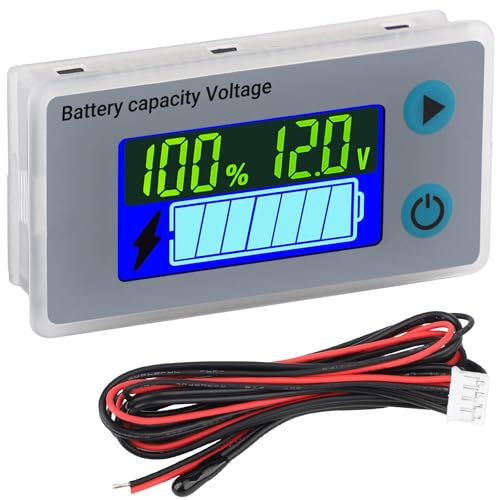
【Upgraded Protection】The sturdy full-enclosure shell and waterproof, dustproof surface can resist external forces and protect the circuit board from damage and other harmful impacts. Apart from reverse connection protection, Drok battery monitor features over temperature buzzer alarm and low voltage buzzer alarm for safer battery monitoring.

【Upgraded Protection】The sturdy full-enclosure shell and waterproof, dustproof surface can resist external forces and protect the circuit board from damage and other harmful impacts. Apart from reverse connection protection, Drok battery monitor features over temperature buzzer alarm and low voltage buzzer alarm for safer battery monitoring.
Wear Marine-Specific Safety Gear: Goggles, Gloves, And Grounding
To safely charge a marine battery, wearing marine-specific safety gear and ensuring proper grounding are essential. Use splash-proof goggles with a sealed shield to protect your eyes from acid spray, as marine batteries contain corrosive acid that can cause serious injury. Pair these with acid-resistant gloves made of neoprene or butyl to shield your skin from spills and splashes. For optimal charging performance and protection of your battery system, consider a marine-rated charger like a top DC to DC charger to ensure proper voltage regulation.
Proper grounding is critical: make sure there is a solid connection between your AC and DC grounding systems, such as the main bus or engine block. Faulty grounding can turn your charger into a hazard, increasing the risk of electrical shock or fire. Always wear long sleeves and avoid metal jewelry or objects in your pockets to prevent accidental contact with live components. Use insulated tools to handle connections safely. A master switch for battery systems can further enhance safety by allowing you to fully isolate power during maintenance.
Conduct the charging process in a well-ventilated area, never near open flames or smoking materials. Keep your setup dry and avoid contact with water. Following these safety practices ensures you minimize risk while charging your marine battery. For programmers who also maintain their boat’s electrical systems, using a programmer-friendly battery maintainer can simplify monitoring while ensuring consistent charge levels.

DEWALT ToughCoat hard coated lens provides tough protection against scratches.

DEWALT ToughCoat hard coated lens provides tough protection against scratches.

Industrial Grade Protection - MELASA protective goggles meet ANSI Z87.1 Safety Goggles Standards and CE EN166 certificate requirements, designed for industrial, commercial, and housework.