
Have you ever wondered how your home wiring stays protected from overheating or short circuits? A thermal circuit breaker is a common safety device that helps prevent electrical fires by cutting off power before wires get too hot.
It’s designed to reset itself after cooling down, offering ongoing protection without needing replacement.
This article will explain how it works and when it’s the right choice.
What Exactly Is a Thermal Circuit Breaker?
A thermal circuit breaker is an electrical protection device that automatically opens the circuit when excessive current causes harmful heat buildup. It operates based on a bimetallic strip that bends when heated by current overloads. When the current exceeds a preset level, the heat causes the strip to bend, triggering a switch that breaks the circuit. This process prevents damage to connected equipment by stopping the flow of current before wiring or devices overheat. For example, in a marine shore power setup, a sparking connection can generate enough heat to trip this breaker, acting as a critical safety against overheating****.
Unlike a fuse, a thermal circuit breaker can be reset after it trips, making it reusable and cost-effective over time. Its durable materials allow it to withstand multiple overloads without degrading, unlike fuses which are single-use. You will typically find thermal circuit breakers in motors, transformers, and low-voltage circuits where they serve as a first line of defense against overheating and slow overloads. Correct installation is essential; you must mount the breaker securely and connect it within the circuit’s rated capacity to ensure proper protection. For high-performance applications, using quality battery terminals ensures a secure and low-resistance connection that prevents unnecessary heat at the breaker’s input. For solar setups, this type of breaker pairs well with 12V solar battery chargers that include overcharge protection to safeguard the entire charging system.
This device doesn’t just protect against sudden short circuits; it’s specifically designed to prevent damage caused by prolonged, heat-driven overloads that can deteriorate wiring and harm equipment if left unchecked. Understanding its role and proper usage will help you maintain electrical safety and extend the lifespan of your electrical systems.
How a Thermal Circuit Breaker’s Bimetallic Strip Works
When overload current flows through a thermal circuit breaker’s bimetallic strip, resistive heat causes it to heat up rapidly. The strip remains straight until enough heat accumulates, reaching a calibrated temperature that triggers its bending. This bending motion pushes against an internal latch, causing it to release. A spring then snaps the contacts open, effectively cutting off the current flow and preventing damage. A similar principle applies when using a heat gun for heat shrink tubing, where controlled heat causes the tubing to contract snugly around wires. After the overload condition subsides, the strip cools down, prompting the metals to contract and resetting the breaker. Because this process involves a thermal delay, minor or brief overloads won’t cause a tripping, allowing the breaker to tolerate temporary surges without interruption. For reliable power isolation in similar safety applications, top battery disconnect switches also provide a manual way to cut off current and protect wiring. A quality crimping tool often includes a built-in cutter to cleanly sever wires before making a secure connection.
Why Thermal Circuit Breakers Can’t Handle Short Circuits Alone
Thermal circuit breakers alone cannot handle short circuits because the current during such faults can be dozens of times higher than their rated capacity. Thermal elements respond slowly to overloads—taking seconds to trip—making them unsuitable for the instantaneous nature of short circuits. When a short circuit occurs, the rapid surge of current causes arc energy to escalate quickly, risking damage to wiring and connected equipment before the thermal device can activate. Without an instantaneous trip mechanism, the high-energy fault can weld contacts or damage internal components. To safely clear these faults, circuit breakers need a magnetic trip component that can react within milliseconds. For maintaining clean, low-resistance connections, the same principle applies when using wire brushes for cleaning battery terminals to prevent voltage drop and arcing. This fast-acting magnetic element is essential to interrupt large fault currents before they cause significant damage or pose safety hazards. The importance of reliable contact integrity during such faults parallels the need for robust crimping tools when assembling wire connections. For example, when choosing protection for sensitive marine electronics, the battery monitor selection process similarly prioritizes fast response to prevent equipment damage from electrical anomalies.

FUNCTIONS: Used to protect 110V 120V 220V 230V AC circuit from overload and short circuit damage, and can also be used for control and isolation.

FUNCTIONS: Used to protect 110V 120V 220V 230V AC circuit from overload and short circuit damage, and can also be used for control and isolation.

Reliable Protection: Designed to safeguard power distribution systems against overloads and short circuits, while also serving as a control and isolation device.
Why Thermal Circuit Breakers Take Time to Trip
Thermal circuit breakers take time to trip because they depend on heat buildup in a bimetal strip or similar thermal element. When an overload occurs, current flowing through the strip generates heat, causing it to expand or bend. This process takes seconds to minutes, depending on the severity of the overload. The delay follows an inverse-time pattern: lighter overloads may take several minutes or even hours to trip, while heavier overloads trip in just a few seconds. Corrosion at battery terminals can mimic an overload by increasing resistance and heat, so using anti-corrosion grease helps maintain proper electrical connections. A high-quality battery charger with maintainer can also prevent such resistance issues by keeping the battery at an optimal charge level.
This intentional delay allows the breaker to tolerate brief motor inrush currents or starting surges without tripping unnecessarily. Ambient temperature also influences trip timing; higher temperatures cause the thermal element to heat up faster, reducing trip time, which means proper airflow and enclosure ventilation are essential. This same thermal delay characteristic makes thermal breakers well-suited for protecting deep cycle battery setups, where sustained overloads must be interrupted but harmless motor starts should be ignored.
Thermal breakers are a cost-effective solution because they are less expensive than magnetic breakers with faster response times. However, their deliberate delay provides a balance between safety and practicality, protecting wiring from sustained overloads while ignoring transient, harmless current spikes.

Power rating: 40A (amp),Package Included: 2 x Circuit Breaker

Thermal circuit breakers (can also be used for 24-hour circuit protection)

Product Name: Compact, Single Pole, Push-to-Reset Thermal Circuit Breakers
How Thermal Circuit Breakers Protect Your Wiring
Thermal circuit breakers protect wiring by using a bimetal strip that bends as heat accumulates. When current flows through, the heat causes the strip to warp, eventually triggering the breaker to open the circuit before sustained overloads can damage the insulation. This design targets long-term, dangerous heat buildup rather than short-lived inrush currents, which are typically harmless. By disconnecting power, the breaker prevents further conductor heating, helping to extend cable life and lower the risk of failure. It also safeguards connected devices by reducing thermal stress at terminals and other components. Material compatibility is important; these breakers are designed for specific wiring types and insulation ratings. External temperatures can influence the breaker’s trip point, so you need to consider your environment to ensure effective protection. After a fault is cleared, resetting the breaker is quick and simple, avoiding the inconvenience and cost of replacing fuses.

Compact, single pole, push-to-reset thermal circuit breakers
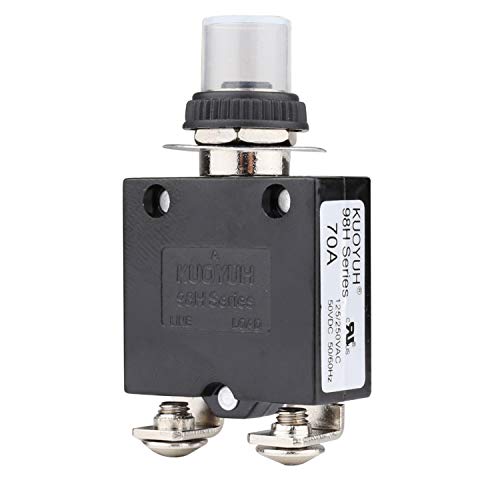
Product Name: Thermal Circuit Breaker with Transparent Cap.

【Durable Material】: The shell is crafted from PA66, known for its excellent compressive strength and resilience, allowing it to withstand significant external forces and pressure. Its heat, wear, and corrosion resistance enable it to perform well in challenging environments.
How Ambient Temperature Affects a Thermal Circuit Breaker
Ambient temperature significantly impacts the performance of a thermal circuit breaker. Most breakers are calibrated assuming an ambient temperature around 40°C. When the surrounding temperature exceeds this, you need to derate the breaker’s current capacity. For example, at 70°C, the usable current might be only 80% of its rated current. The enclosure’s temperature also matters; heat from nearby equipment can raise internal temperatures well above ambient room levels. Just as a battery maintainer is selected based on specific conditions, always verify the manufacturer’s guidelines for your specific breaker and installation environment to prevent overheating and ensure reliable protection. When selecting a breaker, you should also consider the quality of the tools used for wiring, such as choosing a model that ensures clean cuts like top automatic wire strippers do for wire preparation. For critical battery systems, selecting a breaker sized similarly to how you would choose the best master switch can prevent nuisance tripping and equipment damage. Ignoring these ambient conditions risks damaging wiring and compromising safety.

Product Name: Manual Reset 125-250V AC 50V DC Push Button Switch Thermal Circuit Breaker

Product Name: Manual Reset 125-250V AC 50V DC Push Button Switch Thermal Circuit Breaker.

Double pole, 50 Amp, 240V type QP Circuit Breaker
Manual vs. Automatic Reset: Which One Do You Need?
Choosing between manual and automatic reset for a thermal circuit breaker depends on your priority for safety versus convenience. Automatic reset breakers will re-close themselves once they have cooled down after a fault, restoring power without any user intervention. This is useful in applications where continuous operation is necessary, especially when the system runs unattended. However, automatic resets can hide persistent issues because they don’t require a user to acknowledge a fault, potentially leading to unnoticed damage or repeated failures. For example, using a quality zip tie for securing wires near a breaker can help maintain neat cable management and reduce the chance of accidental shorts. To ensure the battery is held securely and protected from vibrations, pairing your setup with a compatible battery tray is essential for long-term reliability.
Manual reset breakers, on the other hand, remain open after a trip until you manually reset them by pressing a button or flipping a switch. This forces you to inspect the circuit and identify the underlying problem before restoring power. Manual units typically feature clear trip indicators like a colored flag or a visible lever, so you can easily see if a fault has occurred. They offer better safety for sensitive or critical circuits where you want to verify a fault before restoring power. The trade-off with manual resets is increased downtime and the need for operator involvement, but they provide greater control and awareness of circuit conditions.
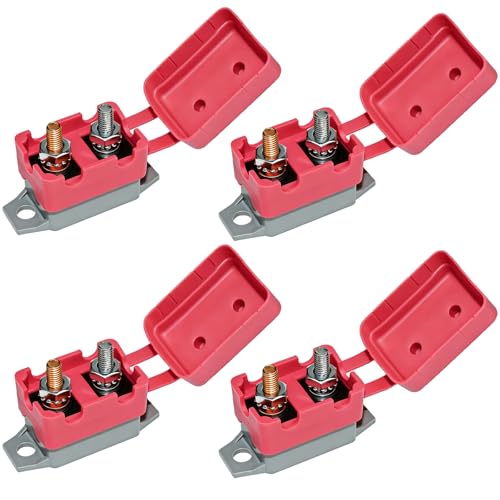
Package Includes: 4 automatic reset circuit breakers; 4 red vinyl waterproof protectors; 8 screw nuts

Specifications: Current: 30A; Working Voltage: DC 12V- 24V, #10-32 Stud Bolt Terminals; Operating temperature: -40°C to 85°C

【Specification】: 50 Amp Circuit Breaker 12v , Operating Voltage: DC 12V - 24V, Waterproof IP 66, #10-32 Stud Bolt Terminals, Working Temp: -10℃ to 60℃. Widely used in automotive and marine circuits, suitable for Cars, Truck, Trailer, Bus, Winches, RV, ATV, Boat, Yacht, Kayak, Solar System, Electrical Equipment etc.