
If you’re wondering whether you need an inverter or an inverter charger, it’s usually about your power setup and how many sources you use.
An inverter charger can handle multiple power inputs like solar, shore power, or generators while switching seamlessly between them.
A standalone inverter works fine for simple, single-source setups but doesn’t offer the same convenience.
Keep reading to see how size and speed play into your perfect choice.
What’s the Difference Between an Inverter and an Inverter Charger?
An inverter charger combines the functions of an inverter and a battery charger in one device, enabling it to perform two roles with a single unit. While a basic inverter only converts DC battery power into AC for your loads, an inverter charger also manages charging your batteries from an AC power source. It automatically switches between power sources and rectifies incoming AC to recharge your batteries, making it a true bidirectional power manager. This integration reduces the need for separate components, increasing overall system efficiency. However, inverter chargers generally cost more upfront compared to standalone inverters due to their advanced capabilities. If your setup requires both backup power and automatic battery replenishment, investing in an inverter charger often results in long-term savings on space, wiring, and maintenance costs, providing a smarter, more cohesive solution. For boaters specifically, selecting the right inverter charger is critical because it ensures your trolling motor batteries remain properly maintained and ready for extended time on the water. When choosing an inverter charger, look for models with corrosion-resistant terminals to ensure reliable connections and long-lasting performance in marine environments.

POWER ASSIST: With the unique Power Assist feature the MultiPlus-II solar inverter will prevent overload of a limited AC source, such as a generator or shore power connection

This Pure Sine Wave Inverter is a combination of an inverter, battery charger and AC auto-transfer switch. High transfer efficiency is above 90%, , complete isolate surge interference of input & output's voltage and current, Impact resistance, super load capacity, built-in AVR stabilizer, continuous stable pure sine wave output.

【Powerful Output 】The REGO 12V 3000W inverter charger provides 3000W continuous pure sine wave AC output and peak power up to 9000W, with a conversion efficiency greater than 90% and adjustable 50/60Hz output, allowing you to power most heavy-duty appliances.
Standalone Inverter vs Inverter Charger: Which One Do You Need?
An inverter charger combines inversion, charging, and automatic transfer switching into a single device, making power management straightforward. When external AC power is available, it seamlessly passes that power through to your load, while simultaneously charging your batteries without the need for separate equipment. This integrated design minimizes wiring complexity and offers a single user interface for monitoring and controlling your system. For lithium batteries, it is crucial to use a charger with the correct voltage profile, such as a trickle charger for lithium battery, to ensure safe and efficient charging. Using a top solar charge controller with the correct voltage profile is equally important for maintaining battery health. Although it tends to be more expensive and introduces a single point of failure, the convenience and automation it provides make it ideal if you frequently switch between battery and AC sources. For those seeking a simpler alternative, a standalone inverter paired with a separate charger can offer more flexibility, but users should still consider the best automatic wire strippers for proper installation and wiring tasks. Choose an inverter charger when your setup requires both reliable AC output and automatic battery recharging for smooth, hassle-free operation.
Why RVs, Boats, and Off-Grid Setups Need an Inverter Charger
An inverter charger combines inversion, charging, and automatic transfer switching all in one unit, which is essential for RVs, boats, and off-grid setups. These environments constantly switch between battery power, shore power, and generator power to keep everything running smoothly. The inverter charger manages this transition seamlessly, ensuring your fridge, lights, and sensitive electronics stay powered without interruption. For example, pairing it with a 100w solar panel can provide reliable daily charging for your battery bank when shore power is unavailable. In such systems, a battery isolator is often used to prevent battery drain when the engine is off.
When you connect to shore power or start your generator, the inverter charger automatically recharges your batteries using multi-stage charging profiles. These profiles help maintain battery health by optimizing charging speed and preventing overcharging. It’s also possible to set adjustable AC input limits to avoid tripping a 30-amp pedestal while still powering other loads, adding a layer of safety and flexibility. If you notice sparks at the connection when plugging into shore power, it may indicate worn contacts or a need for a tight, clean connection to prevent arcing.
For off-grid systems that incorporate renewable energy sources like solar panels or wind turbines, an inverter charger provides critical power stabilization. It delivers pure sine wave AC, which is necessary for sensitive electronics like microwaves, laptops, and other appliances, ensuring stable voltage and frequency. Its compact, all-in-one design makes it an ideal solution for supporting daily loads and restoring your battery bank whenever external AC power becomes available.

BESTEK 300W Pure Sine Inverter (Patent Number US D818,853 S): Designed for your devices that require careful protection, provide 300W continuous DC to AC power and 700W of peak power featuring 2 AC outlets and 2 USB charging ports, great for Christmas gift, charging string lights, laptop, speakers, camera, nebulizer, game console, kindle, iPad and other

【𝟑𝟎𝟎𝟎 𝐖𝐚𝐭𝐭 𝐈𝐧𝐯𝐞𝐫𝐭𝐞𝐫】--- This pure sine wave inverter can provide 3000W continuous clean DC to AC power (6000W surge) with >91% efficiency, which strongly and effectively reduces conversion loss and protecting sensitive electronics (Microwave Oven, Laptops, CPAPs, LEDs) from damage. Handles heavy startups (Coffee Machine, Window AC, Power Tools) effortlessly. For RV, Home, Solar, Emergencies.

【POWERFUL DC-AC】This renogy 1000 watt inverter 12V to 110V provides 1000W continuous DC to AC power, 2000W peak surge during load start-up, 12V to 120VAC pure sine wave with conversion efficiency >90%, reduces conversion loss
How an Inverter Charger Manages AC Input and Battery Charging Simultaneously
An inverter charger manages AC input and battery charging simultaneously through an automatic transfer switch and integrated charging circuitry. When it detects valid shore power or generator input, the unit immediately directs that AC power to your connected loads, passing it through an internal transfer switch. At the same time, a portion of the incoming AC is diverted to the charger circuit to replenish the batteries. This process occurs automatically without any manual switching; the inverter charger continuously monitors voltage and frequency to ensure stable operation before engaging the transfer switch. It often waits a few seconds for the power to stabilize, then maintains the AC supply to loads while efficiently charging the batteries. For secure and reliable connections of battery cables and wiring, using best crimping tools ensures proper terminal attachment. A well-designed inverter charger can also integrate with portable solar panels to combine AC and solar charging for enhanced power availability. Additionally, selecting a shore power inlet mounting spot that provides easy access and proper ventilation is essential for safe and efficient AC input connection.
Power monitoring features display current draw from both your loads and the charger, which is crucial for avoiding overloads. Exceeding your AC input capacity can cause breakers to trip, so keeping track of combined consumption helps prevent interruptions. The charger employs staged charging profiles rather than fixed output, allowing it to automatically reduce charging current as your load increases. This shared-input design optimizes system efficiency and prevents disruption. Passive cooling methods are used to manage heat during simultaneous operation, ensuring your inverter charger remains reliable without the need for noisy fans.

【All-in-one solar charge inverter】: SUNGOLDPOWER 10KW DC 48 volt UL1741 Pure Sine Wave Solar Inverter Combined with Max. 200A battery charging, 2 MPPT Solar controller inbuilt, Max.Voltage of Open Circuit : 500VDC, Split phase (120V/240V) or Single phase (120v) output. Parallel up to 6 units
【All-in-one solar charge inverter】: SUNGOLDPOWER 10KW DC 48 volt UL1741 Pure Sine Wave Solar Inverter Combined with Max. 200A battery charging, 2 MPPT Solar controller inbuilt, Max.Voltage of Open Circuit : 500VDC, Split phase (120V/240V) or Single phase (120v) output. Parallel up to 6 units
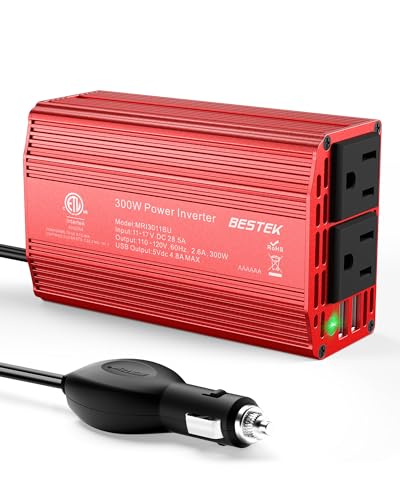
BESTEK Advantage Upgraded: Bestek is power inverter patents owner, America's leading power inverter brand. Our inverter tech upgraded to 11-17V compatible with Tesla. It provides 300 Watts continuous DC to AC power and 700 Watts instantaneous power, featuring 2 AC outlets and 2 USB ports
Inverter vs Inverter Charger: Key Decision Factors for Your Setup
Choosing between a standalone inverter and an inverter charger depends on your load demands, power source options, and battery configuration. For smaller loads up to 3,000 watts with variable demand, a standalone inverter provides a simple and cost-effective solution, especially if charging is handled elsewhere. Ensure that the inverter’s continuous and surge ratings meet your startup needs—compressor motors, for example, require extra headroom for their initial startup surge. For larger systems or setups that incorporate shore power or generator input, an inverter charger offers a streamlined solution. It combines inverter functions with battery charging, reducing the need for separate equipment and wiring. Matching system voltage—such as 12V, 24V, or 48V—is critical for efficiency. Additionally, look for inverter chargers with transfer times under 20 milliseconds to maintain power stability for sensitive devices like computers. While inverter chargers typically have a higher upfront cost, their integrated design enhances energy efficiency and simplifies backup power management. When sizing your system, consult inverter sizing rules to ensure your battery bank and wiring can handle the amp draw at full load. Unlike thermal circuit breakers, which protect wiring from overloads, an inverter charger integrates battery charging to manage both AC and DC power flows efficiently. For the battery housing, selecting a durable plastic battery box helps protect your setup from environmental damage and vibration.