
Wondering whether a battery switch or a battery disconnect is right for your system? Each offers different ways to control power, but they serve distinct purposes.
Choosing the right one depends on whether you need quick management during operation or a complete shutdown for safety or storage. Keep reading to see which option best fits your voltage, amperage, and system needs.
Battery Switch vs. Disconnect: What’s the Real Difference?
A battery switch and a battery disconnect serve different functions in your electrical system. A battery switch is primarily a control device that allows you to select, route, or manage power sources—think of it as a manual switch that lets you choose between one or multiple batteries or connect them together. It offers flexibility in power management but does not completely shut off current flow. In contrast, a battery disconnect is a dedicated safety device designed to physically cut all power by isolating the battery from the system. It completely breaks the circuit, preventing any current from flowing through the wires. This makes the disconnect the better choice when you need to work safely on the system or prevent battery drain during long periods of inactivity. For maintenance and safety, a disconnect provides a more reliable method of ensuring all power is truly off, while a switch is better suited for managing different power sources during normal operation. A disconnect is especially important when installing solar panels to ensure zero current during wiring. To protect your batteries from overcharging, using a solar charge controller is also critical for system longevity. When choosing a charger, consider whether an onboard charger offers better long-term integration for your battery setup.
When Should You Use a Battery Disconnect Instead of a Switch?
Use a battery disconnect instead of a switch when you need a quick, complete cutoff of power, such as during long-term storage, maintenance, or emergencies. It’s particularly useful for preventing parasitic drain from clocks, alarms, or other electronics, helping to keep your battery charged over months. During repairs or servicing, a disconnect fully isolates the electrical system, reducing spark risk and enhancing safety. In emergency situations, it allows you to instantly cut all current, preventing hazards from system faults. A common cause of sparks when reconnecting a shore power cord is a momentary surge of current, which a disconnect can help avoid by ensuring the system is fully dead before reconnection. The BS100 model is a patented side post disconnect switch specifically designed for automotive batteries. Using a top lithium battery tester can confirm that your battery maintains its voltage after being disconnected. For those who also value a secure connection, many top post battery terminals include sturdy clamping mechanisms that reduce resistance and improve current flow.
Cost is another factor: a disconnect typically costs less than a switch and provides rapid, whole-system disconnection. You also gain theft deterrence since no one can start the vehicle when the power is shut off. For applications like RVs, boats, or solar setups, a disconnect offers a clean, reliable way to disconnect power without removing the battery entirely. Its straightforward design and functionality make it a practical choice for safeguarding and controlling your vehicle’s electrical system.

High Current Battery Switch: With a rated current of 200 Amp Continuous, and 1000A Intermittent, Spurtar battery disconnect switch safely isolate and secures 12-48V DC electrical system connections
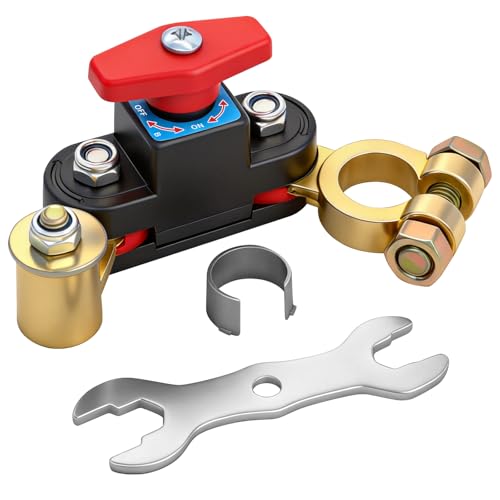
【Extend Battery Life & Prevent Drain】This battery disconnect switch effectively prevents parasitic battery drain, protecting against accidental discharge when your vehicle, RV, or boat is stored. By cutting off the electrical circuit, it reduces unnecessary energy consumption, enhancing battery longevity and ensuring a reliable start every time.
Do These Devices Protect Against Short Circuits or Overloads?
A battery switch alone does not protect against short circuits or overloads. It provides manual isolation, meaning you must intervene to disconnect the system during faults. In a short circuit, a basic switch won’t automatically interrupt the flow of massive current; you need to turn it off manually to prevent damage. For overloads, a switch lacks any built-in safety features to respond to sustained excess current. Unlike a simple switch, correct routing and connections through a battery box lid are critical to ensuring the protective device receives proper power for its automatic fault detection to function. A protective disconnect, on the other hand, includes automatic fault detection. It opens instantly via a magnetic trip during a short circuit, disconnecting the circuit immediately and preventing damage. It also offers thermal safety for overloads, using a thermal trip mechanism that responds to prolonged high current. This prevents wire damage and potential fires from sustained overcurrent conditions. Always verify the device’s trip rating or protection label. Without this, you cannot rely on a switch-only device to safeguard your system from short circuits or overloads, leaving it vulnerable to electrical faults that could cause costly damage or safety hazards. When selecting a master switch for battery systems, it is essential to choose a model with adequate trip protection to ensure automatic fault response. Before resetting a tripped breaker, you should check for a short circuit by inspecting wires and connections for damage or corrosion.
Where to Install Each Type for Safety and Access
Place your battery switch as close to the battery bank as practical, typically within 18 inches. This minimizes cable length and reduces voltage drop, ensuring efficient power control. For safety, position the switch where you can reach it quickly and without tools, such as from the driver’s seat or outside the engine room. This allows for rapid emergency shutdown if needed. For additional security, consider using high-quality battery straps to keep wiring firmly in place and prevent accidental disconnection.
Battery placement should favor dry, well-ventilated locations and avoid areas prone to splashes or gas accumulation. Installing the disconnect switch on the main positive cable near the battery terminal is ideal, but keep it outside high-hazard zones like fire-prone areas. This placement keeps the switch accessible for quick shutdowns while shielding it from dirt and accidental contact.

Permits selection between batteries for starting, charging or operation in parallel

COMPACT DESIGN: Supports installation in tight spaces; helps fit the unit into limited mounting areas

Heavy Duty: ABS plastic housing, durable made for safety use, rear cover insulates terminals against any short of circuits, equipped with 4 sets of bolts.
What Are the Best Battery Switches for Cars, RVs, Boats, and Backup Systems?
The best battery switches for cars, RVs, boats, and backup systems vary based on specific needs, but some stand out across applications. For cars, the Spartan Power 300A disconnect is highly rated for its ability to facilitate battery maintenance without disrupting the vehicle’s electrical system. The AWBLIN switch with built-in voltmeter allows you to monitor voltage directly, helping prevent electrical issues. In RVs, Blue Sea Systems m-Series switches offer reliable power management with convenient toggling, while remote disconnect options make battery access easier from a distance. For boats, the Blue Sea Systems 6006 and e-Series 9003e provide water-resistant housings and robust safety features, essential for marine environments. Backup systems benefit from selector switches that include an off-position to isolate the battery and prevent parasitic drain when not in use. Across all types, prioritize switches that feature clear on/off indicators and sturdy construction to ensure long-term durability.

Easy Installation: The side post design and removable bolts make the installation process more straightforward, eliminating the need for additional battery cables or connectors; direct connection to the battery is sufficient

On/Off Switch: This side post battery disconnect switch features On/Off 2 Position; Rating: 275A DC Continuous (1hr), 455A DC Intermittent (5 min), 1250A DC Cranking (10 sec). Stud Size: 2 x 3/8" (M10)

High Conductivity Power Control - Pure copper contact structure provides high electrical conductivity and low resistance, supporting stable current transmission and reduced energy loss. Helps maintain consistent power flow and reliable circuit performance during daily operation. Designed to minimize voltage drop and improve overall battery system efficiency in automotive and marine applications
How to Pick the Right Battery Switch for Your Voltage and Amperage
Choose a battery switch rated for at least the maximum DC voltage of your system. Typically, systems operate at 12V, 24V, or 48V, so select a switch with a voltage rating that matches or exceeds your system voltage. Voltage compatibility ensures proper contact spacing and arc control. Using a switch rated only for 12V on a 48V system can cause arcing and damage, while a 48V-rated switch can safely handle lower voltages. For example, a typical boat setup often uses a 12V system where a 12V-rated switch is sufficient. For further guidance on selecting a reliable model, consider reviewing top picks from comparisons of battery disconnect switches.
For current capacity, focus on your highest sustained load, such as your alternator’s output, and select a switch with a continuous current rating above that number. This margin reduces heat buildup and prolongs the switch’s lifespan. Also consider intermittent ratings, as starting loads can surge far beyond normal running currents. A switch rated for 200 amps continuous might handle 400 amps temporarily.
Always verify the switch’s interrupting capacity, especially for high-energy systems or potential short circuits. This capacity indicates how much fault current the switch can safely interrupt without failing. Ensuring your switch can handle the worst-case fault is essential for safety and system reliability. For additional protection in high-risk applications, you can also consider kill switches with lanyard for quick manual shutdown.

🔋Battery Disconnect Shut Off Switch: This switch serves as a main car kill disconnect switch, with a continuous rating of 200Amps at a maximum of 32VDC. It has an intermittent rating of 300Amps and a cranking rating of 1000 Amps for 5 seconds.

On/Off Switch: This Battery Disconnect Switch 12V features On/Off 2 Position; Rating: 200A; Crack Current: 1000A Intermittent; Stud Size: 2 x 3/8" (M10)

Heavy Duty: ABS plastic housing and premium copper terminal, durable made for safety use, not easy to aging and abrasion resistant, to ensure maximum strength and durability for long lasting usage.
Remote Control vs. Manual Cutoff: Which One Fits Your Use Case?
Remote control cutoffs are more suitable when easy, outside access is needed to disconnect power. They operate via a signal from a key fob or remote device, allowing you to isolate the battery without opening the vehicle’s hood or manually reaching the switch. This is especially useful for hard-to-reach locations or for anti-theft measures, as you can control power from a distance. However, they add wireless complexity, which can fail if the voltage drops or if signal interference occurs. For optimal safety and performance, a battery monitor can help you track voltage levels to avoid unexpected failures in remote systems. For a reliable option, many users prefer top battery disconnect switches with key for straightforward manual control. Many remote systems also require careful installation to ensure the receiver and wiring are properly secured against vibration.
Manual cutoffs, on the other hand, provide straightforward, reliable control using a physical knob or lever directly on the switch body. They are generally easier to operate, with an obvious open or closed position, making them ideal for regular maintenance or seasonal storage. Manual switches tend to be cheaper, often costing less than $25, and are more durable in harsh environments due to their mechanical nature.
When choosing between the two, consider your needs for convenience versus reliability. If quick, outside access is essential and you can manage potential electronic failure, a remote system makes sense. For durability, simplicity, and lower cost, manual cutoffs are often the best choice. Both types work equally well with different battery colors for polarity indication.

【1-Click Protection - Upgraded Heavy Duty 250A】Tap the keychain remote to immediately cut off power, thwarting potential theft and halting parasitic battery drain. Whether parked in a bustling lot or stored remotely, your car, RV, truck, trailer, ATV or marine boat remains safely guarded, particularly useful for long-term parking, anti-theft measures, car wiring changes, accidentally leaving lights on, and dealing with aging wiring. ***WARNING: PLEASE ENSURE ALL SCREWS ARE SECURELY TIGHTENED***ONLY FITS POST DIAMETER RANGE: 15-17MM (TAPERED)!!!

Positive Side Disconnect: This upgraded remote battery disconnect switch is installed on the positive battery terminal, delivering a truly complete power cut off. It fully isolates all electrical components, eliminating hidden current drains and ensuring a thorough, reliable power disconnect you can count on

Smart Voltage Safet Kill Switch: If the voltage is lower than 11.8V, the remote kill switch will automatically cut off the power supply after 120s to save electricity. if the voltage is higher than 13.2V, that is to say, the remote control will be disabled while driving to prevent power outages caused by accidentally touching the remote control switch while driving.