
Wondering how long your marine battery charger will last? The typical lifespan ranges from 5 to 10 years with proper care.
But tough conditions like salt spray and vibration can shorten that significantly. Learning how to protect your charger can make a big difference in extending its life.
The full details are right below.
What’s a Realistic Lifespan for a Marine Battery Charger?
A typical marine battery charger lasts between 5 and 10 years in normal use. The actual lifespan depends on several factors, including the quality of the unit, maintenance, and how well it matches your batteries. High-quality chargers from premium brands often reach the upper end of this range, thanks to superior components and construction. Similarly, investing in premium top post terminals can ensure reliable connections that support overall charging system performance. Pairing a quality charger with a master switch for battery systems helps prevent parasitic drain and protects the overall electrical setup. Applying a thin layer of white lithium grease to terminals can protect against corrosion and ensure better electrical contact. To maximize your charger’s longevity, ensure it is compatible with your battery’s voltage and chemistry. Proper installation in a dry, well-ventilated area also helps protect electronic components from salt, moisture, and excessive heat. Keep in mind that as a charger ages, its charging efficiency can diminish, which means it may not deliver full power as effectively. Warranties can also be an indicator of durability; higher-end models may come with five-year warranties, while budget options often offer only one to two years, potentially signaling a shorter lifespan. Investing in a quality unit and maintaining it well can help you achieve a reliable service life that approaches the upper limit of this range.
5 Reasons Marine Battery Chargers Fail Early
Corrosion and moisture intrusion are the most common reasons marine battery chargers fail early. Saltwater exposure corrodes terminals and housing, increasing resistance and reducing charging efficiency. This corrosion also creates heat, which can damage internal components over time. Regular inspection and applying corrosion prevention measures, like protective coatings or terminal covers, can significantly extend your charger’s lifespan. Similar to how a shore power cord sparks from poor connections or moisture, internal arcing in a charger can accelerate component wear. Choosing terminals designed for multiple connections can reduce resistance and simplify maintenance by accommodating several cables without overcrowding. Neglecting such maintenance allows salt and moisture to accelerate wear, leading to premature failure.

Charger, Maintainer & Desulfator - An all-weather battery charger, battery maintainer, trickle charger, and battery desulfator. Perfect for charging and maintaining all 12-volt lead-acid, flooded or sealed maintenance free batteries (AGM and gel cell).
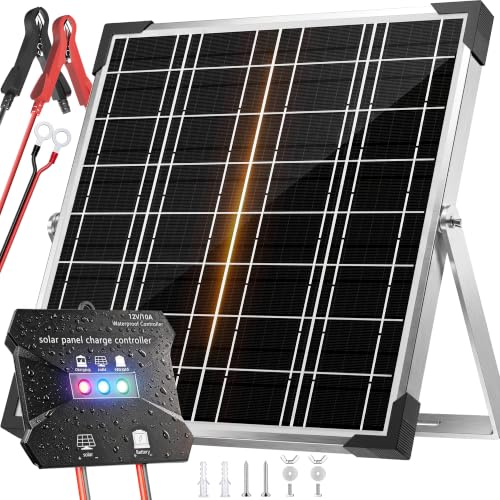
High-Efficiency MPPT Solar Charger - Advanced tracking technology delivers 20-30% faster charging for 12V batteries. A+ monocrystalline panels maximize power conversion. Perfect 20W solar trickle charger for cars, RVs, boats, and trailers. More sun captured, less time waiting.

Compact & Robust - Compact size for easy storage. Enhanced plastic case with top grade fire-resistant feature. Perfect for charging and maintaining all 12-volt lead-acid, flooded or sealed maintenance free batteries (AGM and gel cell). Up to 8.5FT cables with SAE quick release connection options: 7.5amp fuse protected Ring Terminals Harness and Fully insulated enhanced 50amp Alligator Clamp Harness. Works with all devices with standard SAE connectors.
5 Signs Your Marine Battery Charger Is Dying
No AC power indication, such as lights not coming on despite shore power being connected, is a clear sign your marine battery charger is failing. This suggests the charger is not receiving or distributing power correctly. You should also check the battery disconnect switch to ensure it is set to the proper position for charging while connected to shore power. Secondly, inconsistent or absent charging output, which keeps your battery voltage below 13 volts, indicates regulation issues within the charger. Third, fault lights or error codes, like flashing red indicators, point to internal malfunctions that cannot be resolved with a simple reset. Fourth, excessive heat, a burnt smell, or unusual buzzing noises are signs of failing components, often capacitors, requiring immediate inspection. Fifth, charging instability such as voltage fluctuations can cause your fish finder to glitch or slow down battery recovery after deep discharge. A corroded or loose battery terminal connection can mimic charger failure, so checking the fit of terminal shims is an easy first troubleshooting step. Understanding the battery’s amp-hour capacity helps you match the charger’s output to your deep cycle battery needs, preventing overworking the charger. Recognizing any of these signs early helps prevent further damage and ensures your marine electrical system stays reliable.

【Optimized for LiFePO4 Batteries】 Tailored specifically for 12V LiFePO4 batteries, this charger enhances battery performance and significantly extends battery life with over 90% charging efficiency.

Versatile Charging Options: Connect your Battery Tender charger to your battery effortlessly using alligator clips or ring terminals. Enjoy the flexibility to choose the connection method that suits your needs
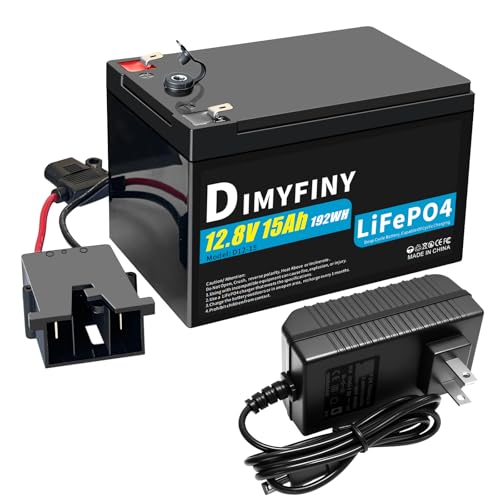
BATTERY CAPACITY:✅Extended Run Time & Lightweight, 15Ah/20Ah battery designed for extended runtime and reliable power delivery
Does Warranty Length Predict Charger Life?
Warranty length alone cannot predict how long your marine battery charger will last. A 3-year or 5-year warranty may seem to promise longer service, but it only indicates the manufacturer’s confidence in the product’s defect rate, not its actual lifespan. Warranties typically cover manufacturing defects, not damage caused by water, installation errors, or wear and tear. These are common causes of charger failure that warranties do not address. Therefore, you should not rely solely on warranty duration as an indicator of longevity. For example, choosing the best solar controller for your boat involves considering the difference between PWM and MPPT technologies, which highlights how performance and build quality matter more than warranty length. Similarly, for your boat’s batteries, understanding the difference between shunt and voltage monitors can further illustrate why real-world performance and build quality are better longevity indicators than a simple warranty period.
Instead, look for signs of durability such as high-quality build materials, effective ventilation, and a design suited for the operating environment. Warranties across brands can vary from 1 to 5 years, but this variation often reflects marketing strategies and competition rather than actual product robustness. Your charger might outlive its warranty period or fail well before it expires. Using real-world durability factors provides a clearer picture of how long your charger will serve you well.
Charger Maintenance That Adds Years to Its Life
Proper maintenance can significantly extend the lifespan of your marine battery charger. Start by verifying compatibility; set the charger’s profile for your specific battery type—AGM, flooded, gel, or lithium—to minimize stress on internal components. Ensure temperature compensation is active when your charger supports it, as this feature adjusts charging to prevent overheating or undercharging. Avoid fast-charging cycles that exceed the recommended voltage limits to prevent overheating and damage. Without a charge controller, small solar panels can overcharge batteries and damage internal charger components.
After a full charge, unplug the charger unless it’s designed for long-term maintenance or float charging. Regularly inspect terminals, lugs, and cable ends for signs of corrosion, such as white or green buildup. Clean these contacts with a baking soda and water solution to halt corrosion before it spreads. Tighten any loose connections to reduce electrical resistance and heat buildup. Applying dielectric grease after cleaning forms a barrier against future corrosion, prolonging connection integrity. If you find damaged ends or cracked boots, replace them promptly. Keep ventilation clear around the charger to allow hydrogen gases to disperse safely, and avoid installing it in enclosed, overheated, or moisture-heavy spaces. Following these steps helps prevent premature failure and ensures reliable operation.
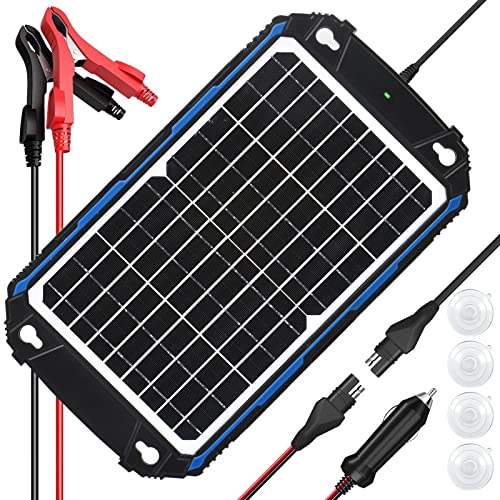
【Ultra-Smart MPPT Technology】This 12v solar panel battery charger is crafted with SUNER POWER's unique Ultra-Smart MPPT( Max Power Point Tracking) technology, the innovative MPPT allows to deliver high tracking efficiency of up to 99% and peak conversion efficiency of 98%, improving approximately 20%-30% utilization rate than other competitors

【EFFICIENT A+ CELL CHARGING】 Our 12v solar panel uses A+ monocrystalline cells with 21%-30% conversion, beating same-size polycrystalline or amorphous panels. As a solar battery maintainer it steadily charges compatible 12V batteries and keeps them topped off.
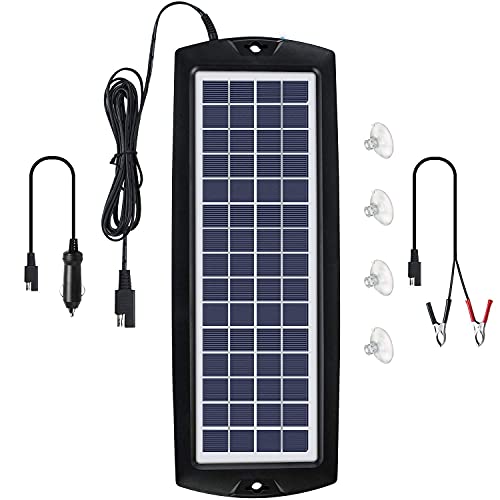
[Solar Panel Power Up To 4W]--Keep your 12 Volt batteries topped off with this solar battery trickle charger ,which helps to manage 12v battery drain in all seasons. Designed to compensate for small, steady battery drains from the vehicle's clock or alarm system.
How to Match Your Marine Charger to Your Battery
Matching your marine charger to your battery involves selecting the correct chemistry profile, voltage, output current, and bank configuration. First, identify your battery’s chemistry—flooded, AGM, gel, or lithium—as each type requires a specific charging algorithm. Using the wrong profile, such as charging lithium batteries with a lead-acid setting, can lead to damage or reduced lifespan. Additionally, the charger should be mounted in a well-ventilated area to prevent overheating during extended use, a consideration that affects both placement and long-term reliability. Next, ensure the charger’s voltage matches your system voltage—whether you have a 12V, 24V, or 48V setup. The charger’s output must correspond exactly to your battery bank’s voltage; wiring batteries in parallel does not change the voltage requirement. For clean, efficient cutting of battery cables, selecting a tool with flush cutters ensures a precise, burr-free finish that prevents corrosion at the connection point. A battery monitor can track the current being delivered to help verify your charger’s output matches the bank’s state of charge. Size your charger’s current output to approximately 10 to 25 percent of your battery bank’s amp-hour capacity. For example, a 200Ah bank should be paired with a charger rated between 20A and 50A for optimal charging without overstressing the batteries. Lastly, match the number of charger banks to your battery layout: use a single bank for one battery and multiple banks when you have separate house and starter batteries. Correct matching ensures efficient charging, extends battery life, and maintains system reliability.

LiFePO4 LEAD-ACID SMART BATTERY CHARGER - 12V 15-Amp and 24V 8-Amp 9-stage quick battery charger, significantly faster than standard 10-Amp or 8-Amp chargers. Perfect for charging or repairing all 12V and 24V LiFePO4 and lead-acid batteries, including AGM, GEL, SLA, and Flooded types. Ideal for cars, trucks, SUVs, motorcycles, lawn mowers, boats, and marine applications. Note:(This is a battery charger not battery jump starter).

Two battery type options: 12V Lead Acid and 12V Lithium(LiFePO4); Input voltage: 100-120VAC, Output: 12V 2A

【5X2, 2-Bank, 5A Per Bank】: Marine battery charger for all types of lead-acid & lithium-ion 12V batteries, including marine, boat, starter & deep-cycle batteries. IP68 waterproof fully-sealed charging. Boat battery chargers can be charged 24/7 onboard.
Replace vs. Repair: 3 Clues It’s Time to Upgrade
If your marine battery charger shows signs of malfunction, it’s typically time to replace rather than repair. First, check if the charger outputs no usable voltage—staying at battery-resting voltage or zero volts. This usually indicates internal damage, like burnt components or thermal stress, which cannot be fixed through repairs. Second, look for visible damage such as a burnt smell, discolored enclosure, or frayed cords. These signs pose safety risks and suggest that replacement is the safer option. Common causes behind such damage include corroded connections or moisture intrusion that short-circuit internal electronics. Third, observe the charging behavior. Unstable voltage, excessive ripple, or failure to switch modes often point to degraded internal parts. Repairing external issues like fuses or cords won’t address these internal faults. After five years of operation, thermal stress and inconsistent performance generally make upgrading the smarter, safer choice. Top models prioritize wire stripping performance to ensure clean, efficient connections during installation. When comparing options, an onboard charger often provides better long-term durability and consistent performance for permanent installation.

[Aluminum Alloy Material] Advanced all-aluminum alloy body with scratch-resistant technology, ensuring durability and keeping the 12V USB socket looking brand new. The upgraded metal USB cigarette lighter socket does not overheat at high temperatures, making it safer than plastic.

Stay Charged: Battery Tender battery chargers and maintainers provide a full charge to your powersport vehicle’s battery before switching to float mode to maintain proper voltage levels for safe, long-term storage

Direct Replacement Compatibility: PD4590CSV power converter serves as a replacement for PD4500 Series Power Center units in RV and marine applications
How Heat, Vibration, and Bilge Vapor Shorten Service Life
Vibration and bilge vapor can significantly shorten your charger’s lifespan. Continuous vessel motion causes mechanical fatigue, loosening fasteners, cracking solder joints, and wearing down connectors over time. Bilge vapor’s humid, salty environment creates a corrosive microclimate that accelerates deterioration. This corrosion increases electrical resistance, generating more heat and further damaging the components. Without proper protective coatings or sealed enclosures, your charger is vulnerable to early failure. Protecting against these stressors is essential to extend its service life.