
Ever wonder if you can overcharge a marine battery and risk damaging it? The truth is, yes—you can. Overcharging can lead to internal heat buildup, warped plates, and dangerous gas buildup.
In this article, you’ll learn how to recognize the warning signs and prevent costly damage before it happens.
What Actually Happens When You Overcharge a Marine Battery?
Overcharging a marine battery causes significant and often irreversible damage by forcing excess current into it after it is already full. This triggers excessive heat buildup inside the battery, which accelerates internal chemical reactions that shorten its lifespan. The heat can warp plates and separators, increasing the risk of thermal runaway, a dangerous condition where heat causes more current to flow uncontrollably. Simultaneously, overcharging drives electrolysis, splitting water molecules into hydrogen and oxygen gases. This process leads to electrolyte loss, exposing the battery plates to air and causing permanent sulfation—a buildup that impairs the battery’s ability to hold a charge. Flooded batteries can sometimes be replenished with water, but sealed AGM and gel batteries cannot recover from this damage. As pressure builds from gas formation, the battery casing can deform or rupture, posing safety risks. Overcharging also accelerates the corrosion of positive plates, shedding active material and reducing capacity over time. For long-term reliability, choosing quality battery terminals ensures a secure connection that minimizes voltage drops and overheating. A poor connection, such as loose battery terminals, can mimic voltage drops and create additional resistance that worsens the heat problem. Signs of severe overcharging include swelling, leaks, and bubbling, indicating the battery has suffered irreversible failure. The same dangerous heat from shore power cord connections can also trigger thermal runaway in your battery system. Continued overcharging dries out the battery, making it unsafe and unreliable for marine use.
How to Tell If Your Charging Voltage Is Too High?
To tell if your charging voltage is too high, measure the charger output directly at the battery terminals instead of the panel gauge. A difference of more than 0.3 volts between the charger and battery posts indicates wiring loss that can distort your reading. Check the voltage against chemistry-specific targets: flooded lead-acid batteries typically require around 14.4 to 14.8 volts during charging, while gel batteries should stay at 14.1 volts or less. During the float stage, voltage should stabilize near 13.5 to 13.8 volts for flooded batteries. If the voltage remains above this range during float, your charger might not be tapering properly. Use a multimeter to verify under load—perhaps with the battery slightly discharged—and pay attention to temperature compensation. To confirm your readings are accurate, ensure the battery disconnect switch is in the correct position when on shore power. When using a multimeter, ensure you have reliable crimping tools for clean, low-resistance connections on your test leads to avoid false voltage drops. If the voltage climbs as the battery warms instead of dropping, your charging system may be failing to maintain a proper, consistent voltage, indicating potential overvoltage issues. Installing a thermal circuit breaker on the charging line can protect against overheating caused by sustained overcurrent during a fault.
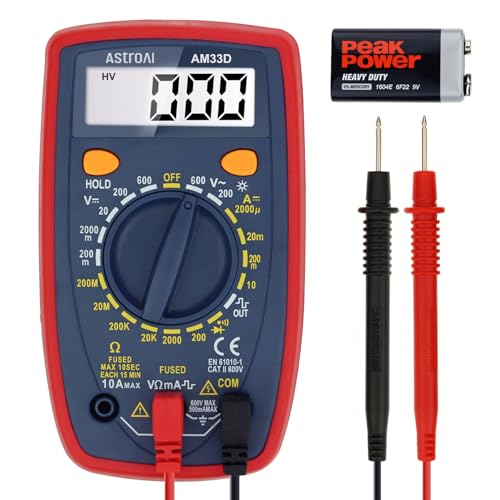
Additional Tips - The following incorrect operations may cause the multimeter not to show results: Firstly, the plugs of test leads are not fully inserted or not inserted into the correct sockets. Secondly, the manual rotary switch is not placed in the correct position. In addition, this meter can not test all AC Current and below 100mV AC Voltage. Please check the user manual carefully before measurement.

Black dial, red graduations, white numerals, vivid white pointer staff
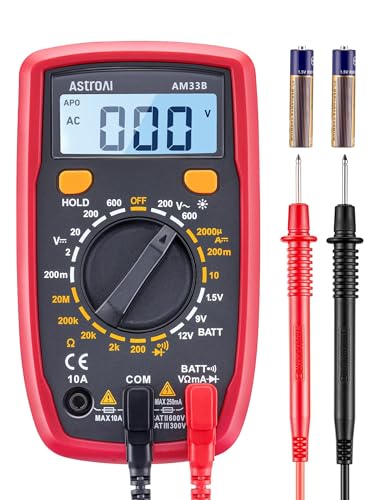
Versatile Digital Multimeter - Accurately measures AC/DC Voltage, DC Current, Resistance, and Diode. This Multimeter is a really useful tool for solving industrial and household electrical issues. Suitable for Household Outlets, Fuses, Batteries (including Vehicles), Automotive Circuit Troubleshooting, Charging Systems, Testing electronics in Cars etc.
Warning Signs Your Marine Battery Is Being Overcharged
If your marine battery is being overcharged, you will notice several warning signs indicating potential trouble. One of the first signs is the battery case feeling excessively hot, even when the engine isn’t running. This heat buildup signals that the charger regulation may be malfunctioning. Swelling or bulging of the battery case is another cause for concern, as internal pressure from overcharging causes the casing to expand. You may also observe electrolyte boiling, which leads to rapid water loss and excessive gassing; these conditions require immediate attention to prevent damage or safety hazards. Additionally, using a digital multimeter to measure across the terminals with the engine running can reveal a “voltage reading” consistently above 15 volts, confirming the overcharge. This excessive voltage often relates to insufficient cold cranking amps for the battery’s intended load. Using a top solar battery charger with proper voltage regulation can help prevent such dangerous overcharging conditions. Installing a battery disconnect switch provides a manual way to instantly stop current flow and protect the system during an overcharge event.
A strong sulfur or rotten-egg odor near the battery indicates gas release, which can be dangerous and should be treated as an urgent hazard. White crusty deposits or sticky residue around the terminals, as well as corrosion, are common signs of overcharging. You might also notice electronics connected to the battery flickering or restarting erratically, which can be caused by voltage irregularities.
These warning signs mean your battery maintenance routines need reviewing. Prioritize safety by inspecting the voltage regulation system and stopping use if you observe case deformation or leakage. Continued use of an overcharged battery can increase the risk of fire or explosion, making immediate action essential.

Smart Alarm: When the battery voltage exceeds 14.6V, the red warning light comes on (only for DC12V vehicles)

Safe Alternator Charging for Lithium Batteries: Continuously monitors alternator output and regulates charging voltage to protect lithium battery banks from overcharging.

Compatible with Mil-wau-kee 18V Batteries: This Vortlink voltage regulator is specifically designed Compatible with 18V lithium-ion batteries, providing portable power for outdoor activities or emergency use. It also features adjustable battery output voltage. (Battery not included)
How Overcharging Wrecks AGM, Gel, and Flooded Batteries Differently
Overcharging damages AGM, gel, and flooded batteries in different ways due to their distinct internal chemistries. In AGM batteries, overcharge quickly increases internal gas pressure. Once the pressure exceeds the valve limit, it vents gas and loses water permanently, which reduces the amount of electrolyte inside and shortens the battery’s lifespan. Since you can’t replace this lost electrolyte, the damage is irreversible. Using a kill switch with lanyard can help prevent accidental overcharge by providing a quick disconnect in emergencies. Selecting a deep cycle battery designed for dual battery systems can also improve voltage regulation and reduce overcharge risk. A master switch properly rated for your battery system is also essential to isolate power and prevent parasitic drain that contributes to overcharging.
Gel batteries react to overcharge by forming gas pockets that disrupt the gel’s structure. This tearing of ionic pathways leads to a rapid decrease in capacity. The gel dehydrates permanently, which ruins the battery’s performance. To prevent this, you should use a lower absorption voltage with gel batteries than with flooded types.
Flooded batteries handle overcharge better because you can refill the water lost during gassing. Still, vigorous gassing accelerates plate corrosion and causes active material to shed, both of which diminish lifespan. Without regular topping-off, heat can build up inside the battery, warping the plates and speeding up failure. Always match your charger settings to your battery’s chemistry to avoid these issues.

Permits selection between batteries for starting, charging or operation in parallel

High Current Battery Switch: With a rated current of 200 Amp Continuous, and 1000A Intermittent, Spurtar battery disconnect switch safely isolate and secures 12-48V DC electrical system connections

On/Off Switch: This side post battery disconnect switch features On/Off 2 Position; Rating: 275A DC Continuous (1hr), 455A DC Intermittent (5 min), 1250A DC Cranking (10 sec). Stud Size: 2 x 3/8" (M10)
Which Chargers Prevent Overcharging and Which Don’t?
Smart chargers with multi-stage capability prevent overcharging and are the best choice for battery maintenance. They automatically transition through bulk, absorption, and float or maintenance modes, which stops the charging process once the battery is full. Look for models equipped with thermal sensors and automatic shutoff features—these are essential for avoiding overcharge issues. For a crimping tool with a cutter, look for models that include a built-in ratchet mechanism for consistent terminal pressure. Smart chargers with multi-stage capability are also reviewed extensively for their performance with various battery brands and applications. Onboard smart chargers are particularly suitable for continuous connection, ensuring ongoing safety and battery health. For example, the NOCO GEN5X2 uses an integrated thermal sensor to prevent overcharging in hot temperatures and undercharging in cold climates, making it a safe, temperature-adjusted choice. When selecting a charger, also consider the battery group size to ensure compatibility with your boat’s physical tray and terminal configuration, as group 27 and 31 batteries have different dimensions and capacity ratings.
Avoid using basic single-stage or manual chargers. These lack voltage regulation and tend to keep pushing current even after the battery reaches full charge, increasing the risk of overcharging. Traditional trickle chargers also pose a danger, as they can slowly cause battery damage if left connected for extended periods. If a charger does not specify features like float mode or temperature compensation, it’s a warning sign. Always opt for a marine-rated smart charger to guarantee reliable, worry-free charging and to protect your batteries from overcharge damage.

ProSport HD 20A Triple Bank Waterproof Marine Battery Charger (Part Number 44021) replaces the old ProMariner Gen 3 ProSport 20 plus (part number 43021)

PREVENT BATTERY FAILURE: Ensure reliable starts after storage with this 4-in-1 device that charges, maintains, tests, and restores batteries for cars, motorcycles, ATVs, trucks, SUVs, and boats.

[Triple Independent Charging] Delivers 5A per channel for simultaneous separate charging of three batteries, max 255W AC input (100-120V 50/60Hz). Works with 15Ah–150Ah capacity batteries, covering marine, boat, starter & deep-cycle batteries. With a robust 5A output per bank (15A total).Each channel runs independently without interfering, ideal for boats with starter & house battery sets.
How Overcharging Creates Fire, Gas, and Internal Damage
Overcharging a marine battery triggers a dangerous chain reaction that begins with gas production and pressure buildup. When the battery is overcharged, the electrical energy causes unwanted chemical reactions in the electrolyte, splitting water into explosive hydrogen and oxygen gases. If the venting system cannot release these gases quickly enough, pressure accumulates inside the case, which can cause it to swell or crack.
These gases are highly flammable, and even a small spark can ignite them, leading to a violent explosion that releases acid mist and corrosive debris. Concurrently, internal heat from overcharging accelerates. It boils off the electrolyte, warping the plates and separators inside the battery. This thermal stress exposes internal components and causes permanent loss of capacity. Repeated overcharging damages the battery’s internal balance and structural integrity, ultimately shortening its service life beyond repair.
What to Do If You Suspect an Overcharged Battery
If you suspect an overcharged marine battery, the first step is to shut down the charger immediately and disconnect the battery from all equipment. Turn off the engine and any nonessential electrical loads to prevent further stress. Carefully move the battery away from heat sources and flammable materials, and avoid touching the terminals with bare hands. Place the battery in a cool, well-ventilated area to allow it to cool down naturally. Use insulated gloves if the battery is hot to prevent burns.
Inspect the battery for visible signs of damage: look for bulging sides, cracks, leaks, or white crusty deposits indicating corrosion. A strong sulfur smell also suggests internal damage. Measure the battery’s voltage with a reliable multimeter and compare it against the manufacturer’s specified range. Check the charger’s output voltage and settings to ensure proper operation. Regularly inspect your charging system to detect issues before they escalate.
If the battery shows swelling, leakage, or significant corrosion, do not attempt to reuse or recharge it. Dispose of damaged batteries through hazardous-waste channels that accept marine batteries. After handling an incident, clean the terminals with a wire brush or terminal cleaner to prevent future corrosion. Always seek professional assistance if you are uncertain about the battery’s condition or safety.

ASTM D120 Certified 1000V Protection: Designed for electrical work under 1000V, these insulated electrician gloves meet ASTM D120 standards, providing reliable shock protection for professional maintenance and repair tasks.

【Why do you need LED Safety Flares?】 Markstor road flares light are ideal for an array of uses. Whether your vehicle got stuck in a ditch, your motorbike has a flat tire, your boat is capsizing or there’s a fire nearby — you can quickly caution others and signal for help.boat, bike, or backpack as an emergency awareness product. A wonderful gift for friends and family to keep safety in traffic accidents and out door activities.

COMPLETE 2-PIECE ELECTRICAL TOOL SET: this value bundle includes one heavy duty 14 inch forged steel cable cutter plus one pair of anti-slip dot coated gloves. Everything you need for safe and efficient cable cutting projects arrives in one package, saving you the trouble of purchasing tools separately for home electrical work or jobs